US Launches 'Project Freedom' as Iran Cries Ceasefire Violation in Hormuz Standoff
Tehran has condemned a new US naval operation to escort commercial vessels through the Strait of Hormuz, calling it a breach of agreed ceasefire terms hours after the Trump administration ordered military support to guarantee passage for stranded ships.
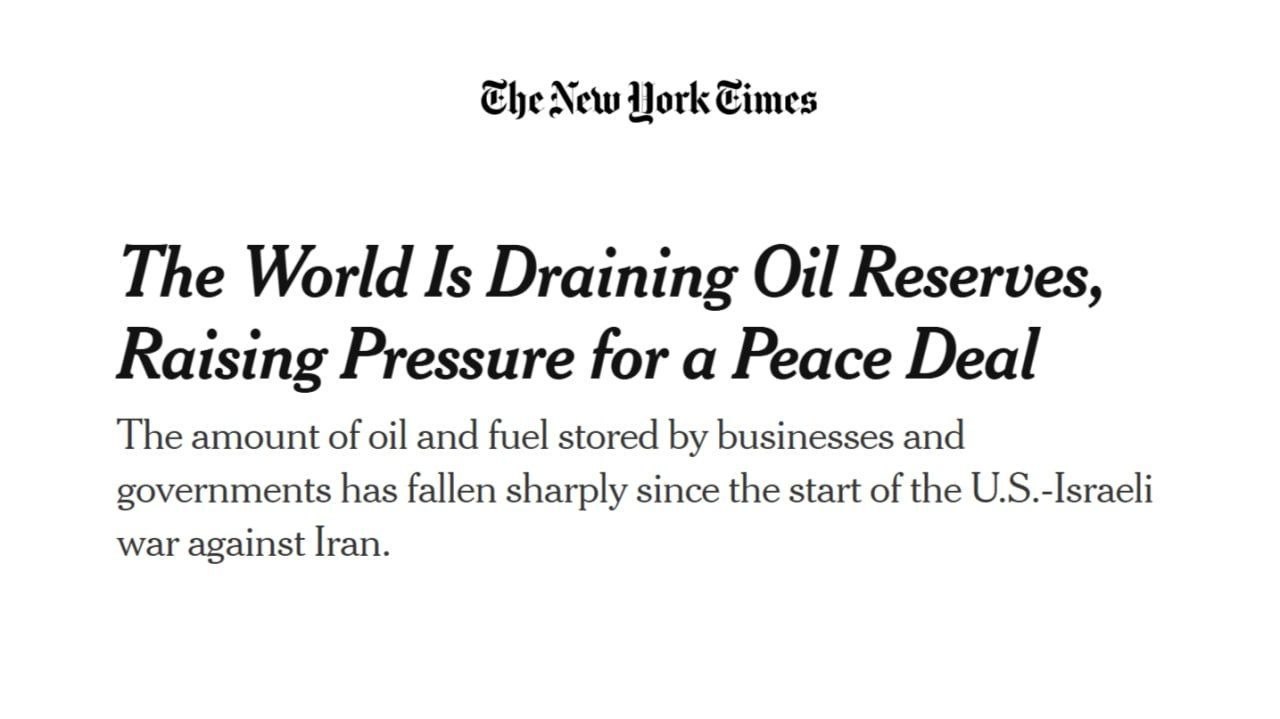
The United States military will begin escorting commercial vessels through the Strait of Hormuz on May 4, 2026, according to a CENTCOM statement carried in the early hours of Monday. The announcement came within thirty minutes of President Donald Trump's public unveiling of what his administration has labelled "Project Freedom" — a mission described as intended to "safely guide" vessels stranded in the Persian Gulf and to "interfere by force" should any interdiction attempt be made against them. The timing left little room for diplomatic preparation: Tehran learned of the operation from the same broadcast channels as the rest of the world.
Iran's response, reported by Al Jazeera as a breaking news item at midnight UTC on May 4, was swift and categorical. The Iranian government characterisation, as conveyed by state-adjacent media, is that Washington's move violates the terms of an existing ceasefire framework. That framework — its precise contours still contested between the two sides — is the product of months of back-channel negotiation and at least one round of direct talks mediated by Oman. The American announcement, from Tehran's perspective, rewrites the rules unilaterally and without prior notification.
This publication has reviewed the available CENTCOM and Telegram-sourced accounts of the operation's stated parameters. According to those accounts, the mission is anchored to an order from the President himself: the US military will provide physical escort for commercial ships transiting the world's most contested maritime chokepoint. The language used in the announcement — "interfere by force" — is not diplomatic shorthand. It is a commitment to engage Iranian naval assets should they attempt to stop, board, or redirect vessels the United States has designated for safe passage.
The operational threshold this creates is significant. Iran's Revolutionary Guard Corps Navy has historically asserted a zone of enforcement authority in the lower Gulf, particularly around the Strait of Hormuz's narrowest channel. Whether that assertion is legitimate under international law is a separate question from whether Iranian forces will act on it — and whether American forces are prepared to act in response. Project Freedom appears designed to answer both questions with the same signal: the United States is not asking for permission.
The announcement and its immediate fallout
The sequence matters for understanding the diplomatic damage. Trump unveiled the operation publicly. CENTCOM confirmed it within minutes. Iran protested — through Al Jazeera's breaking coverage at midnight UTC — within the same hour. There was no working-level heads-up to Tehran, no back-channel warning, no formal notification through Omani intermediaries. Whether that omission was deliberate or logistical remains unclear from the sources reviewed by this publication; the operational communication chain described in CENTCOM's statement does not reference prior diplomatic notification.
The practical consequence of that gap is a crisis of interpretation happening in real time. Iran is treating Project Freedom as a breach. The United States is treating it as enforcement of commitments already made. Both positions cannot be simultaneously correct — or at minimum, they cannot both be correct under the ceasefire's current terms, however those terms are documented. What is clear is that the ceasefire framework, whatever its substance, did not anticipate this specific scenario. Either it specified that the Gulf's maritime lanes would remain open under some agreed arrangement, in which case the US action might be characterised as implementation rather than escalation; or it reserved maritime transit decisions to bilateral agreement, in which case the American unilateralism is precisely what Tehran alleges.
This publication cannot adjudicate that question from available sources. The ceasefire text itself has not been published in full by either government, and the reporting to date relies on characterisation rather than documentation. What can be said is that both governments are operating from publicly stated positions that are mutually exclusive — and that this is not a misunderstanding. It is a dispute about substance.
Tehran's position and its structural logic
Iran's framing deserves more than summary dismissal. Tehran has a documented interest in the Gulf remaining a zone of commercial transit — its own oil exports flow through the same waterway, and a complete militarisation of the Strait would harm Iran's economy as readily as any other's. The Revolutionary Guard's historically aggressive posture in the lower Gulf has been a point of friction with Iran's own Foreign Ministry, which has at various points sought to manage the Gulf's stability as part of broader diplomatic normalisation strategies.
That internal tension — between enforcement agencies who view maritime control as a tool of statecraft and diplomatic actors who understand the economic costs of confrontation — is relevant here. Iran's protest may represent the Foreign Ministry's position rather than the Guard's. If so, it signals that Tehran's civilian diplomatic apparatus is attempting to contain an escalation that the Guard's operational posture may, in different circumstances, have welcomed. The fact that the protest came through state-adjacent media rather than a formal Foreign Ministry statement means the internal debate is still in progress.
The structural logic of Iran's argument is straightforward: any ceasefire framework that has operationalised a pause in hostilities must, by definition, govern the security environment in which commercial transit occurs. If the ceasefire governs military operations but not maritime transit, then it governs only part of the escalation ladder. That is a plausible reading — and one that other parties to the negotiations may have accepted without the United States. Whether the ceasefire document explicitly addressed the question of naval escort operations for commercial vessels is not known from public sources, but the ambiguity itself is evidence that the framework is unfinished.
The Hormuz question: why this waterway matters
The Strait of Hormuz carries roughly a fifth of global oil trade and a comparable share of liquefied natural gas. Its narrowest point — the channel between Iran and Oman — is approximately 21 nautical miles wide, with a shipping lane that allows transit on either side of an imaginary median. Any militarised engagement in that channel, even one that does not involve the sinking of vessels, risks creating the conditions for a wider disruption of global energy markets. Markets respond to uncertainty as much as to supply loss.
The waterway's geopolitical significance is inseparable from its physical constraints. In normal conditions, the United States Navy maintains a persistent presence in the Gulf through the Fifth Fleet headquartered in Bahrain. That presence has historically been understood by Tehran as a stabilising force — one that deters Iranian naval adventurism — and as a threat, depending on the political context. The dynamic has produced decades of friction, including incidents involving US Navy vessels being approached by Iranian fast craft and periodic seizures of commercial shipping.
Project Freedom changes that dynamic in a specific way. It does not merely maintain a US presence; it creates an active escort relationship between the US military and specific commercial vessels. That relationship implies a commitment — explicit in the White House's stated language — to use force to protect those ships. The commitment to use force is the part that escalates the friction. A US Navy vessel in the Gulf is a presence. A US Navy vessel accompanying a tanker with the stated intention of engaging Iranian assets that interfere is something closer to a tripwire.
The sources reviewed by this publication do not indicate whether any Iranian naval assets are currently positioned in the immediate vicinity of the Strait. Whether Project Freedom will face an actual test in the near term — whether Iranian forces will choose to assert enforcement authority against a US-escorted vessel — is therefore unknown. What is known is that the United States has announced a posture that Tehran has characterised as a provocation, and that both governments are now managing the political consequences of that characterisation.
The ceasefire framework and what it covers
The ceasefire between the United States and Iran has never been formally ratified as a bilateral treaty. It has been described by both governments in general terms — a pause in military operations, a suspension of sanctions escalation, a freeze on nuclear programme advancement — but the specifics of what was agreed have been contested in public from the outset. That ambiguity has been a feature, not a bug, of the negotiations: it allowed both sides to claim progress while preserving flexibility on the details. Project Freedom is the first major operational test of that ambiguity's limits.
From the American side, the argument appears to be that the ceasefire governs military actions directed at the other state's forces, not commercial transit through international waters. The United States is not attacking Iranian assets; it is protecting vessels that have been stranded — unable to move freely — during the period of elevated tension. The escort mission is humanitarian and commercial in framing, even if its operational parameters are explicitly military.
From the Iranian side, the argument is that commercial transit in a post-ceasefire environment requires bilateral agreement, not unilateral American determination. Tehran's position may be that the ceasefire created a mutual obligation to avoid provocative actions in the Gulf — and that deploying US naval escort operations, with a stated willingness to use force, falls squarely within that prohibition. The ceasefire may or may not have explicitly addressed maritime transit; but Iran's reading is that the spirit of the agreement precludes exactly this kind of operational escalation.
This publication cannot determine which side's reading is consistent with the ceasefire's actual terms. What can be observed is that the gap between the two positions is not a matter of implementation detail — it is a fundamental disagreement about what the ceasefire commits each party to refrain from doing. That is the kind of dispute that, left unresolved, tends to produce the very incident it was designed to prevent.
Forward view and the risks ahead
The immediate risk is a collision — literal or diplomatic — in the Strait. CENTCOM's operational start date is May 4, 2026. Within hours of that date, US escort operations will be underway. Iranian naval assets, if deployed to the lower Gulf, will encounter those escort operations. Whether the Revolutionary Guard's posture involves direct interdiction, harassment, or simply observation will determine whether Project Freedom faces its first test on day one or is allowed to define its own terms of engagement before being challenged.
The diplomatic risk is longer-term. Iran has characterised the US operation as a ceasefire breach, which means Tehran is now operating from the premise that Washington has violated the agreement first. That framing matters: it gives Iran rhetorical cover to respond in kind, either by escalating its own Gulf posture or by withdrawing from aspects of the ceasefire framework it had previously honoured. The ceasefire's durability depends on both parties perceiving it as still in effect. Project Freedom may have changed that calculus in Tehran's internal deliberations.
The broader question is whether the ceasefire framework has a mechanism for absorbing this kind of operational shock. The sources reviewed by this publication do not indicate a designated dispute-resolution pathway within the ceasefire's architecture. If the two sides disagree about whether Project Freedom is legitimate, there is no obvious forum in which that disagreement can be adjudicated short of either resumed conflict or a new round of negotiations that both sides currently appear disinclined to undertake.
What is available is the public record of stated positions. The United States says it will protect stranded vessels. Iran says the mission violates the ceasefire. The gap between those positions is not semantic — it reflects a genuine disagreement about what the ceasefire permits and what it prohibits. Until that disagreement is resolved, the Strait of Hormuz will be operating under a ceasefire whose terms are, in the most literal sense, contested by the parties to it.
This publication covered the announcement through CENTCOM-sourced Telegram accounts and Al Jazeera's breaking news reporting. The wire framing centred on American operational capability and regional stability; this article has sought to foreground the Iranian counter-framing and the structural ambiguity in the ceasefire framework that Project Freedom has exposed.
Wire provenance
This editorial synthesis draws on the following public wire/social posts:
- https://t.me/myLordBebo
- https://t.me/wfwitness
- https://en.wikipedia.org/wiki/Strait_of_Hormuz
- https://en.wikipedia.org/wiki/United_States_Central_Command
- https://en.wikipedia.org/wiki/Revolutionary_Guard_Corps_Navy
- https://en.wikipedia.org/wiki/Central_Command
- https://en.wikipedia.org/wiki/Iran%E2%80%93United_States_relations