U.S. Navy Conducts First Convoy Through Hormuz Under Project Freedom as Iranian Oil Stranded
Two U.S.-flagged tankers transited the Strait of Hormuz on Monday under a new naval escort operation, a day after President Trump announced Project Freedom to free American vessels trapped by an expanding U.S. blockade.
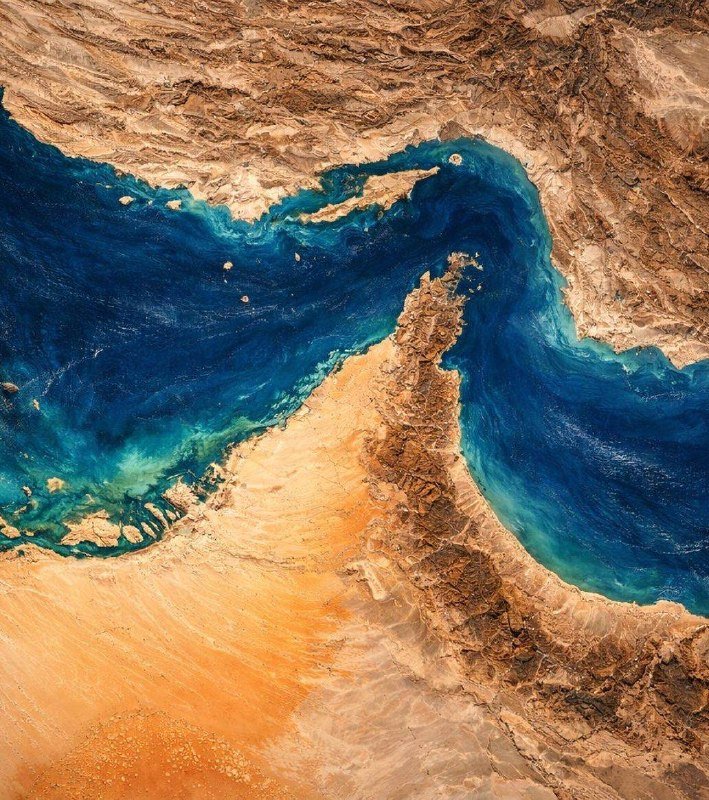
Two U.S.-flagged merchant vessels successfully passed through the Strait of Hormuz on Monday with U.S. Navy escort, according to a statement from U.S. Central Command. The transit marks the first convoy under Operation Project Freedom, announced just a day earlier by President Trump as a mechanism to extract American commercial ships stranded in the Persian Gulf. The vessels had been unable to exit the region since late February, when the United States launched Operation Epic Fury — a blockade-style operation that has effectively cut Iran off from its primary oil export routes to Asia.
The U.S. Navy's deployment of artificial intelligence to accelerate the detection of Iranian naval mines has enabled the passage, CENTCOM said. The AI-assisted sweep cleared a corridor through waters the Pentagon described as seeded with Iranian ordnance, a charge Tehran has not publicly acknowledged.
The timing is significant. Iran has lost access to markets consuming approximately 1.8 million barrels of crude oil per day as a direct result of the blockade, according to reporting from Nikkei Asia. That figure represents the overwhelming majority of Iran's seaborne export capacity and the most immediate pressure point in Washington's escalating economic posture toward Tehran.
The Blockade's Economic Force
Operation Epic Fury, which began on 28 February 2026, restructured the strategic geography of the Persian Gulf in a manner that had long been anticipated but never previously executed at scale. Rather than relying solely on secondary sanctions — the blunt instrument that defined U.S. Iran policy for the preceding decade — the current administration opted for a physical interdiction posture. The Strait of Hormuz, through which roughly a fifth of the world's oil supply passes, became the chokepoint for an explicitly coercive campaign.
The consequences for Iran have been immediate. With 1.8 million barrels per day effectively removed from Asian buyers' procurement calculations, Iranian state revenue faces acute contraction. Asian refineries that had maintained Iranian crude supply contracts under waivers and workarounds are now unable to receive cargoes. The blockade does not merely constrain Iranian oil — it eliminates the maritime corridor through which it travels. This is a structural distinction from sanctions: the oil is not merely expensive to buy, it cannot physically leave Iranian terminals.
The Trump administration has framed Project Freedom as a humanitarian and commercial protection mission — freeing American-flagged vessels and their crews from an imposed stalemate. The framing positions the United States as the party restoring free passage, while Iran bears responsibility for seeding the waterway with mines. That narrative is coherent on its own terms. The counter-narrative, articulated in Iranian state-adjacent outlets, frames the blockade itself as an act of economic warfare that renders any defensive posture by Tehran a proportional response to an illegal coercion.
The AI Mine-Detection Variable
What distinguishes Operation Epic Fury's naval dimension from previous U.S. posture in the Persian Gulf is the integration of artificial intelligence into mine-detection operations. The U.S. Navy's deployment of AI software to accelerate the identification and classification of naval mines in the Strait of Hormuz represents a operational capability that shortens the decision cycle for contested transits. In prior configurations, mine-clearing operations required extended pattern analysis by trained technicians and divers. The AI system compresses that timeline significantly.
CENTCOM's public communications have treated this as a success story — proof that American technology can mitigate the risks Iran has introduced. That framing has domestic political utility in Washington. It also signals to regional partners, particularly Saudi Arabia and the UAE, that the United States can maintain freedom of navigation without requiring a broader ground or air campaign.
What the public record does not yet establish is the scope and density of the minefield Iran has laid. Intelligence assessments on the quantity and sophistication of Iranian naval mines are not included in the CENTCOM statements. The AI system's accuracy rate under operational conditions — versus controlled test environments — also remains uncorroborated by independent sources. These gaps matter for calibrating how durable Project Freedom's operational model actually is.
The Multipolar Resonance
The Hormuz confrontation arrives at a moment when the architecture of global energy finance is under structural pressure from multiple directions simultaneously. The dollar's role as the pricing and settlement currency for globally traded oil has been a bedrock of U.S. financial hegemony for fifty years. Moves to circumvent that architecture — through bilateral oil-for-goods arrangements, yuan-denominated crude contracts, or commodity-backed digital settlement systems — have accelerated in recent years, particularly between Iran and China.
The blockade complicates that multipolar realignment in a specific way: it demonstrates that physical choke point control remains a dimension of power that purely financial alternatives cannot replicate. A Chinese buyer willing to purchase Iranian crude in yuan still needs the crude to physically leave Iranian waters and arrive at a Chinese port. The Strait of Hormuz remains a physical necessity, and the United States Navy retains decisive capacity to close it.
Whether that capacity is sustainable over the medium term — politically, operationally, and in terms of the willingness of commercial partners to maintain U.S.-flagged vessels in high-risk waters — is a separate question. Project Freedom, as currently constituted, is a proof of concept. It has succeeded once, under conditions the Pentagon controlled, with AI-assisted detection support, and with two vessels that had been waiting for exactly this kind of coordinated extraction. Scaling that model to cover the full volume of commercial traffic that transits the Strait routinely is an entirely different challenge.
Forward Stakes
The immediate winners in the current configuration are clear: Asian refiners that have been unable to source alternatives to Iranian crude are now under intensified pressure to diversify, which benefits Gulf Cooperation Council producers with U.S.-aligned governments. The U.S. Navy has demonstrated it can execute contested transits. American commercial shipping interests have seen their stranded assets released.
The losers are also identifiable. Iran faces acute fiscal contraction with limited short-term alternatives. The crews of vessels still trapped in the Persian Gulf — beyond the two freed on Monday — remain in a state of commercial paralysis. Regional escalation risk increases with every transit, as the AI-detected corridor becomes a predictable operational lane that an adversary can target.
What remains genuinely uncertain is whether the blockade constitutes a long-term structural shift in U.S.-Iran confrontation or a discrete coercive campaign with a defined political objective. If the aim is to compel Iran to the negotiating table on nuclear and missile programme terms, the historical record of blockade-as-leverage is mixed at best. If the aim is simply to degrade Iranian oil revenue as a secondary objective while the primary confrontation with Tehran proceeds along other axes, the current posture has a more immediate logic. The CENTCOM statement on Monday addressed operational mechanics, not political endstates. The strategic objective of Epic Fury and its relationship to ongoing nuclear diplomacy remains, for now, unstated.
Monexus led with the CENTCOM operational statement and the 1.8 million barrels per day strand figure, consistent with how wire services framed the immediate event. This desk prioritised the economic architecture of the blockade — the figure that most directly shapes Asian energy markets and Iranian state capacity — as the structural frame rather than the military escort narrative alone.
Wire provenance
This editorial synthesis draws on the following public wire/social posts:
- https://x.com/polymarket/status/1920452812344234142
- https://t.me/nikkeiasia/3421
- https://x.com/polymarket/status/1920375612344234142
- https://t.me/OSINTdefender/2847
- https://t.me/DDGeopolitics/1892
- https://t.me/englishabuali/1243