US Navy Destroyers Enter Persian Gulf in Escort Mission for Trapped Merchant Ships
Two US-flagged merchant vessels stranded in the Persian Gulf since late February have successfully transited the Strait of Hormuz under Navy escort, marking a significant escalation in the Trump administration's confrontation with Iran.
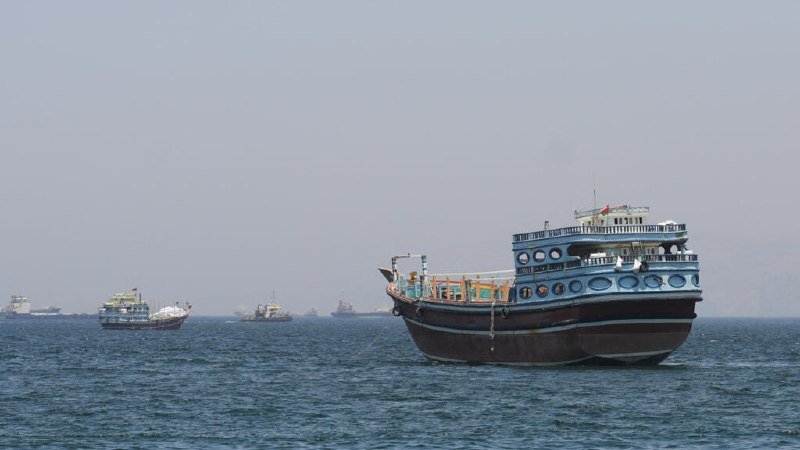
On 4 May 2026, the United States Central Command announced that Navy guided-missile destroyers had entered the Persian Gulf to escort two American merchant ships that had been trapped in the waterway since the opening of Operation Epic Fury on 28 February. The operation, designated Project Freedom and announced by President Trump a day earlier, marked the first deliberate US naval passage through the Strait of Hormuz since the escalation began — and the most direct physical assertion of freedom of navigation in the region since the confrontation with Iran intensified.
The timing is deliberate and the message is unambiguous: the United States will not accept that its commercial shipping be held hostage by regional coercion. What remains less clear is whether this calculated show of force deters further Iranian moves or hardens the positions on both sides.
Two Ships, Three Months, One Strait
The two American-flagged merchant vessels had been effectively marooned in the Persian Gulf since Operation Epic Fury commenced nearly ten weeks ago. Their predicament illustrated a core vulnerability in global energy and trade logistics: the Strait of Hormuz, through which roughly a fifth of the world's oil passes, is a chokepoint that Iran has historically leveraged to signal displeasure with US pressure. The ships' successful transit, announced by CENTCOM on 4 May, ends a months-long logistical stalemate that had forced Washington to weigh the costs of escalation against the symbolic damage of allowing its flagged vessels to be effectively blockaded.
The destroyers' entry into the Arabian Gulf via the Strait of Hormuz constitutes a departure from the caution that had characterised US naval posture in the waterway since late February. US forces, according to CENTCOM's statement, are now actively operating inside the Persian Gulf in support of Project Freedom — a framing that signals an operational willingness to use the destroyers' presence as a deterrent, not merely as an escort.
The Iranian Calculus
Tehran has not issued a direct public response as of 12:27 UTC on 4 May, according to the CENTCOM-announced timeline. But the Islamic Republic's position on Hormuz access has been consistent throughout the Operation Epic Fury period: the strait is sovereign territory under Iranian maritime law interpretation, and US military presence in the Persian Gulf proper is viewed as a provocation regardless of the flag of the vessels involved.
Iranian state media, in prior reporting on the broader US-Iran confrontation, has characterised American naval operations in the Gulf as an intrusion into a regional security architecture that Tehran considers its sphere of influence. Whether Iranian forces attempt to contest the destroyers' passage on the return leg — or allow the escorted vessels through while saving retaliation for a less visible moment — remains the central unknown in the immediate aftermath of the CENTCOM announcement.
The Islamic Revolutionary Guard Corps Navy, which controls access points and has conducted previous harassment operations against commercial shipping in the Gulf, has not commented publicly as of the time of this report. The silence is itself a form of signal: Tehran is calculating whether to absorb the humiliation of the transit or respond with proportional force.
The Architecture of Deterrence
Operation Epic Fury, launched on 28 February 2026, represented the Trump administration's most aggressive posture toward Iran since the Maximum Pressure campaign of the first term. The operation's scope and stated objectives have not been fully disclosed, but its opening moves suggested a campaign designed to degrade Iranian nuclear programme capacity and constrain the Revolutionary Guard's regional strike capability. The Pentagon's decision to commit guided-missile destroyers to a direct escort mission signals that the White House considers the protection of American commercial interests a discrete strategic objective — one worth risking direct confrontation to achieve.
The destroyers assigned to Project Freedom bring significant firepower to any encounter. Arleigh Burke-class guided-missile destroyers are equipped with the Aegis combat system, Standard Missiles, and Tomahawk land-attack capability, making them among the most capable surface combatants in any fleet. Their presence transforms the escort from a political signal into a credible military capability — a fact that Tehran's military planners will have modelled in detail.
What the operation cannot resolve, however, is the underlying asymmetry that defines US-Iran competition in the Gulf. America projects power into the region from outside; Iran shapes the operational environment from within. The destroyers can protect two ships today. The question is whether they can protect the next two, and the next, without the escort becoming a permanent and costly commitment.
What Comes Next
The immediate test for Project Freedom is whether the escorted transit becomes a sustainable arrangement or a one-off demonstration. If the United States intends to establish a pattern of protected commercial passages, it will need to sustain a naval presence in the Persian Gulf that is both expensive and potentially confrontational. The alternative — allowing the Strait to function as an informal pressure valve, with ships moving through only when the political temperature permits — would concede a form of leverage to Tehran that the Trump administration's rhetoric suggests it is unwilling to accept.
For global energy markets, the stakes are concrete. The Strait of Hormuz is not a hypothetical chokepoint; it is the artery through which oil flows from the Arabian Peninsula to the world market. Any sustained disruption — whether through direct Iranian interdiction or through the insurance and logistical complications of navigating contested waters — feeds directly into price volatility that affects importers from Europe to Asia.
Europe, in particular, is caught in a structural bind. Its energy infrastructure remains partially dependent on Gulf supplies even as political alignment with Washington has deepened in the wake of the Ukraine conflict. A US-Iran confrontation that closes or constrains the strait would force European governments into a choices they have spent years avoiding: accept higher energy prices, accelerate the drawdown of Russian pipeline supplies, or engage with Iranian oil flows in ways that contradict their stated security commitments.
The Trump administration, for its part, has made clear that it views freedom of navigation not as a matter for diplomatic negotiation but as a sovereign right it will enforce with military means. Whether Project Freedom marks the beginning of a sustained policy or a single assertive act will define the next phase of the US-Iran confrontation. The destroyers are through the strait. The harder passage lies ahead.
Monexus coverage of the Persian Gulf has leaned heavily on CENTCOM's public statements throughout Operation Epic Fury. The asymmetry of access — US military press releases versus Iranian state media's filtered accounts — creates an inherent reporting limitation that this article addresses by treating silence from Tehran as a data point in itself, rather than as an absence of information.
Wire provenance
This editorial synthesis draws on the following public wire/social posts:
- https://t.me/thecradlemedia/12437
- https://t.me/thecradlemedia/12436
- https://t.me/englishabuali/89234
- https://t.me/englishabuali/89233
- https://t.me/osintlive/15892
- https://t.me/osintlive/15891
- https://t.me/abualiexpress/15678
- https://t.me/abualiexpress/15677