US Updates Rules of Engagement in Strait of Hormuz Following Crew Evacuation from Seized Iranian Tanker
The Pentagon has authorized direct strikes against Iranian vessels posing immediate threats in the Strait of Hormuz, a significant escalation following the seizure of an Iranian tanker and the evacuation of 22 crew members to Pakistan.
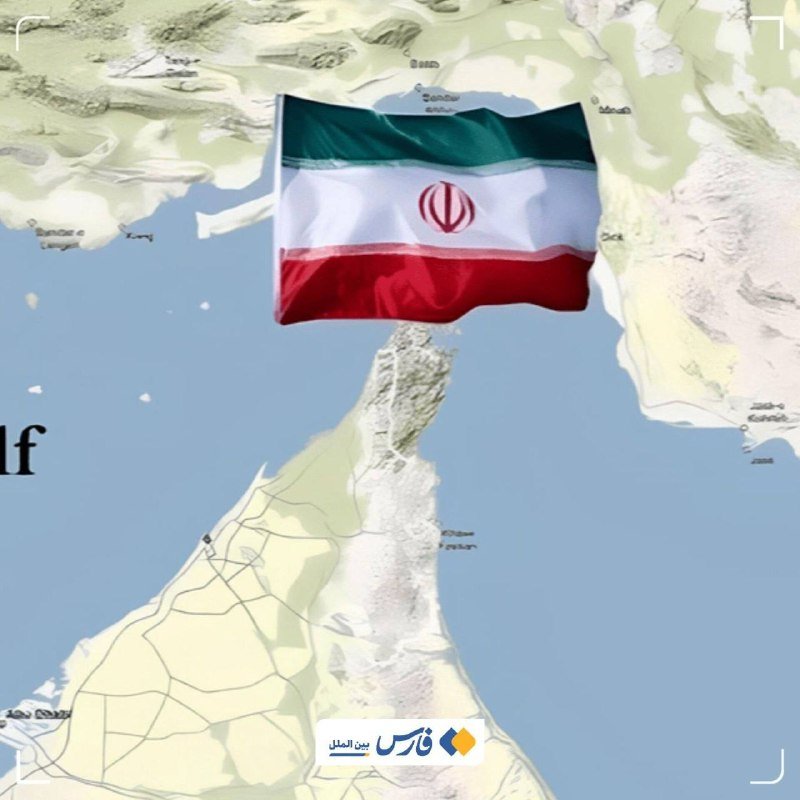
On 4 May 2026, the United States Central Command confirmed the evacuation of 22 crew members from an Iranian vessel that had been seized in the Gulf. The crew was transported to Pakistan under U.S. military protection. Hours earlier, a senior U.S. official confirmed that the rules of engagement governing American forces in the region had been materially updated — a development that signals a more permissive posture toward the use of force against Iranian maritime assets.
The policy shift, first reported by Axios and corroborated by reporting from regional monitoring channels, authorizes U.S. forces to strike immediate threats against vessels transiting the Strait of Hormuz, specifically including Islamic Revolutionary Guard Corps fast-attack boats. The decision marks a departure from the more constrained posture that had governed U.S. naval operations in the Gulf for the better part of two years, during which Washington sought to calibrate responses to Iranian provocations without triggering a broader escalation.
The immediate trigger appears to have been the seizure of the tanker — an act that U.S. officials characterized as a violation of international maritime law and a threat to freedom of navigation in one of the world's most critical chokepoints. The Hormuz strait carries approximately 20 percent of global oil shipments on any given day, making its stability a matter of direct consequence for global energy markets and the economies that depend on them.
What happened in the Gulf
According to reporting by Reuters, Central Command confirmed that U.S. forces evacuated 22 crew members from the seized Iranian vessel on 4 May 2026, transporting them to Pakistan. The exact circumstances of the seizure — who seized it, from whom, and under what legal authority — remain incompletely reported in the available wire accounts. The Reuters dispatch establishes the evacuation as fact; the preceding seizure and its legal rationale are described in terms consistent with a rapidly evolving situation.
Reporting from WarMonitors, a Telegram-based regional intelligence aggregator, provided additional context on the policy shift. A senior U.S. official, speaking to the outlet under conditions of anonymity standard for such disclosures, stated that the rules of engagement had been changed and that U.S. forces were now authorized to strike immediate threats against ships crossing the strait — with specific mention of IRGC fast boats as the anticipated threat vector.
A separate report from wfwitness, citing the same Axios disclosure, confirmed that the authorization applies to immediate threats to vessels transiting the strait. The Axios reporting — attributed to senior U.S. officials — appears to be the originating source for the rule-of-engagement disclosure and is cited across the monitoring community.
What we verified / what we could not
Verified:
- 22 crew members were evacuated from a seized Iranian vessel to Pakistan on 4 May 2026 — confirmed by Reuters, cited by Central Command.
- A senior U.S. official confirmed that rules of engagement for the region had been changed — confirmed by WarMonitors and wfwitness citing Axios reporting.
- The new authorization specifically covers Iranian fast-attack boats and immediate threats to vessels in transit through the strait — per anonymous senior official statements carried across multiple monitoring channels.
Not verified (or incompletely verified):
- The identity of the vessel, its registered flag-state, ownership, and the legal basis of the original seizure — these details appear not to have been disclosed in the wire accounts available to this publication.
- The specific chain of command authorization — whether this represents a standing order from the Pentagon, a directive from CENTCOM, or an authorization requested and granted by the National Command Authority — is not specified in the available reporting.
- Whether any strikes have been carried out under the new authorization, or whether this represents a contingency authorization not yet activated.
- The specific historical baseline — what the prior rules of engagement prohibited that the new rules permit — is not detailed in the available sources.
The picture emerging from these sources is consistent but incomplete. The core factual claims — evacuation, rule-change, IRGC fast boats — are corroborated across at least three independent channel reports. The legal and operational specifics remain thinner.
A structural pattern in the Gulf
The Strait of Hormuz has been a pressure point in U.S.-Iranian relations for decades, but the character of that pressure has shifted. The Obama-era nuclear agreement (JCPOA) provided a period of relative maritime calm; the Trump administration's withdrawal from the deal in 2018 and the subsequent "maximum pressure" campaign restored friction. Iranian naval behavior — seizure operations, harassment of commercial vessels, attacks on oil infrastructure — escalated in cycles that analysts tied to the sanctions regime's bite and to Tehran's effort to demonstrate leverage without triggering a direct military confrontation.
The Biden and subsequent administrations faced a recurring dilemma: respond forcefully enough to deter further provocations, but not so forcefully as to give Iran a casus belli or fracture the international consensus on sanctions enforcement. The previous rules of engagement, as described by available reporting, reflected that balance — allowing for deterrence without pre-emptive strike authority against vessels that had not yet fired.
The change now reported suggests that balance has tilted. The shift to authorizing strikes on immediate threats — rather than requiring confirmation of hostile intent before engagement — lowers the threshold for kinetic action. Whether this reflects a new strategic assessment that deterrence has failed under the prior framework, a political decision to demonstrate resolve, or a operational judgment that IRGC fast boats present an acute and imminent threat that the prior rules cannot adequately address, the sources available to this publication do not specify. What the sources confirm is the change itself, and that it is a significant one.
The 22-person evacuation adds a human dimension: it suggests the U.S. assessment was that the crew faced a credible threat requiring immediate extraction. That the same operation produced a policy change — rather than simply concluding with a successful evacuation — implies that the seizure was read not as an isolated incident but as evidence of a pattern requiring a systemic response.
Stakes and forward view
The stakes here are considerable. The Hormuz chokepoint is irreplaceable in global energy terms; a military incident in the strait that closes even a fraction of its transit capacity would immediately affect oil prices and, through them, inflation expectations in import-dependent economies. The United States has long treated freedom of navigation in the Gulf as a non-negotiable interest — one that, when challenged, has historically drawn a military response.
Iran's calculus is more complex. The IRGC Navy, which operates the fast-attack boats referenced in the rule-of-engagement update, is a distinct branch from the regular Islamic Republic of Iran Navy. It is doctrinally designed for asymmetric operations — swarm tactics, mine-laying, harassment — rather than conventional naval combat. An authorization to strike those vessels preemptively puts IRGC asymmetric assets at direct risk in ways that regular Iranian Navy vessels are not. Whether Tehran reads this as a deterrent signal — making the boats too costly to deploy — or as a provocation that demands escalation in kind is the central uncertainty.
U.S. allies in the Gulf, particularly Saudi Arabia and the UAE, have long called for a more robust American posture against Iranian maritime behavior. A rule change favoring pre-emptive strike authority will likely be welcomed in Riyadh and Abu Dhabi. European allies, more exposed to Iranian nuclear escalation risk and more invested in the diplomatic track, may read the development with more caution.
The next 72 hours will be telling. If Iranian naval behavior in the strait continues at prior levels, the new authorization will either deter or be tested. If the IRGC reads the authorization as a bluff and continues or accelerates provocations, the kinetic threshold has been set low enough that an incident could occur within days. If, conversely, the change produces a rapid de-escalation — Iranian vessels standing back — it will be cited as evidence that the previous ambiguity was the problem, not the solution.
What is clear from the available sources is that the U.S. decision has moved the guardrail. The question is whether it holds.
Wire provenance
This editorial synthesis draws on the following public wire/social posts:
- http://reut.rs/48FRzTJ
- https://t.me/warmonitors/12438
- https://t.me/wfwitness/7821