The Banking Lobby's Last Stand Against Stablecoin Yield Is Already Lost
Banking trade groups are spending political capital trying to gut the yield provisions in Congress's stablecoin bill. They will fail—and the reasons why reveal something structural about how financial incumbency works in Washington.
There is a particular kind of regulatory theater that plays out every time a technology threatens to disintermediate an incumbent industry. The incumbent hires lawyers, funds think-tanks, mobilizes trade associations, and issues public letters. The letters use phrases like "falls short" and "we remain committed to working with lawmakers." Then, usually, the technology wins anyway.
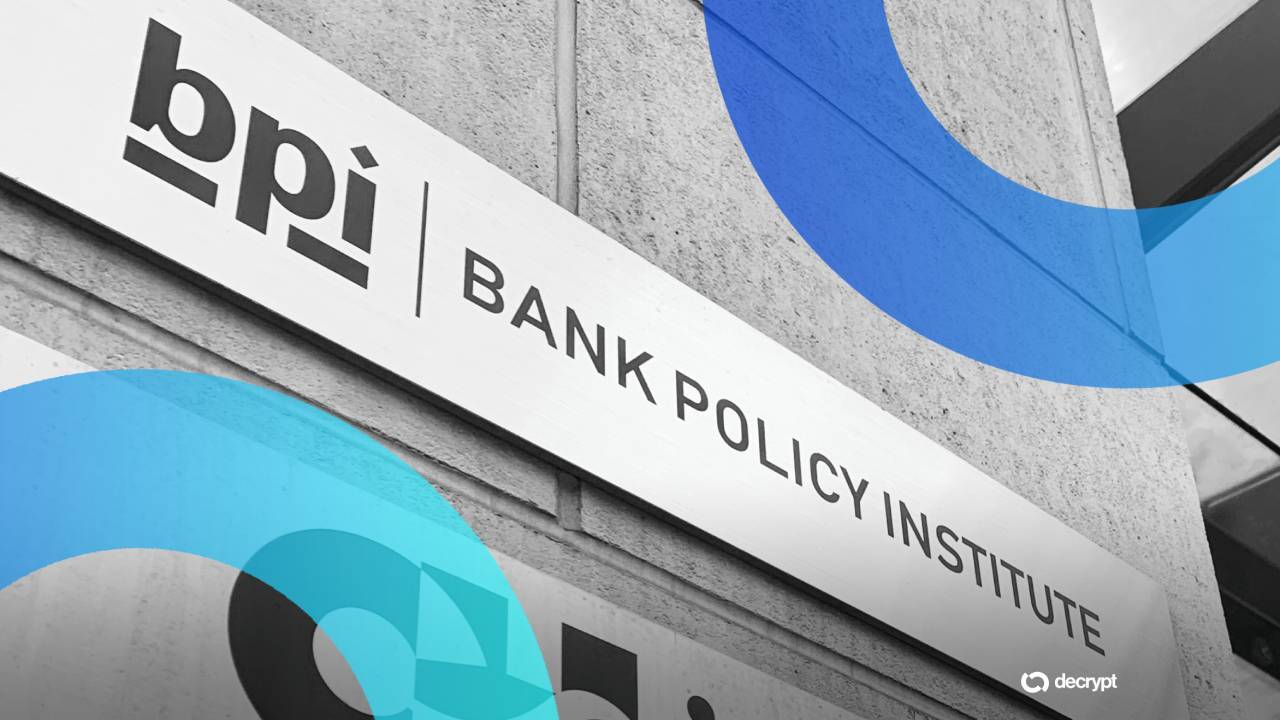
The banking industry's current campaign against yield-bearing stablecoins is that theater. On 5 May 2026, three major trade groups—the Bank Policy Institute, the American Bankers Association, and the Financial Services Roundtable—declared that the stablecoin yield language in the CLARITY Act "falls short" of a full prohibition and promised to deliver suggested edits to lawmakers within days. The same day, Senators Thom Tillis and Angela Alsobrooks issued a joint statement calling their compromise "final" and pushing back firmly.
The Senate duo has the better argument. Not because yield is inherently good—though for stablecoin holders earning nothing in a high-rate environment, it demonstrably is—but because the banking lobby's position is structurally incoherent, and Washington is running out of patience for incoherent positions when the underlying technology is already deployed at scale.
The Incumbency Playbook, Updated
The standard move for a financial incumbent facing disruption is regulatory capture by proxy. You push for rules that your competitor cannot easily comply with—capital requirements, licensing hurdles, consumer disclosure mandates—while grandfathering in your own existing structures. In the 2010s, this worked tolerably well against fintech startups that lacked the balance sheet to play the compliance game.
Stablecoins broke that playbook. Because the issuers—Tether, Circle, emerging bank-adjacent entrants—already have the infrastructure to operate at scale, and because the stablecoin market now exceeds several hundred billion dollars in circulation, they can absorb compliance costs in ways that startups couldn't a decade ago. You cannot regulatory-capture your way out of a product that your potential competitors already sell globally.
The banking groups' specific complaint—that yield-bearing stablecoins amount to an unfair competitive advantage—is not without merit in narrow technical terms. A regulated depository institution must hold reserves against deposits, comply with FDIC insurance frameworks, and manage interest-rate risk. A stablecoin issuer, under current law, faces a lighter touch. The concern is legitimate.
But the solution the banks are proposing—effectively prohibit stablecoin yield or cap it severely—is not a consumer protection measure. It is a competitive restriction masquerading as one.
The Yield Question Is a Distribution Question
Here is what the banking lobby does not want to discuss in public: the reason stablecoin yield matters is that it redistributes the interest income that central banks have generated through rate hikes over the past several years. In a world where the Federal Reserve holds rates elevated to fight inflation, money market funds, Treasury bills, and short-term instruments generate meaningful yield. Stablecoins—backed by Treasuries and similar short-duration assets—can pass that yield through to holders.
That pass-through is, for hundreds of millions of users globally, the entire point. A gig worker in Southeast Asia holding USDT earns a return on savings that their domestic banking system cannot provide. A cross-border remittance sender using a yield-bearing stablecoin recovers part of the transfer cost through interest accrual. These are not edge cases; they represent the mainstream use case for stablecoins in much of the world.
The banking industry's preferred outcome—restricting or eliminating stablecoin yield—would not eliminate yield from the financial system. It would redirect it toward institutions that already capture most of it: money market funds, large depository banks, and Treasury holders who operate through traditional brokerage accounts. The policy would be regressive in distributional terms even as it is framed as protective.
This is not an accident. Regulatory frameworks built around incumbent interests tend to have regressive distributional effects. That is the structural logic of incumbency: protect the existing distribution of intermediation rents.
The Senate's Finality Claim Is Mostly Correct
Tillis and Alsobrooks' statement, released at 01:48 UTC on 5 May 2026, is notable for what it does not say. It does not claim the CLARITY Act is perfect. It does not dismiss banking concerns as invalid. It simply says the yield compromise is settled, and the banking lobby should stop expecting further concessions.
That positioning has strategic logic beyond its immediate policy content. Legislative deals survive in Washington when both sides believe further revision costs more than acceptance. By declaring finality, Tillis and Alsobrooks are raising the revision cost: any senator who reopens the yield question must explain to colleagues why the bipartisan deal is being renegotiated on behalf of banking-industry clients who did not vote for them.
The Anthropic-FIS partnership announced on 4 May, in which the AI developer and the financial services firm are building autonomous agents to help banks conduct financial crime investigations, is a useful structural reminder that the financial industry's own technology transformation is already underway. Banks that spend political capital defending their stablecoin yield position are simultaneously investing in AI systems that may, within years, reduce their need for the kind of human compliance staffing that the banking lobby currently frames as the public interest.
What This Means and Who It Affects
If the CLARITY Act's yield compromise holds—and the weight of bipartisan Senate support suggests it will—the stablecoin market will continue to evolve toward yield-bearing products as the default, not the exception. This creates three identifiable consequences.
First, stablecoin issuers outside the United States—particularly those based in jurisdictions with lighter regulatory regimes—will face less pressure to harmonize with US rules, because the US itself will have adopted a competitive framework. Second, traditional banks will face sustained pressure to offer comparable products or accept continued deposit outflows into tokenized alternatives. Third, the Federal Reserve and Treasury will inherit a larger share of dollar-denominated activity that operates outside the traditional banking system, with implications for monetary policy transmission that neither agency has fully mapped.
The banking lobby's next move is predictable: a sustained public communications campaign, congressional testimony emphasizing systemic risk language, and quiet lobbying to attach amendments to must-pass spending bills. This is the correct playbook for an industry that has survived multiple waves of financial innovation by outlasting them.
But the stablecoin market is not a wave. It is a permanent feature of the financial infrastructure. The yield fight is the last significant battle over whether incumbents get to write the terms of that infrastructure's expansion. Based on the current legislative trajectory, they will not.
The CLARITY Act's stablecoin provisions remain the best-monitored legislative text in the current crypto regulatory landscape. Monexus will track must-pass bill amendments as they surface.
Wire provenance
This editorial synthesis draws on the following public wire/social posts:
- https://t.me/Cointelegraph/284876
- https://t.me/Cointelegraph/284874
- https://t.me/Cointelegraph/284861