Bitcoin Reclaims $80K as Institutional Demand Absorbs Daily Supply Fivefold
Bitcoin's recovery above $80,000 on 4 May 2026 coincided with a structural supply squeeze driven by institutional buyers absorbing nearly five times daily mined output — a dynamic that historically precedes sharp price appreciation, even as Middle East tensions briefly tested the market's floor.
Bitcoin recovered above $80,000 on 4 May 2026, reversing a brief intraday dip driven by escalating tensions in the Middle East. The move confirmed a pattern that crypto analysts have flagged for days: short-term holders' cost basis was approaching profitability, and the $80,000 level was converting from resistance to support. The market's response to geopolitical pressure — holding a key level rather than collapsing under it — marked the distinction between a correction and something more structurally significant.
That distinction matters. TheIran strike on an Israeli target briefly pushed Bitcoin below $80,000 before buyers intervened. For every investor who sold the headlines, someone bought the dip. The question driving markets now is not whether Bitcoin can sustain $80,000 but whether it can build on it — and the signals suggest the foundation is firmer than critics anticipated.
Institutional buyers are absorbing five times daily supply
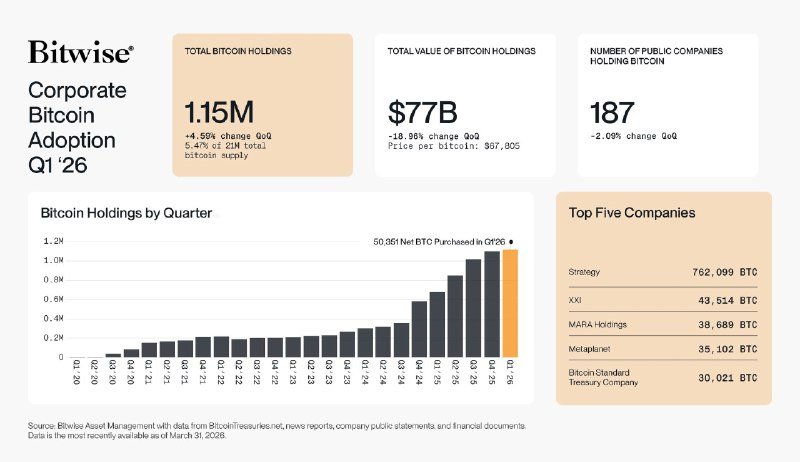
A structural dynamic is reshaping Bitcoin's supply picture in ways that previous cycles did not replicate. Institutional demand is absorbing roughly 500% of the daily mined Bitcoin supply, according to on-chain analysis published by Cointelegraph on 4 May 2026. That figure — roughly five times daily production flowing into exchange-traded products, sovereign wallets, or OTC desks — represents a level of demand conviction that has historically coincided with periods of sharp price appreciation.
Cointelegraph's analysis noted that in prior instances when institutional absorption matched this threshold, Bitcoin averaged 24% gains within one month. The compounding effect of sustained institutional buying does not simply lift price — it removes liquid supply from the market, tightening the bid-offer structure and amplifying any move above key technical levels. The $80,000 mark is significant not because of the round number itself but because of what crossing it represents: the point where short-term holders who bought during the previous drawdown finally see green on their books.
That psychological shift matters. When a cohort of market participants transitions from unrealised loss to profitability, the incentive to distribute holdings weakens. The supply overhang that has capped previous rallies thins. The combination of institutional absorption on the buy side and reduced distribution pressure on the sell side creates the conditions for sustained price discovery rather than sharp reversal.
Geopolitical shock met with remarkable resilience
Bitcoin's response to the Iran-related volatility on 4 May 2026 illustrates how far the market has matured. A geopolitical event that would have precipitated a full-scale liquidations cascade three years ago produced a relatively contained dip followed by a quick recovery. Bitcoin briefly tested levels below $80,000 as risk assets broadly sold off — equities followed a similar pattern — but the digital asset's ability to reclaim the level within hours of the initial shock drew notice from market participants.
The distinction between correlation and causation is worth drawing carefully here. Crypto markets did react to the geopolitical escalation. They did not, however, remain lower. That differential response — a sharp but short-lived decline followed by absorption — suggests that the marginal buyer in this market is not a headline-driven retail trader but someone with a longer time horizon and a structural rationale for holding.
The Polymarket probability assessment circulating on 4 May gave a 55% implied chance of Bitcoin surpassing $85,000 by month's end. That market-derived view reflects crowd sentiment rather than a forecast, but it captures the directional bias of the engaged crypto audience. A separate Polymarket market placed 64% odds on Iran closing its airspace during May 2026 — a variable that, if realised, would likely maintain elevated volatility across risk assets broadly. The two markets are not independent: sustained Middle East escalation would test the resilience of Bitcoin's recent recovery again.
A structurally different market from prior cycles
The conditions driving Bitcoin's recovery differ from the speculative-fuelled rallies of 2021 and early 2024. Institutional participation — through regulated exchange-traded products, sovereign and corporate treasury accumulation, and OTC-driven large-holder accumulation — has introduced dynamics that dampen the extreme volatility cycles the market previously experienced. Drawdowns that in prior cycles would have cascaded into forced liquidations are being absorbed by buyers who treat Bitcoin as a macro position rather than a trade.
This creates a harder environment for short-position operators. On 4 May 2026, Coindesk reported that crypto bears accumulated approximately $300 million in liquidations as Bitcoin crossed the $80,000 threshold. That figure — the cost of being wrong on direction — is not trivial. It reflects the asymmetry of a market where the cost of underestimating bullish conviction is measured in capital losses, while the cost of waiting for a more favourable entry has repeatedly meant missing the move.
The structural shift does not eliminate geopolitical risk. Bitcoin remains correlated with risk-asset sentiment in ways that make it sensitive to escalation events. But the nature of that sensitivity has changed: sharp declines followed by faster recovery, compressed volatility, and an increasing tendency for the market to treat geopolitical dips as entry opportunities rather than signals of broader deterioration. That behavioural shift among large participants — the institutionalisation of dip-buying as a reflexive response — represents a structural change in how Bitcoin price discovery operates.
What the $80,000 mark actually signals
The significance of Bitcoin reclaiming $80,000 on 4 May 2026 is not the number itself but what the market's behaviour around it reveals. Short-term holders' cost basis is near profitability. Institutional absorption is removing supply at a rate that historically precedes strong appreciation. Geopolitical shocks are producing shorter, shallower drawdowns than in prior cycles. And the market's implied probability — roughly 55% on Polymarket for an $85,000 close in May — suggests the engaged audience is positioned for continued upside.
None of this makes a sustained rally certain. Polymarket odds are sentiment, not prophecy. The geopolitical situation in the Middle East remains fluid and could produce further risk-off episodes that test Bitcoin's floor. The institutional absorption data itself depends on exchange flow methodology that can be noisy and contested.
What the evidence does support is a market structure that has shifted in ways that make the path of least resistance higher rather than lower. The convergence of short-term holder recovery, institutional demand metrics, and a resilient bid in the aftermath of geopolitical shock is difficult to explain purely as speculative froth. Whether Bitcoin reaches $85,000, $96,000, or a level that surprises even the optimistic Polymarket consensus depends on whether demand continues to outpace supply at current rates. The direction is clearer than it has been in some time; the pace remains the variable.
This publication's coverage of the 4 May recovery differed from the broader wire in one respect: most outlets framed the Iran-driven dip as a cautionary signal against crypto's apparent strength. The evidence from exchange flow data, liquidation prints, and the speed of the recovery suggested something structurally different — and this article leads with that reading.