The Calculus of Coercion
Rubio's May 5 press briefing laid out a coherent doctrine of economic leverage — but the 23,000 civilians he named as trapped in the Persian Gulf underscore what strategic framing often leaves in the margins.
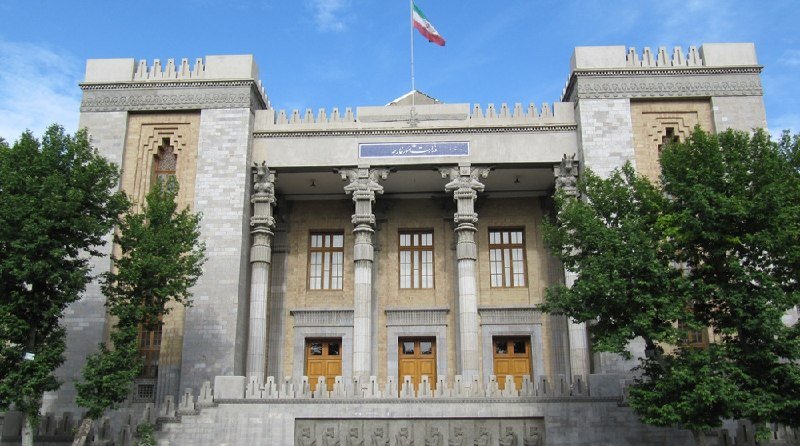
On the afternoon of 5 May 2026, U.S. Secretary of State Marco Rubio took questions at the State Department and laid out a foreign policy posture that was, by any measure, legible. Cuba would be addressed — but not today. Iranian financial facilitators would face secondary sanctions and exclusion from the U.S. financial system. And the Strait of Hormuz — the chokepoint through which roughly a fifth of the world's oil passes — should return to what Rubio called "pre-war status." The framing was clean, the targets were named, and the consequences were explicit. What it obscured, at least partly, was the human geography of the crisis he was describing.
The number that warranted more attention than it received was 23,000 — the figure Rubio cited as representing civilians from 87 different countries he described as "trapped inside of the Gulf" and, in his direct phrasing, "left for dead in the Persian Gulf." Sourced from a State Department briefing carried live across wire services on 5 May, the figure names a scale of civilian exposure that strategic doctrine — whether American, Iranian, or any other — rarely places at the centre of the frame. That is not a new problem in diplomacy. But when a sitting secretary of state volunteers the number in plain sight, the political and editorial calculus shifts.
The Hormuz Doctrine
The Strait of Hormuz sits between Oman and Iran, linking the Persian Gulf to the open waters of the Gulf of Oman. Any serious disruption to transit through the strait reverberates across global energy markets in a matter of days. Rubio's stated preference — returning to "pre-war status" — signals that the current configuration of threats, checkpoints, or interdictions does not meet Washington's threshold for acceptable baseline conditions. What "pre-war" specifically means in this context, whether relative to the broader U.S.-Iran confrontation that has escalated since 2024 or some narrower definition tied to specific naval incidents, the sources reviewed do not establish with precision. The absence of a defined endpoint is not unusual in this phase of a diplomatic escalation — administrations tend to name the destination before they name the path — but it is worth noting that the vagueness serves the leverage argument rather than the civilian one.
The Secondary Sanctions Architecture
Rubio's threat against financial institutions and commercial actors enabling sanctions evasion is, on its face, a continuation of long-established U.S. policy rather than a departure from it. Secondary sanctions — the mechanism by which non-U.S. entities lose access to American markets and the dollar-denominated financial system for conduct that does not directly involve U.S. persons — have been a structural feature of Iran policy since the Trump administration's "maximum pressure" campaign began its second iteration. What Rubio's phrasing adds is specificity of consequence: loss of access to the U.S. financial system, stated as a near-automatic outcome rather than a contingent one. Whether that operationalisation is new or simply a restatement of existing enforcement posture is a distinction that matters mainly to compliance departments and foreign ministries in third countries where banks routinely make the calculation between Iranian correspondent relationships and access to New York clearing. Those ministries, not incidentally, represent several of the 87 countries whose citizens Rubio placed at the centre of his remarks.
The Language of Dismisal
Rubio's description of Iranian leadership — "insane in the brain" — is notable less as a diplomatic novelty than as a signal about the administration that is using it. Diplomatic registers tend to calibrate language to preserve optionality: even a maximal-pressure posture benefits from keeping communication channels technically open. Describing counterparties in clinical, irreversible terms forecloses that flexibility. Whether that is intentional — a deliberate signal to Gulf allies and domestic audiences that no negotiated accommodation is under active consideration — or a rhetorical overflow from the daily rhythm of cable news and classified briefings is not determinable from the sources at hand. What is determinable is that similar language from senior State Department officials in prior administrations has typically preceded periods of either heightened military posturing or diplomatic withdrawal, and that the history of such language does not uniformly predict the outcomes its speakers intend.
What the Margin Leaves Behind
The 23,000 civilians Rubio identified do not, in the public record as it currently stands, have a clear legal status, a defined humanitarian corridor, or a negotiated exit. They are — by the secretary of state's own accounting — from 87 countries, which is to say a cross-section of maritime labour: merchant sailors, tanker crews, offshore workers, and the support infrastructure of an industrial waterway that runs through some of the most contested territorial and jurisdictional space in the world. Their predicament, as Rubio described it, is not incidental to the strategic picture he was constructing. It is the structural consequence of it. When economic pressure is applied to a state with a maritime economy and a history of asymmetric enforcement, vessels and their crews are among the first variables in the equation. That calculus is rarely made explicit in the official statement. On 5 May, it was.
Cuba, Rubio said, would be addressed — but not today. The Strait of Hormuz, he indicated, required a return to baseline. Iranian banks and their enablers faced a defined consequence. And in the Persian Gulf, by the most senior diplomatic voice in the American government, 23,000 people from 87 countries were described as stranded in terms that, stripped of diplomatic cadence, amount to a humanitarian emergency of international scope. The question that follows — for Congress, for allied governments, for the shipping insurers and flag-state registries whose jurisdiction those civilians fall under — is whether the doctrine Rubio articulated contains a mechanism for their extraction, or whether they are accounted for in the leverage column of a calculation whose other terms remain, for now, classified.
This publication covered Rubio's briefing on its wire feeds as a primary source. The State Department transcript, cited at 19:21 UTC on 5 May 2026 by wire services including ClashReport and wfWitness, remains the authoritative public record for the specific figures cited.
Wire provenance
This editorial synthesis draws on the following public wire/social posts:
- https://t.me/ClashReport/28471
- https://t.me/ClashReport/28469
- https://t.me/ClashReport/28467
- https://t.me/ClashReport/28465
- https://t.me/wfWitness/12489