The Eight-Year Problem: Trump, Term Limits, and the Market's Quiet Verdict
Prediction markets give just 6% odds on term-limits repeal this year. That number is more alarming than it sounds.
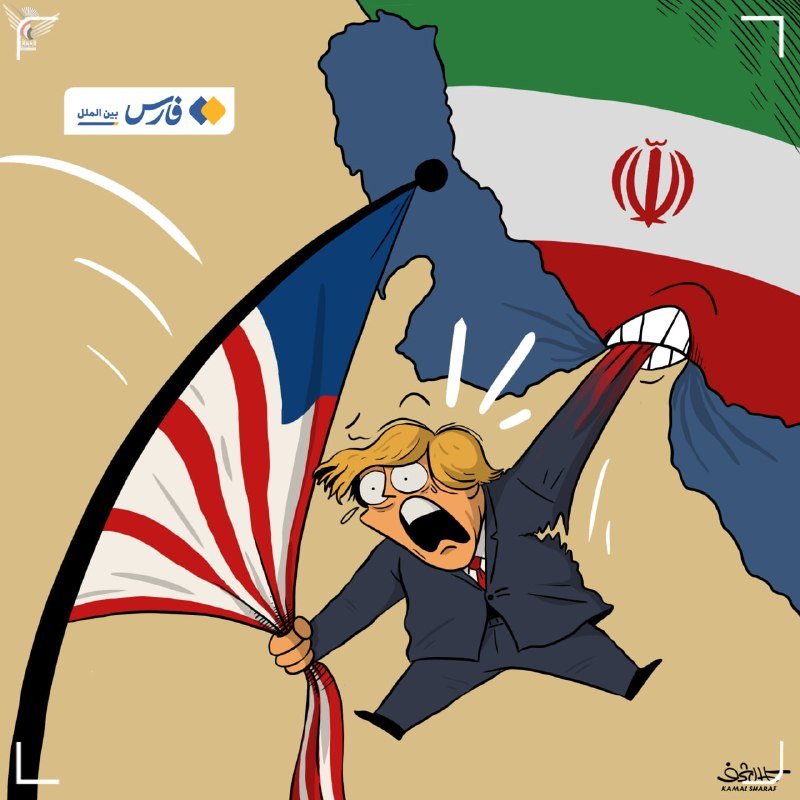
Donald Trump on 4 May 2026 told a gathering that he expected to remain in office for "eight or nine years." The comment, posted by the trading-signal outlet Unusual Whales, prompted immediate constitutional commentary. The US presidency is a four-year term with a hard two-term ceiling written into the 22nd Amendment. Eight years from now is January 2034 — well past the end of a second term, and well into territory that requires either constitutional amendment or something the framers did not anticipate. Trump has form for this kind of language. He is not the first American politician to flirt with norm-breaking rhetoric. He is, however, the first in the modern era to do so from inside the office itself.
Prediction markets moved accordingly. Polymarket data circulating on 4–5 May 2026 assigns a 6% probability to Trump repealing presidential term limits in 2026, and a 28% probability to the US lifting its Hormuz blockade within the month. The 6% figure is small. It is not zero, and the distance between those two numbers is where this editorial lives.
The thesis is straightforward: markets are poor vessels for moral judgment, but they are efficient aggregators of institutional confidence. When the market assigns meaningful probability to constitutional circumvention, it is not predicting that outcome — it is registering that the question is now being asked seriously, and that no institutional firewall has yet made the asking unthinkable.
The arithmetic of authoritarian ambition
The 22nd Amendment was ratified in 1951, partly in response to Franklin Roosevelt's four-term presidency. It states that "no person shall be elected to the office of the President more than twice." That language is unambiguous. What it cannot prevent is the creative reinterpretation of what "elected to the office" means — or, more practically, the erosion of the social and political conditions that make the amendment operative.
Constitutional scholars differ on whether a third term is legally possible without amendment. Most conclude it is not. What the market is pricing in is not a legal loophole but a political scenario in which the question becomes live — where allies in Congress decline to enforce the limit, where courts are packed before a test case arrives, where the norm simply ceases to function because no one with power chose to defend it.
The 6% Polymarket figure is the market's estimate of all of that coming together in 2026. It is a low number. It is not a reassuring number.
When the blockade becomes a bargaining chip
The same Polymarket data gives 28% odds on the Hormuz blockade being lifted by month's end. The Strait of Hormuz carries approximately 20% of the world's oil shipments. A blockade — or the credible threat of one — is not a tactical maneuver. It is an economic weapon with global reach, and its persistence suggests a geopolitical logic that runs parallel to, and potentially in support of, the domestic political framing.
International pressure and domestic power consolidation are not separate tracks. History offers multiple cases where external confrontation was leveraged to shift domestic political calculations — to focus attention, test loyalty, or manufacture the kind of crisis that enables extraordinary measures. The Hormuz situation, if it continues, becomes background to any constitutional conversation happening in Washington. Markets that assign 28% odds to a lift this month are acknowledging that the blockade itself is a negotiating position, not a fixed policy.
The market as institutional seismograph
Prediction markets are not polls. They reflect where capital is moving, which means they capture the judgments of people with real skin in the game. When money flows toward a 6% probability of term-limits repeal, it is not betting that the outcome is likely. It is betting that the probability is non-trivial, and that the downside of being wrong is asymmetric enough to make buying that protection worthwhile.
That is a different signal than a poll showing 6% public support for constitutional amendment. It is a signal that something has changed in the way the political class and its financial witnesses are calculating risk.
The structural observation here is not about Trump specifically. It is about what happens when the question of whether a leader can extend their time in office is no longer politically verboten. The moment that question enters mainstream discourse, it has already done damage. It shifts the reference point. What was beyond the pale becomes a negotiating position. What was a negotiating position becomes a policy option.
What institutional resilience looks like
The guardrails that exist — the 22nd Amendment, an independent judiciary, the Electoral Count Act reforms of 2022 — are real. They matter. The fact that Polymarket assigns 94% odds against term-limits repeal this year is, in part, a reflection of those structures holding.
But guardrails only function if those inside the system choose to respect them. The constitutional text is not self-enforcing. It requires officials who will refuse illegal orders, courts willing to rule against the executive, legislators who treat the oath to support the Constitution as a binding constraint rather than a rhetorical gesture.
The market's 6% is the premium on the uncertainty that those choices will all be made correctly. It is an index of institutional anxiety, not just political risk.
The permanent campaign and its costs
This publication has noted before that the most consequential erosion of democratic norms does not arrive as a coup. It arrives as incremental normalization — a comment here, a trial balloon there, a market that starts pricing in scenarios that would have been inconceivable five years earlier. By the time the full picture is visible, the work of normalization is substantially complete.
The Trump quote from 4 May is not, on its own, a constitutional crisis. The 6% Polymarket figure is not, on its own, evidence of imminent authoritarianism. What they are, together, is a signal that the distance between rhetoric and action has shortened, and that the institutions charged with holding that line are being asked to do so under conditions of unprecedented political pressure.
Markets give 94% odds that term limits survive 2026. Those are reasonable odds. The question worth asking is whether the 6% represents a margin of error, or a margin of warning.
Wire provenance
This editorial synthesis draws on the following public wire/social posts:
- https://x.com/unusual_whales/status/2051405325291708416