Escalation Without an Off-Ramp: The Persian Gulf Just Got Dangerously Volatile
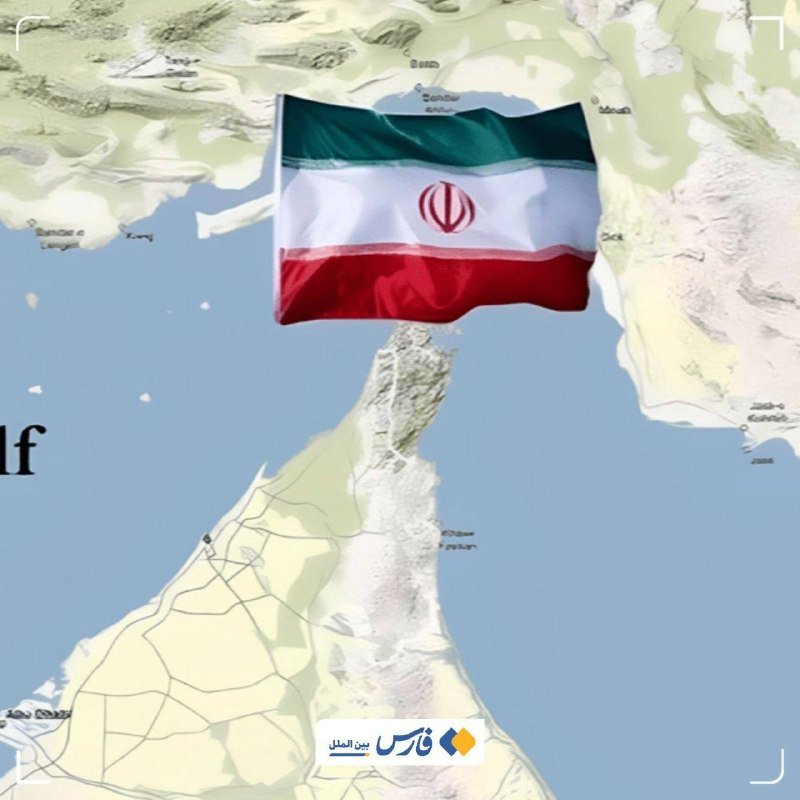
On 4 May 2026, the United States authorized its military commanders in the Gulf to strike Iranian forces posing an immediate threat, without awaiting clearance from Washington. That same day, Iranian drones struck a petroleum complex at Fujairah on the United Arab Emirates coast, causing a fire. Iranian missiles were also intercepted over UAE territory, according to reports cited by Axios. The sequence is not incidental. A regional actor struck a civilian energy facility on allied territory. The US responded not with rhetoric but with a material expansion of its rules of engagement. We are in a different situation than we were forty-eight hours ago.
Immediate context: what actually happened and why it matters
The strike on the Fujairah complex is a significant escalation from the pattern of recent years. Iranian drones and missiles have been used in targeted attacks on regional adversaries, and US forces have faced periodic harassment in the Gulf — fast boats operating aggressively near American warships, laser illumination of pilots, UAV encounters near carrier strike groups. Those incidents were provocative but contained. They were managed through naval communication protocols and, when necessary, through proportional responses that both sides understood as calibrated. The Fujairah attack crosses a different threshold. A petroleum export facility on the territory of a US-aligned Gulf state was hit with weapons that caused a fire. The target was not a warship or a military installation. It was civilian energy infrastructure. That distinction matters, and Washington has treated it accordingly.
The counter-narrative and what Iran might argue
Tehran's framing, when it emerges, will likely echo the logic that has defined Iranian strategic communication for years: that American military infrastructure in the Gulf constitutes a hostile presence in Iran's near abroad, that US regional allies are complicit in an economic and political architecture that serves Western interests at Iranian expense, and that the Strait of Hormuz — through which roughly a fifth of global oil trade passes — is legitimately subject to Iranian military attention as a corridor within its sphere of influence. That argument has been made before. It has not previously included strikes on civilian energy facilities in a US-aligned Gulf state. The counter-narrative does not neutralise the provocation, but it explains the logic: in Tehran's reading, the US presence is not a neutral security arrangement. It is an embedded hostile asset, and Iranian military doctrine has never accepted that arrangement as fait accompli. The rule-of-engagement update from the US side — authorizing strikes on Iranian missile positions and fast boats in the Strait — will be read in Tehran as confirmation that the US posture is aggressive and forward-deployed. Both sides are now operating with updated authorisation to use force against the other. That is the condition that existed before several of the most dangerous moments in US-Iran relations over the past decade, and it is a condition that carries genuine risk of inadvertent escalation.
The structural frame: what this escalation sits inside
The US has maintained a robust military presence in the Persian Gulf since the 1970s, with the Fifth Fleet headquartered in Bahrain and carrier strike groups rotating through the Strait of Hormuz. That presence has always produced friction with Iranian interests. It has also always produced a specific set of arguments about sovereignty, jurisdiction, and the right to use force in contested waters. What changed with the 4 May rule-of-engagement update is the decision tree that military commanders on scene must navigate. Previously, a response to an Iranian fast-boat threat or a missile position required authorisation from higher in the chain of command. Now the authority to strike appears to rest with commanders on scene. That is a structural change in the way the US military manages escalation — and it is a response to a structural change in Iranian behaviour. The question of whether the US has the legal authority to strike Iranian military positions in waters that Iran considers its own is not a question that has a clear answer under international law. It is a question that has been managed through silence and operational caution for decades. The rule-of-engagement update does not resolve that ambiguity. It ignores it, on the assumption that the threat is real and the response must be immediate. That assumption may be correct. It is also the assumption that, if it leads to a strike, creates the next crisis.
Stakes: who is exposed and what the trajectory looks like
The immediate risk is a cycle of retaliation. The US strikes Iranian missile positions in response to a threat in the Strait. Iran responds to the strike. The response triggers a further US action. Neither capital appears to have an obvious off-ramp, and neither side's domestic political calculus currently rewards de-escalation. The US administration has maintained a posture of maximum pressure on Iran since taking office. Tehran's leadership faces a domestic environment shaped by sanctions, internal dissent, and a regional posture that has grown more assertive as the nuclear constraints of the JCPOA era have dissolved. A managed crisis — in which both sides absorb a provocation, issue statements, and step back — is possible. It is also what both sides managed in 2019, when Iranian forces shot down a US surveillance drone and the US prepared but did not execute a retaliatory strike. It is what both sides managed in 2020, when a US drone strike killed Qasem Soleimani and Iran responded with a ballistic missile attack on Al-Asad airbase that was designed to inflict casualties without triggering a full-scale conflict. Those incidents are instructive. They show that the US-Iran relationship has, so far, contained within it a mechanism for pulling back from the edge — not through diplomatic channel but through calibrated military response that signals intent without crossing the threshold into a war neither side wants. The question is whether that mechanism is still functional, and whether it will survive an incident of sufficient scale to make restraint politically difficult for both sides.
The Fujairah attack was close to that threshold. A strike on a crude storage facility could have produced mass casualties and an environmental disaster alongside the fire. It did not. That narrow escape should not be mistaken for stability. What we are watching is an escalation dynamic that has moved faster than the diplomatic infrastructure designed to manage it. The US and Iran have both updated their authorisations for force. The next incident will test whether those authorisations remain tools of deterrence or become instruments of a conflict neither side planned.
Wire provenance
This editorial synthesis draws on the following public wire/social posts:
- http://reut.rs/4waaobM