Explosions Near Qeshm Island as Iran Announces New Strait of Hormuz Transit Rules
Iran reports two explosions on Qeshm Island in the Strait of Hormuz hours after announcing a new email-based transit mechanism for vessels — a coincidence that analysts say warrants scrutiny as regional tensions remain elevated.
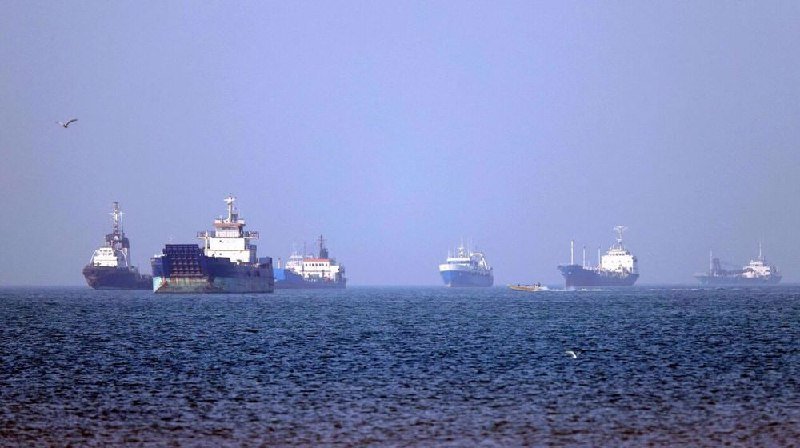
Two explosions were reported near Qeshm Island, in Iran's southern Hormuzgan Province, on the evening of 5 May 2026 — hours after Tehran announced a formalised system for managing vessel traffic through the Strait of Hormuz, the narrow waterway through which roughly a fifth of the world's oil shipments pass.
The timing of the two events, reported within minutes of each other by regional open-source monitoring accounts, has drawn sharp attention. Iran controls the northern half of the strait's shipping corridor and has historically used the waterway as leverage in its geopolitical negotiations with Western governments. Initial accounts from Qeshm described two distinct blasts audible across the island, which sits at the narrowest point of the chokepoint, though neither the Islamic Revolutionary Guard Corps nor the Iranian Oil Ministry had issued a public statement by 22:30 UTC.
What we know — and what we don't
According to reports collected by intelligence-adjacent monitoring channels, two blasts were heard near Qeshm at approximately 21:00 UTC on 5 May. The cause of the explosions remains unconfirmed. No group immediately claimed responsibility; no Western government official had commented publicly as of late evening UTC.
The island sits directly inside the Strait of Hormuz's narrowest transit corridor. It hosts several industrial and Free Trade Zone facilities and, according to regional shipping analysts, is regularly traversed by vessels carrying liquefied natural gas from Qatar's North Dome field — the world's largest LNG export terminal. That context makes any disruption at Qeshm sensitive to energy markets, even before the cause is established.
In a separate but nearly simultaneous development, Reuters reported that Iran had formally announced a new mechanism for Strait transit. Eligible vessels would receive emails containing instructions and would be required to follow them. The announcement, which appeared to formalise what had previously been an informal, ad hoc notification system, was flagged by regional observers as a potential attempt by Tehran to assert tighter administrative control over the chokepoint — a move that could complicate US and European naval operations in the Persian Gulf.
Competing framings — coincidence or signal?
The near-simultaneity of the two events invites competing interpretations. One reading, common among Gulf-state-aligned analysts, is that the explosions — if confirmed as deliberate — may represent a calibrated Iranian signal, demonstrating reach and willingness to escalate without triggering the kind of kinetic confrontation that would draw immediate American or Israeli military response. Under this reading, a transit-mechanism announcement followed by visible tactical activity serves simultaneously as a governance assertion and a deterrent demonstration.
An alternative read holds that the explosions are unrelated: an industrial accident, a detonation from within Iran's own military infrastructure, or an incident staged by a third-party actor seeking to implicate Tehran in an escalation spiral. Both readings acknowledge the same data; they differ on the prior probability assigned to Iranian intent versus Iranian exposure.
A third possibility — one that Western intelligence officials rarely acknowledge publicly — is that the incident may involve internal Iranian power dynamics, where IRGC factions use unilateral action to complicate a diplomatic track the civilian foreign ministry is attempting to open. That reading, while difficult to source directly, is consistent with the documented history of parallel channels within Tehran's security apparatus.
The Hormuz lever — structural context
What makes Qeshm significant beyond the immediate incident is its position inside the strait's transit zone. Approximately 21 percent of global oil output and 20 percent of LNG trade passes through the Hormuz corridor annually, according to US Energy Information Administration data. In periods of heightened tension, even the rumour of disruption moves markets; a confirmed incident at Qeshm, with its proximity to LNG export lanes, would carry disproportionate freight compared to its physical scale.
Iran has used the strait as a negotiating instrument repeatedly over the past decade. Formalising the transit notification process — moving from informal signalling to a codified email-based system — could serve several purposes simultaneously: asserting sovereign administrative authority over a contested zone, creating a bureaucratic paper trail that complicates US sanctions enforcement, and establishing a legal pretext to challenge non-compliant vessels. Whether the new mechanism is a genuine administrative improvement or a political stunt remains to be tested in practice.
For Washington, which maintains a Fifth Fleet presence in the Persian Gulf and has repeatedly asserted the right of free navigation through international waters, a codified Iranian transit system creates a new compliance question: does engaging with the system imply recognising Iran's jurisdictional authority over the strait? US naval doctrine has historically rejected that implication; the new Iranian announcement forces the issue back into public view.
Stakes and what to watch
If the explosions are confirmed as deliberate and attributable to an Iranian state actor, the immediate consequence would be a sharp diplomatic response from Washington and European capitals — at minimum, a UN Security Council consultation and new Treasury designations against Iranian shipping entities. The oil market reaction would likely be swift and outsized relative to the physical disruption, given the strait's symbolic centrality.
If the explosions are proven accidental or unrelated to state policy, the incident recedes — but the transit-mechanism announcement remains live. Tehran has successfully placed a new administrative tool on the table, and the manner in which Western navies respond to the email notification system will define the operating environment in the strait for the coming months.
The uncertainty matters. Open-source analysts monitoring the situation as of 22:30 UTC on 5 May had not received official confirmation of cause, casualty figures, or vessel status. That fog — familiar to anyone who tracks Gulf incidents — is itself meaningful. In a corridor where ambiguity is often deliberate, the speed and transparency of Iran's response in the next 24 to 48 hours will tell observers whether the Islamic Republic is managing a crisis or manufacturing one.
This publication's coverage of the Qeshm incident prioritised regional wire sources and direct monitoring feeds; the dominant Western framing emphasised the transit-mechanism announcement as the primary story, with the explosions treated as a secondary development. Monexus led with the explosions as the immediate event and used the mechanism announcement as structural context — a framing the wire feeds later converged toward.
Wire provenance
This editorial synthesis draws on the following public wire/social posts:
- https://t.me/BellumActaNews
- https://t.me/rnintel
- https://t.me/GeoPWatch
- https://t.me/gazaalanpa