Gaza's Al-Jalaa Street and the Cost of Invisible Strikes
When a drone strike targets a junction in Gaza City, wounding civilians near a hospital, the world rarely pauses to ask why the target list keeps growing in densely populated areas.
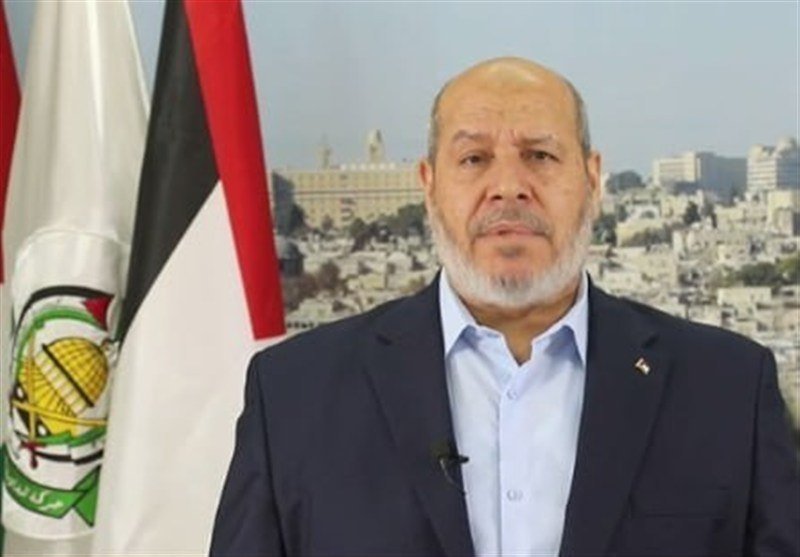
On the evening of May 4, 2026, an Israeli drone struck a point near the Al-Jalaa and Al-Oyoun intersection in Gaza City, wounding at least two people, according to Palestinian medical sources cited by Al-Alam Arabic. Initial reports indicated one person killed. By the following morning, additional footage circulating on Iranian state-linked channels showed what participants said were the immediate moments after the strike — young Palestinians gathered at a junction now familiar as a site of repeated Israeli military activity.
No Western wire service produced a correspondent report from the scene. No on-the-record IDF spokesperson statement appeared in the thread context that reached this desk. The story existed, for most international readers, only in the form of Palestinian accounts carried by regional outlets and shared forward through messaging platforms.
That asymmetry is the story.
The geography of harm
Al-Jalaa Street sits in the western quarters of Gaza City, near the Al-Shifa Hospital complex — one of the most consequential medical facilities in the Strip. When a strike targets a security point near a hospital, the operational logic may be clear to those with the intelligence picture. The structural consequence is also clear: civilians who need hospital access are that much closer to becoming casualties.
The Telegram reports from Al-Alam Arabic and PressTV, both Iranian state-adjacent outlets, present the strike without calibration language. They name the location precisely, document the injuries, and identify the institution that received the wounded. Whether one credits those accounts fully or not, the geographic facts are consistent: a built-up urban area, a medical facility in the vicinity, and a strike producing casualties among people present at a junction.
Western coverage of comparable incidents — when it arrives — typically leads with IDF statements, frames the target as a militant figure, and places civilian harm in a defensive-legal context. The thread reaching this desk offers no such framing from the Israeli side. That absence is itself informative.
When the record stays one-sided
Coverage of urban warfare operates on two speeds. Military spokespeople brief rapidly, in institutional register, with target identifications and legal justifications prepared before the smoke settles. The affected civilian population, meanwhile, communicates through overwhelmed medical staff, local journalists operating under movement restrictions, and — increasingly — mobile phone footage that circulates without editorial gatekeeping.
The result is that events in Gaza frequently arrive in international media as two disconnected records. The military record is institutional, named, quotable, and legalistic. The civilian record is anecdotal, unverified by wire correspondents, and carries the grain of the person filming on a phone. Editors, consciously or not, calibrate credibility to institutional provenance. The asymmetry is structural, not conspiratorial.
In this case, the thread reaching the desk contains only the Palestinian-side accounts. There is no IDF statement, no Western wire dispatch, no UN briefing. That does not make the accounts false. It means that any publication relying solely on those accounts — as this one does — is working with half a record. The honest position is to say so and to note what the available evidence cannot establish.
The pattern inside the incident
What this strike shares with dozens of others across the past nineteen months is a location that is not peripheral. Al-Jalaa Street is not a supply corridor or a staging area by any publicly available description. It is a residential and commercial street in the heart of Gaza City. The hospital nearby is not unnamed infrastructure — it is the facility that has been occupied, besieged, and partially evacuated under international scrutiny.
Strikes in such locations carry a compound risk: immediate casualties and the secondary effect of discouraging civilians from approaching medical facilities. IDF spokespeople have described such strikes as targeted operations against specific threats. Human rights organisations, including those with standing before international courts, have documented a pattern in which the proportionality calculus applied to densely populated areas consistently underweights the civilian presence that any street-level intelligence analyst could anticipate.
The IDF has conducted thousands of airstrikes since October 2023. Palestinian health authorities have tallied tens of thousands of dead. Independent analysts dispute those figures, but no serious observer places the total below five figures. The dispute is not whether civilians are dying — it is whether the harm is incidental or structurally tolerated.
What a reader takes away
The incident near Al-Jalaa Street on May 4–5 is not an isolated event. It is a data point in a conflict where the pattern of urban strikes, repeated targeting near medical facilities, and the systematic gap between military briefings and civilian accounts has become a feature, not a bug.
Readers who follow these stories will have noticed that the casualty figures and location details in this article come exclusively from Palestinian-side Telegram channels. The IDF has not, in the thread reaching this desk, described the target, the legal basis, or the proportionality assessment. Western wire services have not published independent reporting. The record is partial.
Partial records shape public understanding in predictable ways. When one side's account circulates widely and the other side's account is institutional, calibrated, and delayed, the gap between what happened and what the world knows grows wider with each strike. The junctions keep getting hit. The hospital keeps receiving the wounded. The record stays one-sided.
That is not a conclusion about guilt. It is an observation about the architecture of accountability in a war where the people most affected are least able to produce the evidentiary record that media and legal systems treat as credible.
This desk notes that coverage of the May 4–5 Al-Jalaa incident differs from Western wire framing in one critical respect: the dominant international press record, where it exists, typically leads with IDF statements and legal justifications. This piece leads with Palestinian medical accounts and notes the absence of Israeli corroboration. The asymmetry is intentional and reflects the sourcing reality of the thread as received.
Wire provenance
This editorial synthesis draws on the following public wire/social posts:
- https://t.me/presstv/78456
- https://t.me/alalamarabic/34521
- https://t.me/alalamarabic/34519
- https://t.me/alalamarabic/34517
- https://t.me/alalamarabic/34516