Golf world confronts LIV's uncertain future as Saudi investment outlook dims
Australian golf officials are assessing what Cameron Smith's possible U-turn means for a sport navigating the collapse of one of its biggest financial backers.
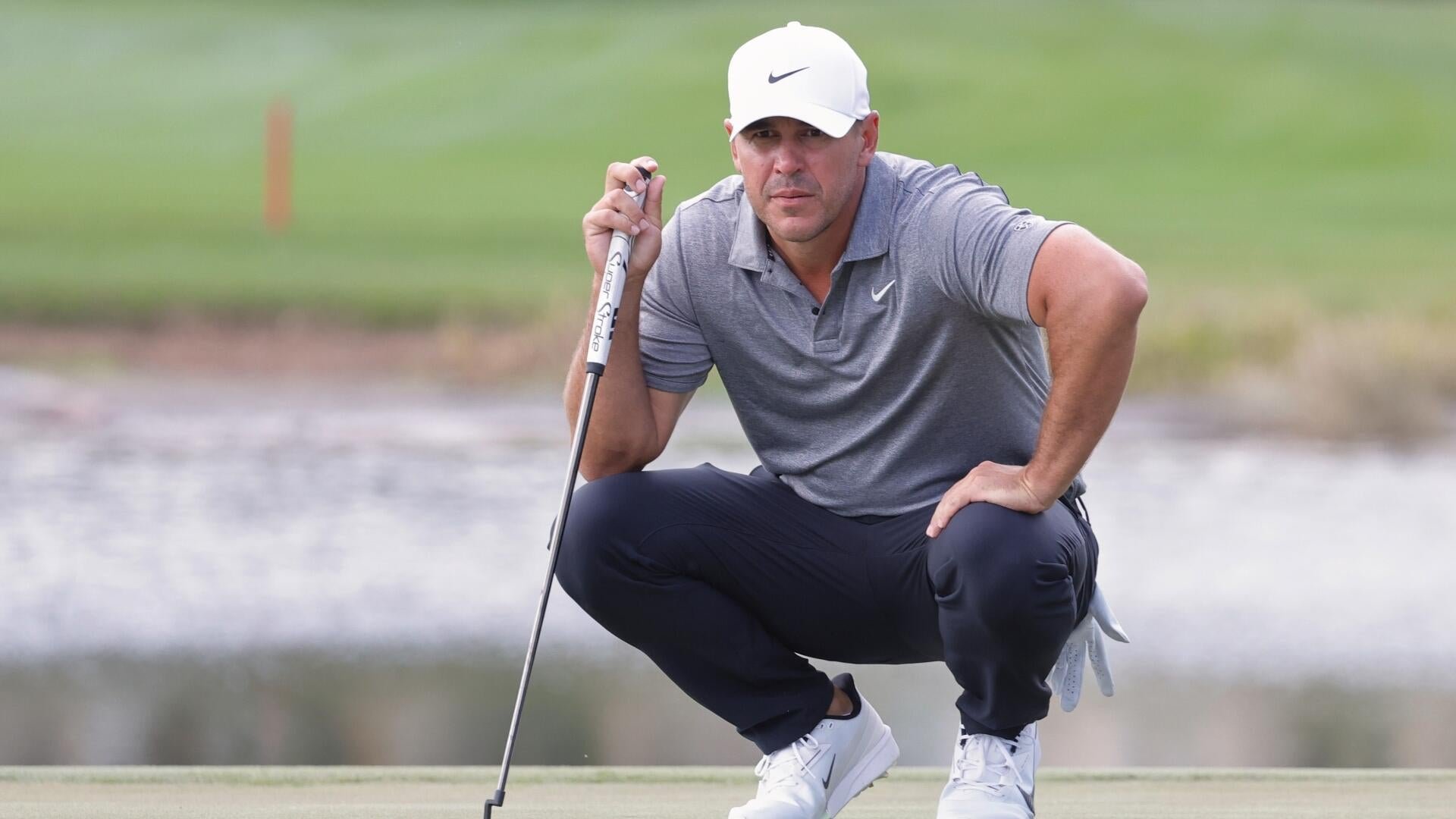
When Cameron Smith signed with LIV Golf in 2022, the deal was framed as a generational opportunity — a chance for one of Australia's most decorated players to secure long-term financial security while reshaping the global golf landscape. Three years later, the calculus has shifted considerably.
Australian golf officials are now quietly reassessing what a potential exit by Smith — reportedly weighing retirement decisions as his post-LIV options narrow — would mean for a sport still struggling to reconcile the fractured ecosystem the Saudi-backed circuit created. The question is no longer whether LIV Golf changed the game, but what happens to the sport's architecture now that the investment thesis underpinning it appears to be contracting.
The pressure on LIV's financial model has been building for months. Initial projections from the league's Saudi backers suggested sustained, long-horizon investment in the circuit, with the Public Investment Fund positioning its involvement as a multi-decade project in sports entertainment and lifestyle branding. That framing has quietly eroded. Several former LIV players who spoke to Australian golf administrators — conversations described by insiders as informal but revealing — have indicated that the guarantees that once made the jump attractive have become significantly less certain.
Smith, who won the 2022 Open Championship and reached world number three before departing for LIV, has publicly maintained that he has no immediate plans to step away. Australian golf sources familiar with his thinking describe a more complicated picture: a player who remains competitive and physically capable, but who is confronting the reality that the circuit offering him the most financial security is itself operating under a cloud of financial uncertainty. "He's too young to retire," one official with knowledge of the discussions told Australian golf media, "but he's also too competitive to pretend everything is fine."
The structural problem beneath the headlines
LIV Golf's model depended on a specific set of assumptions: that Saudi capital would sustain supracompetitive salaries for a generation of players, that the circuit would eventually secure world-ranking points and mainstream broadcast viability, and that the cultural and commercial gap between LIV and the established tours would narrow over time. None of those assumptions have fully materialised.
The world-ranking question remains unresolved — LIV events still carry limited or no OWGR recognition, which means players like Smith are gradually disappearing from the rankings that gate major championship entry. The majors, which once seemed accommodating to LIV's presence, have become more stringent in their qualification criteria. For a player who built his reputation on major performances, the prospect of a circuit that increasingly limits access to those events is not abstract.
Broadcast and commercial viability has also underperformed early projections. LIV's media rights deals have been modest compared to the PGA Tour's established relationships with major networks. The spectacle model — team formats, shorter courses, music-festival adjacent fan experiences — generated initial curiosity but has not translated into the sustained ratings that would make LIV a must-carry property for mainstream sports broadcasters.
What Australian golf officials find most striking is the speed of the reversal. Two years ago, the conversation in Australian golf circles was about which players might follow Smith's lead and what that would mean for the domestic game as a development pathway. Now the conversation is about what the departure of LIV's financial certainty means for players who made career calculations based on a circuit that appears to be entering a more constrained phase.
What the alternatives actually offer
The obvious destination for a LIV player seeking to return to mainstream golf is the PGA Tour, but that pathway has its own complications. The framework agreement between the PGA Tour and LIV's investors — announced with considerable fanfare in 2023 — has repeatedly stalled on implementation. Players who expected a clear route back to PGA Tour competition have found themselves in bureaucratic limbo, with the Tour's leadership changes creating further uncertainty about what any revived agreement would look like.
The DP World Tour offers a secondary route, and several LIV players have used that circuit as a staging ground for partial returns. But the DP World Tour's own relationship with LIV has been contentious, with legal challenges and regulatory disputes adding another layer of complexity to any reintegration strategy.
For Smith specifically, the options appear narrower than for most. At 32, he remains a marketable player with a major championship on his record, but the gap between his last PGA Tour start and now has grown, and the form that once made him a world-top-five talent is less recent. Australian golf sources who track his performances in LIV events describe a player who remains competitive at the circuit level but has not demonstrated the kind of form that would immediately command the sponsor exemptions and qualifying spots that a full return to mainstream golf would require.
The Australian game's reckoning
Golf Australia and its state bodies have watched the LIV experiment with a mixture of concern and strategic calculation. The immediate concern is reputational: a sport that positions itself as a pathway for Australian talent now has to explain to emerging players why a system that seemed secure has become less so. The strategic calculation is about what the global game's infrastructure looks like when the Saudi capital that reshaped it begins to pull back.
Australian officials have publicly called for the sport's governing bodies to find a way to bring the fractured ecosystem together. That call has been consistent since the LIV split began, but it has taken on new urgency as the financial assumptions underlying LIV's model have come under pressure. The sport cannot function effectively, the argument goes, with two mutually incomprehensible circuits competing for the same talent pool and the same commercial interest.
Whether that integration call translates into actual policy movement is unclear. The PGA Tour's recent leadership transition — with the new regime arriving with different priorities and relationships — has added uncertainty to an already complicated negotiation dynamic. The LIV backer's calculus is also opaque: the PIF has invested substantially in the circuit, and walking away entirely would represent a significant strategic reversal, but the willingness to sustain losses at the level required to keep LIV competitive has become genuinely uncertain.
What seems clear is that the period of financial exceptionalism that defined LIV's early years is ending. The sport is being forced back toward questions it had hoped to defer: what the economics of professional golf actually support, what the global market for talent looks like when artificial subsidies disappear, and whether a sport that depends on player stars can sustain itself when those stars face genuine career uncertainty at the moment they were supposed to be most secure.
For Cameron Smith, the immediate question is simpler: whether to continue a career that has been made more complicated by the very move that was supposed to simplify it. Australian golf will be watching closely, and so will the rest of a sport that has never quite recovered from the fracture LIV created.
This article drew on reporting from Australian golf media outlets and international sports wires covering the evolving LIV Golf landscape.