Three Dead, Two Critical as Hantavirus Outbreak Cruise Ship Awaits Canary Islands Arrival
A Dutch-flagged cruise vessel carrying a lethal hantavirus outbreak is three to four days from the nearest adequate medical port, raising questions about emergency coordination protocols when a flag state lacks nearby territorial access.
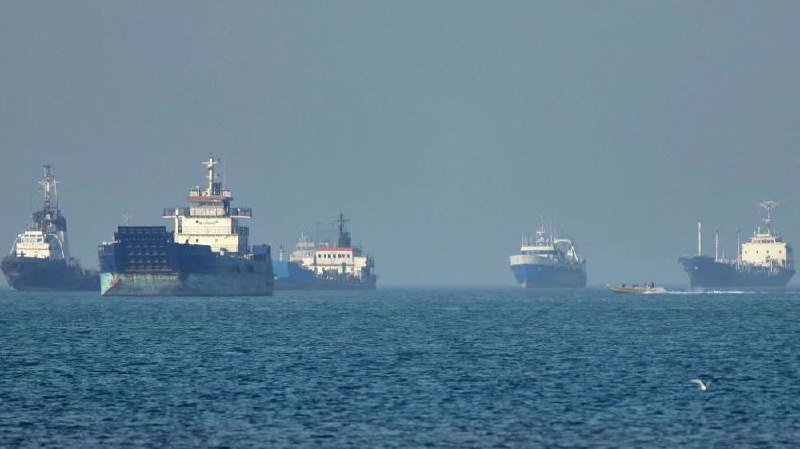
A Dutch-flagged cruise ship carrying a lethal hantavirus outbreak is three to four days from the nearest adequate medical port, according to reports from the Spanish Ministry of Health confirmed by wire services on 5 May 2026. The MV Hondius has been anchored off Praia, capital of Cape Verde, since the virus was detected. Two crew members remain in critical condition and will be evacuated via Cape Verde to the Netherlands once the vessel reaches the Canary Islands.
The MV Hondius incident crystallises a recurring tension between public health imperatives and maritime protocol. When a flag state's own territorial waters cannot provide adequate medical evacuation, a vessel carrying a contagious pathogen must negotiate access to a foreign port — a process that introduces delays when speed may determine who survives.
What happened aboard the MV Hondius
Three passengers aboard the MV Hondius have died following a hantavirus outbreak aboard the vessel, according to Deutsche Welle's reporting on the incident. The cruise ship has been stranded off the coast of Cape Verde since the virus was first detected. Spanish health authorities confirmed on the evening of 5 May 2026 that the quarantined vessel would be permitted to dock at the Canary Islands, with arrival expected within three to four days. Two critically ill crew members are scheduled for medical evacuation — first via Cape Verde and then onward to the Netherlands — once the ship reaches Spanish territorial waters.
Hantavirus spreads through inhalation of aerosolised particles from the urine, droppings, or saliva of infected rodents. Symptoms initially resemble common influenza — fever, muscle aches, fatigue — before, in severe cases, progressing to respiratory distress and kidney failure. The enclosed, mechanically ventilated environment of a cruise ship creates conditions that amplify respiratory pathogen transmission, a dynamic that public health officials have documented across multiple vessel-bound outbreaks over the past two decades.
Maritime jurisdiction and the flag-state gap
The Netherlands holds primary regulatory responsibility for the MV Hondius as its flag state. Dutch maritime health protocols apply to the vessel regardless of its location. But when a medical emergency exceeds the capacity of nearby territorial waters — in this case, Cape Verde's — the flag state must negotiate with a willing port state for emergency disembarkation. That process is governed by a patchwork of bilateral agreements, International Maritime Organization guidelines, and unilateral port-state decisions that can be and occasionally are refused.
Spain's decision to accept the MV Hondius at Las Palmas, capital of Gran Canaria, is not guaranteed by any treaty. Port states retain the right to deny entry during public health emergencies, and several European ports did exactly that during the COVID-19 pandemic when cruise vessels presented suspected infection clusters. The three-to-four-day transit to the Canaries means two critically ill patients remain aboard and unstable for that duration. Whether an earlier medical evacuation — for instance, via Cape Verde's own medical infrastructure — could have been arranged remains unanswered by the available reporting.
The cruise industry and contained-environment risk
For the wider cruise sector, the MV Hondius incident is a reputational and regulatory pressure point. Hantavirus aboard vessels is not hypothetical: the virus takes hold when rodents colonise a ship's infrastructure, typically during port layovers where cargo and provision handling creates access points. Cruise operators have long managed this risk through pest control protocols, but the economics of turnaround times and port efficiency create incentives to compress inspection windows.
The 2024 revision of the International Health Regulations strengthened reporting obligations for ship operators, requiring earlier notification to port authorities when船上疑似病例 appear. Whether that protocol was followed aboard the MV Hondius is not yet established. What is clear from the available reporting is that three deaths occurred before the vessel reached a port capable of full medical evacuation — and that the two crew members still in critical condition face at least three further days aboard before they reach a properly equipped hospital.
What the sources do not yet establish
The wire reporting does not confirm the route the MV Hondius was sailing before the outbreak was detected, the total number of passengers aboard, or the timeline between the first symptoms and the decision to anchor off Praia. The species of rodent carrying the virus strain involved has not been identified in the available sources, nor has the specific medical treatment provided to the two critically ill crew members. Cape Verde's own health ministry has not issued a public statement in the thread context reviewed by this publication.
What the reporting does establish is sufficient to raise a structural question: when a flag state cannot provide territorial access for emergency medical evacuation, and when the nearest willing port is three to four days away, the gap between protocol and outcome is measured in lives.
This publication's wire feed prioritised the public health dimensions of the MV Hondius incident over the geopolitical context of a Dutch-flagged vessel requiring access to Spanish territory during a medical emergency. The structural question — who bears responsibility when a vessel carrying a lethal pathogen needs emergency port access — received less column-inches than the casualty count.
Wire provenance
This editorial synthesis draws on the following public wire/social posts:
- https://t.me/France24fr/10256
- https://t.me/france24_en/10256