The Hegseth Doctrine: Ceasefire in Words, Pressure in Practice
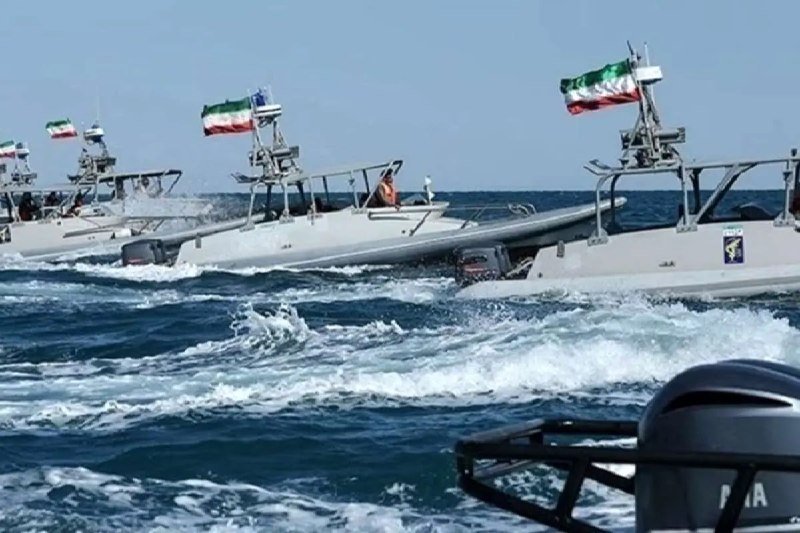
On 5 May 2026, U.S. Secretary of War Pete Hegseth stood at a podium and said two things that should not fit together. The ceasefire with Iran, he declared, remains in place. And Iran—embarrassed, overextended, bluffing—will face devastating American firepower if it so much as looks at a U.S. vessel or commercial shipping in the Strait of Hormuz. Both statements landed in the same briefing. Both were treated as settled fact.
That is not a contradiction the State Department will acknowledge. But it is the contradiction that defines the current posture.
The Ceasefire That Isn't
At the press conference on 5 May 2026, Hegseth confirmed what multiple channels have reported since the weekend: a ceasefire framework with Iran is operative. "The truce with Iran remains in place," he stated, addressing whether the American operation in the Strait of Hormuz had collapsed the arrangement. The answer, officially, is no.
The problem is what "remains in place" actually means on the water. The Strait of Hormuz is the world's most critical chokepoint for oil shipments—roughly 20 percent of global supply transits the 21-mile-wide corridor between Oman and Iran. Any sustained U.S. naval operation in those waters, particularly one aggressive enough to prompt a Secretary of War to publicly mock Tehran's claimed control of the strait, creates a de facto pressure environment that no ceasefire language can fully sanitize.
Iranian state-aligned media covered the briefing with predictable emphasis on the threatening language. The framing in Tehran has been consistent: Washington is the destabilizing actor, and the ceasefire represents Iranian restraint more than American goodwill. That narrative has legs in the region, and the administration has done little to undercut it with actions that speak softly.
What "Overwhelming Firepower" Is Actually Communicating
The more newsworthy element of Hegseth's remarks was not the ceasefire confirmation but the warning attached to it. "To what remains of Iran's forces," he said, "if you attack American forces or innocent commercial vessels—you will encounter overwhelming and devastating American firepower." The phrasing matters. "What remains of" suggests a military degraded by prior operations. "Overwhelming and devastating" is not diplomatic vocabulary.
This is deterrence by declaration—loud, public, and calibrated to be heard not just in Tehran but in the shipping lanes, in allied capitals, and in the markets watching energy futures. The message to commercial vessel operators is: stay clear, or the U.S. Navy will be your shield and your enforcer. The message to Iran is: the rules of engagement have changed, and any miscalculation will be answered at a scale Tehran cannot match.
Whether that posture is strategically sound or recklessly escalatory depends entirely on what the administration believes Iran intends to do—and what evidence, if any, prompted the Hormuz operation in the first place. The sources do not provide that context.
The Kamikaze Dolphins Question
In the same briefing, responding to a reporter's query about whether the Hormuz operation involved unconventional assets, Hegseth offered the non-answer that has since circulated widely: "I can neither confirm nor deny that we have kamikaze dolphins." The line landed as humor. It also functioned as an information-operations tool—signaling that the U.S. retains unconventional capabilities in the strait that Iran cannot fully map or prepare for.
It is tempting to dismiss the remark as Pentagon theater. But ambiguity about capabilities is itself a weapon. The more uncertainty Tehran has about what the U.S. Navy actually has in the water, the more cautious its commanders will be about testing the boundary. Whether that ambiguity serves a stabilizing deterrent function or merely deepens distrust depends on whether there is, behind the theater, a coherent diplomatic off-ramp.
The sources do not indicate that one exists.
Why This Posture Is the Policy, Not a Glitch
Critics of the current approach will note the internal contradiction: you cannot simultaneously reassure Tehran that the ceasefire holds and threaten its forces with devastation. But that critique assumes the goal is reassurance. The evidence suggests something different.
The administration appears to be operating a layered deterrence model: maintain the ceasefire as a legal and political framework that limits the scope of conflict, while conducting a pressure campaign—naval presence, public threats, information operations—that keeps Iran perpetually off-balance and below the threshold that would force a formal rupture. It is ceasefire in form and attrition in substance.
That approach carries risks that the public statements obscure. Every public warning raises the bar for what Iran must respond to. If Iranian forces take no action, the administration can claim deterrence worked. If they act and the U.S. response escalates, the ceasefire becomes a casualty of its own contradiction. There is no third option—no diplomatic path—that the current posture is visibly building toward.
For commercial shipping, the immediate calculus is simpler: Hormuz remains passable, but the political risk premium is now embedded in every transit decision. Insurance costs will reflect the uncertainty. Oil markets, already sensitive to Middle East volatility, will price in a premium that has little to do with actual supply disruption and everything to do with the rhetoric now surrounding the strait.
That premium is the policy's signature. Whether it was worth signing is a question the administration has not yet been forced to answer.
Wire provenance
This editorial synthesis draws on the following public wire/social posts:
- https://t.me/englishabuali/4832
- https://t.me/englishabuali/4831
- https://t.me/tasnimplus/4821
- https://t.me/ruptlyalert/1149
- https://t.me/abualiexpress/2948