Hegseth's Hormuz Gambit: The Anatomy of a Credible Threat
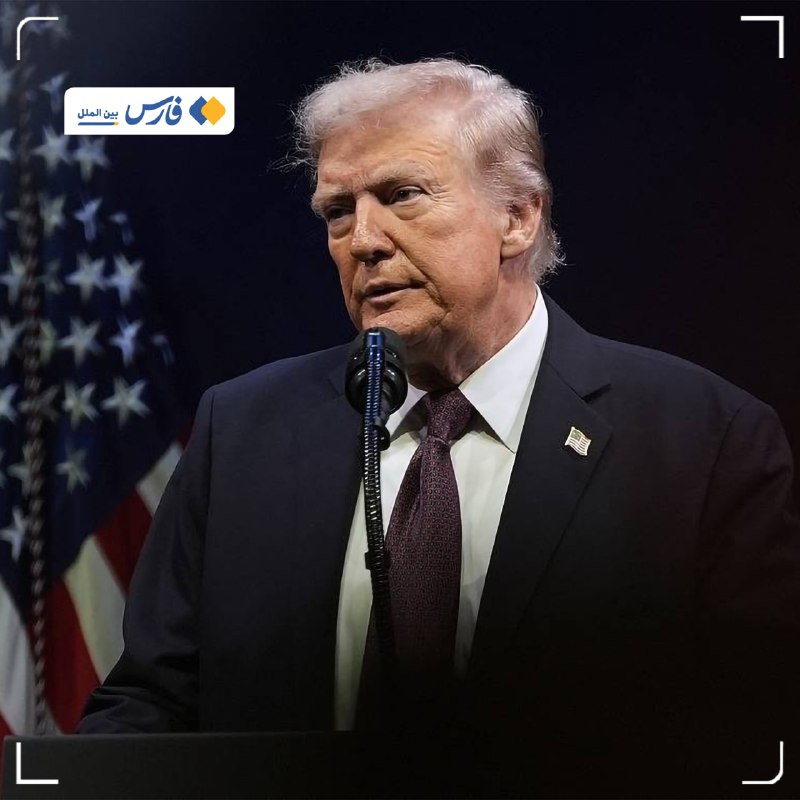
The Pentagon briefing room on Tuesday carried the cadence of a man who had rehearsed his lines and intended to land them squarely. Pete Hegseth, the US Secretary of War, stood before reporters and delivered a verdict on Iran that was blunt, declarative, and calibrated for an audience well beyond the room: Tehran, he said, does not control the Strait of Hormuz. It never did.
The statement, made public via multiple Telegram channels carrying OSINT and defense-sector commentary, came as tensions over the waterway — through which roughly one-fifth of the world's oil passes — remained elevated following a period of open confrontation. Hegseth's remarks were not delivered in isolation. They arrived alongside explicit warnings to whatever remained of Iran's naval and paramilitary forces: any attack on American personnel or commercial vessels would draw what he called "decisive and destructive American firepower." The language was unambiguous. The threat was credible.
What the briefing room performance concealed, however, was a more complicated picture underneath. Project Freedom — the codename for the American military posture in the Gulf — was being sold as temporary, limited, and defensive. Hegseth was simultaneously conceding that negotiations were ongoing "in real time" and insisting the ceasefire was not finished. The United States was talking and brandishing a big stick at the same time. That dissonance is the real story.
The Embarrassment Thesis
Hegseth's central claim — that Iran is "embarrassed" — carries strategic intent beyond mere rhetoric. The framing positions Tehran as a power that overreached, claimed capabilities it does not possess, and now finds itself exposed. According to transcripts circulated by thecradlemedia and osintlive, the Secretary of War told reporters that Iran had publicly asserted control over the Strait of Hormuz and that this assertion was demonstrably false. The humiliation, he suggested, was the point.
"Iran is the clear aggressor," Hegseth stated, per ClashReport's Telegram thread. "Harassing civilian vessels, threatening mariners from every nation indiscriminately and weaponizing a critical choke point for its own purposes." The language drew a direct line between Iran's maritime posture and a threat to international commerce — a framing designed to broaden the coalition of nations with a stake in the outcome. Washington has long understood that legitimacy, in the Hormuz context, requires more than American signatures on a position paper. It requires the tacit consent of the shipping industry, the insurance underwriters, and the trading houses that move crude through the Persian Gulf.
The embarrassment thesis also serves a domestic audience. Hegseth, who has navigated significant scrutiny since taking office, has an interest in presenting American actions as successful and the adversary's position as degraded. Whether that portrayal reflects operational reality on the water — where small Iranian craft, naval mines, and anti-ship missiles continue to pose challenges to any large-format naval operation — is a separate question. The sources reviewed for this article do not provide independent corroboration of the extent to which Iran's naval capabilities have been degraded, nor do they offer a clear accounting of damages or casualties on either side.
Project Freedom and the Architecture of Restraint
The naming of the American operation as "Project Freedom" is itself a signal. Defense planners rarely select codenames at random; the choice to invoke freedom in a maritime context, weeks after an open confrontation, carries echoes of Operation Earnest Will — the mid-1980s US Navy escort mission in the Gulf that framed tanker protection as a stand for free passage. The historical parallel is not accidental, even if the operational parameters differ.
Hegseth described the current posture as "limited" and "defensive," per reporting from thecradlemedia. He emphasized that it was "temporary." The triple qualifier — limited, defensive, temporary — is a diplomatic formulation as much as a military one. It signals to American allies in the Gulf, who have public security relationships with Washington but also commercial and energy interests in not seeing the Strait closed or contested permanently, that this is not a prelude to indefinite American military presence. It also signals to American domestic critics that the administration is not drifting toward another open-ended Middle East commitment.
That framing sits in tension with the aggressive language Hegseth used on the same day. Telling remaining Iranian forces that they will "encounter American firepower" if they strike American assets is not the language of a party seeking to de-escalate quietly. It is the language of deterrence — credible, explicit, and designed to shape Iranian calculations before they make a second-order decision. The question is whether deterrence and diplomacy can coexist in the same briefing, or whether the threat undersells the negotiation.
Osintlive, citing OSINTdefender reporting, noted that Hegseth stated negotiations and efforts to continue them were proceeding "in real time" and that Project Freedom was providing the time and space for those efforts to "seriously" proceed. That framing — military pressure enabling diplomatic process — is a familiar playbook. Whether it is working in this instance remains unclear from the available record.
The Hormuz Question: Who Controls the World's Most Important Waterway
The Strait of Hormuz is not merely a shipping lane. It is a geopolitical choke point whose control has been contested, in varying degrees, since the 1979 Iranian Revolution. The Islamic Republic inherited a strategic geography that no amount of international pressure has fundamentally altered: Iran sits on both sides of the eastern approach to the Strait, controlling the northern shore with radars, missile batteries, fast-attack craft, and naval infrastructure that would complicate any adversary's passage in wartime.
That reality underpins everything. American carriers do not sail through Hormuz unchallenged; they sail through it with the understanding that challenge is possible and that escalation calculus runs both ways. The Trump administration, in its second term, has been more willing than its predecessors to accept that risk — or to posture as if it does. The result has been a series of confrontations that have raised, but not resolved, the fundamental question: can the United States maintain freedom of navigation in the Gulf without triggering the very conflict it claims to be managing?
The sources reviewed here do not contain Iranian government statements or official responses to Hegseth's remarks. Iranian state media outlets — PressTV, Tasnim, IRNA — have not been represented in the thread context for this story. Their silence, or their response if they have issued one, is not captured in the available record. That gap matters. An analysis of Hegseth's statements that does not include Tehran's counter-framing is, by construction, incomplete.
What can be said from the Western-sourced record is that Iran has, at various points in recent years, sought to test the limits of American tolerance in the Gulf. Mining of commercial vessels, harassment of tanker crews, and missile tests in the vicinity of shipping lanes have been documented by Western naval authorities and attributed to Iranian forces. Whether the current episode represents a continuation of that pattern, an escalation of it, or a miscalculation that drew an outsized American response is a question the available sources do not fully answer.
What Comes Next
The immediate trajectory depends on two variables that are not yet resolved. The first is Iranian decision-making — specifically, whether Tehran interprets Hegseth's threats as credible and chooses to avoid further provocation, or whether it calculates that American domestic political pressure, or the cost of appearing weak, will prevent Washington from following through. The second is the diplomatic track that Hegseth acknowledged is running in parallel. The sources do not specify who is mediating, what terms are under discussion, or whether the two sides have made any private commitments that their public postures do not reflect.
What is clear is that the ceasefire — whatever its contours — is fragile. Hegseth said so himself when he noted it was "not over." That formulation is notable: it implies the ceasefire is not yet secured, not yet violated, and not yet guaranteed. It exists in a state of suspended animation, dependent on calculations that both sides are making in private.
The longer-term structural question is whether the Hormuz standoff is a discrete episode or a symptom of a broader realignment in the Gulf. American strategic attention has been shifting toward the Indo-Pacific, toward a contest with China that absorbs naval resources and political capital. Gulf partners — Saudi Arabia, the UAE, Qatar — are hedging their own positions, building relationships with multiple great powers and avoiding excessive dependence on any single security guarantor. In that environment, American credibility at Hormuz is not merely a statement about Iran. It is a statement about whether the United States can sustain the posture its partners have come to rely upon.
Hegseth's briefing on Tuesday was designed to answer that question in the affirmative. Whether the answer holds will be determined not in the briefing room, but on the water.
This publication covered Hegseth's statements primarily through OSINT and defense-sector Telegram channels, which reproduced excerpts of the Secretary of War's remarks without full transcripts. Iranian state media responses have not been included in the thread record and are absent from this analysis. Readers seeking Tehran's counter-framing should consult Tasnim, PressTV, or Iran International for official statements.
Wire provenance
This editorial synthesis draws on the following public wire/social posts:
- https://t.me/osintlive/2847
- https://t.me/thecradlemedia/18492
- https://t.me/ClashReport/8921
- https://t.me/ClashReport/8920
- https://t.me/ClashReport/8919
- https://t.me/abualiexpress/3341
- https://t.me/abualiexpress/3340
- https://t.me/myLordBebo/12893