Hegseth Draws Red Line on Strait of Hormuz as Iran Strikes Test Ceasefire Boundaries
U.S. Secretary of War Pete Hegseth on Monday rejected suggestions that a new round of Iranian strikes had voided the ceasefire arrangement, insisting the deals hold while warning Tehran that any attack on American forces or commercial shipping in the Persian Gulf would trigger a direct military response.
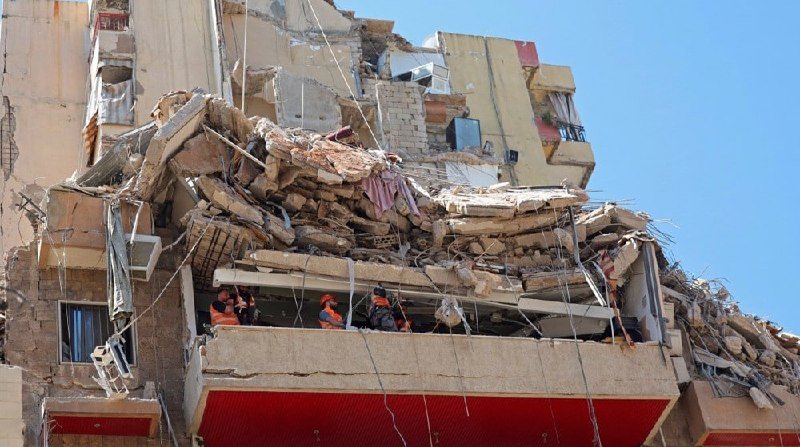
At a Pentagon briefing on May 5, 2026, U.S. Secretary of War Pete Hegseth was asked directly: in the last 24 hours, Iran has fired at American forces. Is the ceasefire over? His answer was emphatic. "No," Hegseth told reporters. "The ceasefire is not over. This is a separate project." The distinction he drew — between a standing ceasefire arrangement and a new round of Iranian military action — set the tone for what the administration is framing as a contained but volatile episode. Within the same briefing, however, Hegseth delivered a warning calibrated for regional audiences and global markets alike: any Iranian attack on American personnel or commercial vessels transiting the Persian Gulf would meet what he called "decisive and destructive American firepower."
The White House has spent months engineering the impression of a diplomatic breakthrough, and the ceasefire with Iran has been central to that narrative. Hegseth's Monday briefing makes clear that the administration cannot afford to let Iranian strikes collapse that framing — not because the strikes are harmless, but because the political architecture around the ceasefire has become load-bearing for how the White House is managing its broader Middle East posture. Calling the strikes a "separate project" is a rhetorical device designed to preserve the ceasefire's credibility while leaving the military response option fully open. Whether that distinction holds depends entirely on what happens next.
What the Strikes Actually Are — and What Tehran Says They Mean
The sources do not yet provide granular detail on which Iranian units fired, what systems were used, or the specific targets hit. What is clear is that Iranian forces conducted military action against U.S. interests within a 24-hour window prior to Hegseth's briefing. Iranian state-aligned media — which the administration has historically treated as unreliable and which it would be easy to dismiss entirely — has framed any such strikes as defensive responses to what Tehran characterizes as American violations of the ceasefire's terms. That framing, regardless of its provenance, deserves analytical attention. A ceasefire built on contested understandings of its own conditions is a ceasefire that can be manufactured to fail from either side.
The administration has thus far declined to release imagery or targeting data from the strikes. That is not unusual in the early hours of a developing incident, but it limits what independent verification is possible. The Pentagon's account — that Iranian forces fired but that the strikes do not constitute a ceasefire violation — rests on the administration's own interpretation of the arrangement's scope. Regional partners, particularly Gulf states whose commercial traffic transits the same waters Tehran is now being warned away from, are likely watching closely for any signal that the ceasefire is becoming an instrument of selective enforcement.
The Rhetoric Versus the Strategic Calculus
Hegseth's language on Monday contained two distinct registers. The first was calibrated de-escalation: the ceasefire holds, the strikes are a "separate project," and there is no appetite for a wider war. The second was blunt deterrence: Iranian forces, reduced in capacity according to administration assessments, should understand that attacks on American or commercial targets will be met with force. The phrase "decisive and destructive American firepower" is not diplomatic shorthand. It is a threat designed to be heard in Tehran, in the Strait of Hormuz shipping lanes, and in the trading rooms of Singapore and London where energy futures move on precisely this kind of rhetoric.
That dual register is not confusion — it is policy. The administration wants to maintain the political benefit of the ceasefire narrative while signaling that Iranian miscalculation will be met with consequences. The risk is that Tehran hears only the threat and not the reassurance, or that it interprets the "separate project" framing as an invitation to probe the boundaries of what the ceasefire permits. If Iranian leadership concludes that the ceasefire is a U.S. political instrument rather than a strategic commitment, the architecture supporting it weakens considerably.
The characterization of Iran as "trying to subjugate the world" — a phrase Hegseth used verbatim during the briefing — is the sharpest note in the rhetoric. It is also the least operationally useful. Subjugation implies a coherent imperial project; what Iran has demonstrated, particularly since the reinstitution of maximum-pressure sanctions, is the capacity to project power asymmetrically through proxies, maritime disruption, and missile capabilities, not through conventional domination of neighboring states. Naming the threat in maximalist terms may serve domestic political purposes or signal solidarity with regional allies, but it does not clarify the strategic calculus for anyone trying to assess where this episode goes next.
The Structural Context: Who Controls the Hormuz Chokepoint
The Strait of Hormuz is the world's most critical maritime chokepoint for oil shipments, handling roughly a fifth of global oil trade. Any threat to free passage through those waters registers immediately in commodity markets. Hegseth's insistence that the United States "can't allow Iran to prevent innocent countries from navigating an international waterway" maps directly onto this structural reality. The statement is as much about reassuring allies and trading partners as it is about signaling to Tehran.
What is notable is that the administration is fighting on two fronts simultaneously: preserving the ceasefire narrative while positioning itself as the guarantor of Hormuz transit. Those two objectives are not necessarily compatible. A ceasefire with Iran that leaves U.S. forces patrolling the Persian Gulf in a posture of deterrence is stable only as long as both sides agree on the rules of the road. The strikes Hegseth referenced suggest those rules are already under pressure.
There is a broader pattern here worth noting. The administration has signaled, through Hegseth's "We expect the world to step up" formulation, that it is looking for burden-sharing on the Iran file. European allies, Gulf states, and partners in the Indo-Pacific have been presented with a choice: support the ceasefire architecture and its enforcement, or watch the United States manage the problem alone. For capitals that depend on Hormuz transit and have complicated relationships with both Washington and Tehran, that invitation comes with its own set of calculations.
Stakes: Escalation, Credibility, and the Ceasefire Architecture
The immediate stakes are clear. If Iran conducts a follow-on strike on U.S. personnel or commercial shipping, the administration faces a binary choice: respond and risk escalation, or decline to respond and watch the ceasefire's credibility — and its own — erode in real time. Hegseth has publicly committed to the response option. That commitment creates an operational logic that is difficult to walk back.
The medium-term stakes involve the ceasefire architecture itself. Ceasefires survive on mutual belief in their enforceability and mutual interest in their continuation. The strikes of the last 24 hours — characterized by the administration as a "separate project" but perceived by Tehran, according to its own framing, as a response to ceasefire violations — represent the kind of ambiguity that erodes that mutual belief. The longer the ambiguity persists without a diplomatic clarification, the more the ceasefire becomes a label applied to a situation that is, in practice, unstable.
Gulf state alignment with U.S. posture is another variable. Riyadh and Abu Dhabi have invested in the normalization of regional relations with Israel and in the broader ceasefire logic. A sustained uptick in Iranian military activity along the Gulf threatens to pull those capitals back toward the security alignments they had tentatively moved away from.
What remains uncertain — what the available sources do not yet resolve — is the scale and intentionality of the Iranian strikes. Whether they represent a deliberate probing operation, a calculated signal, or opportunistic action by commanders acting without full authorization from Tehran remains to be seen. That distinction will shape whether this episode is contained within Hegseth's "separate project" framing or whether it becomes the event that redefines the ceasefire entirely.
This publication covered Hegseth's briefing using the Pentagon's transcript as the primary factual record. Western wire coverage has focused on the ceasefire's survival; the framing here foregrounds the structural tension between preserving the diplomatic narrative and maintaining credible deterrence — a tension the available sources suggest is unresolved.
Wire provenance
This editorial synthesis draws on the following public wire/social posts:
- https://t.me/osintlive/124891
- https://t.me/ClashReport/88234
- https://t.me/abualiexpress/44512
- https://x.com/disclosetv/status/2051637735006347264
- https://x.com/disclosetv/status/2051636995823116291
- https://t.me/GeoPWatch/33451