Hezbollah Denies Syrian Claims of Cell Presence as Jolani Government Consolidates Control
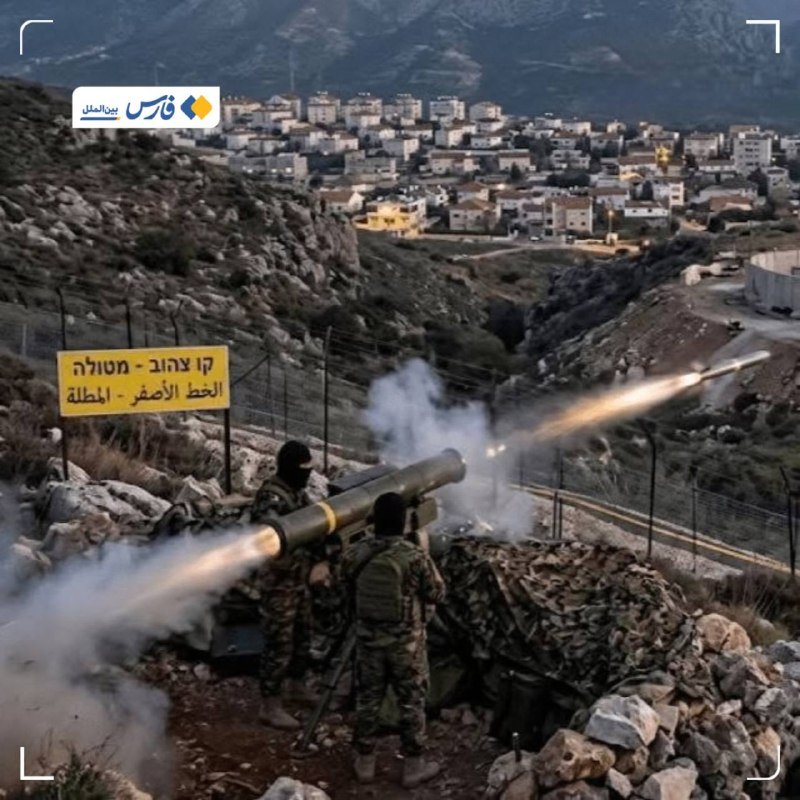
Hezbollah has formally denied Syrian Interior Ministry accusations that the Iran-backed militia maintains an operational cell inside Syria, according to statements carried by Lebanese and regional media outlets on 5 May 2026. The group's media department insisted Hezbollah holds "no presence or activities" in Syria and warned that the allegations risked stoking unnecessary bilateral tensions at a fragile moment for the region.
The dispute erupts against a backdrop of profound structural change in Damascus. Since the fall of the Assad dynasty in December 2024, power in Syria has been consolidated under Hay'at Tahrir al-Sham, the former al-Qaeda affiliate led by Ahmed al-Sharaa — widely known by his nom de guerre Abu Mohammed al-Jolani. The transitional administration has made the pacification and subordination of all non-state armed factions operating inside Syrian territory a central plank of its governance project, and it is moving systematically to enforce state monopoly over security within its borders.
A Claim and Its Denial
The Syrian Interior Ministry's assertion — that Hezbollah maintained a clandestine cell on Syrian soil — was first reported on 5 May 2026 by The Cradle Media, a Beirut-aligned outlet with longstanding ties to the Resistance axis. Hezbollah's denial came within hours. The group's media office characterised the accusations as "false" and the product of what it described as an overreach by the "Al-Jolani government." The language was pointed: by using Jolani's nom de guerre rather than any formal state designation, Hezbollah implicitly contests the legitimacy of the new administration in Damascus.
The exchange is more than bureaucratic sparring. Hezbollah fought inside Syria for over a decade, deploying thousands of fighters at the invitation of the Assad regime to aid its suppression of the 2011 uprising. That deployment, and the resulting network of Shiite militia infrastructure along the Syrian-Lebanese border, was a cornerstone of the Iran-led axis of resistance and a central source of friction with Israel. Following the devastating Israeli military campaign against Hezbollah in late 2024, which dismantled much of the group's command-and-control apparatus and killed its long-time secretary-general Hassan Nasrallah's successor, the organisation's footprint across the region has contracted sharply. Whether any meaningful Hezbollah structure remains inside Syria — or whether the Syrian government's claim reflects genuine intelligence or political signalling — is a question the available sources do not resolve with certainty.
The Jolani Government's Security Project
What is clear is that Damascus under HTS leadership is not inclined to tolerate any armed actor operating outside state authority. The Interior Ministry statement should be read in that light: a declaration of intent as much as an assertion of fact. The Jolani administration has inherited a country dotted with foreign-aligned militias — Lebanese Hezbollah remnants, Iraqi Popular Mobilisation Forces contingents, Iranian-backed Afghan and Pakistani Shia fighters who traversed the border during the height of Assad's reliance on Shia militia proxies. The new government's stated objective is the dissolution, disarmament, or integration of all such groups.
Fars News International, a Tehran-aligned agency, reported Hezbollah's media department framing the Syrian accusations as part of a broader "exaggeration" campaign by the Jolani government. The characterisation suggests Tehran's ecosystem of affiliated outlets is circulating a counter-narrative: that the Syrian government is manufacturing a Hezbollah threat to justify its own consolidation of power, or to deflect attention from internal difficulties. That framing has internal coherence, but it sits uneasily alongside the HTS administration's documented programme of disarming all non-state armed groups, a programme that has already brought it into friction with local militias across multiple provinces.
Regional Reverberations
The stakes of even a minor diplomatic breach between Beirut and Damascus extend well beyond bilateral relations. Hezbollah, for all its reduced military capacity, remains the most capable Lebanese institution capable of confronting Israel along the northern border. The Biden-era ceasefire framework that ended the 2024 Israel-Hezbollah war left unresolved the question of Lebanese state sovereignty over areas where Hezbollah historically operated. A Damascus-Beirut rupture could complicate whatever diplomatic architecture the United States and its partners are attempting to construct around a more durable northern Israeli ceasefire, by creating competing pressures on Lebanese political actors who must navigate their relationship with both Hezbollah and the Lebanese state simultaneously.
For the Jolani government, the priority runs in a different direction. Syria under HTS has sought international rehabilitiation — Western sanctions relief, reconstruction financing, reintegration into the Arab League — all of which require demonstrating that Damascus can exercise genuine state authority over its territory. A visible failure to address armed foreign militias would undermine that case. The Interior Ministry's statement, whether or not it reflects verified intelligence, performs a useful function for Damascus: it signals to Western and Gulf Arab interlocutors that the government is serious about sovereignty.
The Iranian dimension deserves explicit acknowledgment, even as the sources resist firm conclusion. Tehran invested heavily in the Assad survival project and in Hezbollah as its most potent regional proxy. The collapse of Assad'sAlawite regime removed a critical node in that architecture. Whether Hezbollah's denial of a Syrian presence reflects operational reality, political calculation, or a negotiation over what the new relationship between Damascus and the Resistance axis will look like — or some combination of all three — cannot be determined from the public record. What is evident is that the Iran-Hezbollah axis is operating from a position of significant structural weakness, and that the Syrian government under Jolani is attempting to define the terms of engagement on its own turf.
What Remains Uncertain
The available sources do not contain the specific evidence, if any, that the Syrian Interior Ministry cited in making its accusation. The denial from Hezbollah's media office is categorical but provides no documentary counter-evidence. Whether Syrian intelligence has identified a cell, a weapons cache, a facilitation network, or merely a residual social presence — and whether that presence constitutes a security threat or merely a political inconvenience for the HTS government — is not disclosed in the public record. The incident may represent a genuine security concern addressed through official channels; it may equally represent the opening move in a longer negotiation over the status of Hezbollah-affiliated populations and infrastructure inside Syria. The evidence as it stands does not permit a firm judgment on which interpretation is correct.
What the episode confirms is that the Levant's realignment following the 2024 upheavals remains incomplete and contested. The map of armed actors, territorial control, and political authority across Lebanon, Syria, and Israel is still being drawn. Hezbollah's categorical denial of a Syrian presence is, at minimum, a declaration of where it does not wish to be seen as present — and an invitation to watch what Damascus does next.
This publication covered the Hezbollah denial through the Lebanese-aligned and Iranian state-adjacent wire, which provided the primary record of both the Syrian accusation and the group's response. Western wire services had not carried independent reporting on the Interior Ministry claim at time of publication.
Wire provenance
This editorial synthesis draws on the following public wire/social posts:
- https://t.me/thecradlemedia/18456
- https://t.me/thecradlemedia/18455
- https://t.me/FarsNewsInt/124891