Hezbollah's FPV Footage Release: Open-Source Verification and the Limits of Visual Evidence in the Lebanon Border Zone
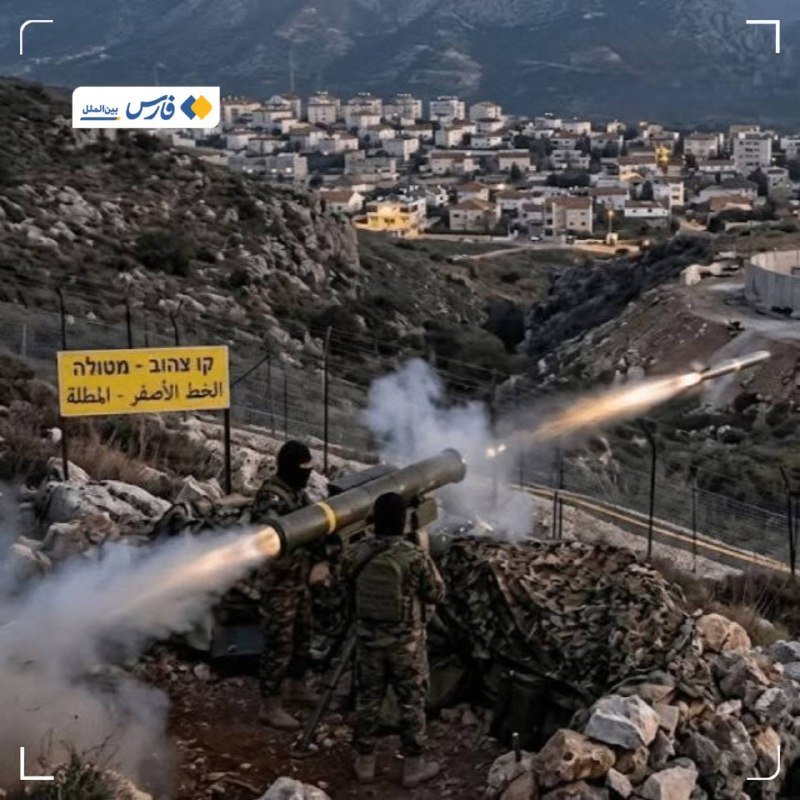
Hezbollah released footage on 5 May 2026 claiming to show a first-person-view drone strike against Israeli occupation forces in the town of Bayyada, in southern Lebanon. The video, published simultaneously by Hezbollah's media arm and circulated across regional Telegram channels including the Palestine Chronicle, purports to depict an FPV (first-person-view) attack on Israeli military personnel on 1 May 2026. The release was framed by Hezbollah-aligned channels as a successful operation against Israeli forces operating in occupied Lebanese territory. Monexus examined the footage and cross-referenced the claims against available open-source intelligence and independent reporting. The findings are mixed: the footage's existence and Hezbollah's claim are documented; the operational claims embedded in the framing require independent corroboration that current sources do not provide.
The immediate significance of the release lies not in verification but in timing and audience targeting. Hezbollah's media apparatus operates as an integrated information tool alongside its military operations. Releasing footage five days after an alleged strike serves multiple functions simultaneously: it provides propaganda material for domestic Lebanese and wider regional audiences, signals operational capability to Israeli military and intelligence planners, and contributes to a broader informational environment in which visual evidence is deployed before independent confirmation is possible. The delay between the claimed operation on 1 May and the published footage on 5 May is itself notable. Conventional military communication doctrine suggests that rapid release of footage reinforces credibility; a four-day gap introduces questions about editorial review, operational security clearance, or message-testing before publication.
What the footage shows and does not show
The video, as circulated via The Cradle Media and the Palestine Chronicle on 5 May, depicts an FPV drone approach toward what appears to be a fixed position or personnel cluster. The visual quality is consistent with commercially available FPV drone hardware increasingly employed by non-state armed groups across multiple conflict zones. The footage shows the approach, the impact point, and a subsequent view. However, several elements that standard OSINT methodology would seek to confirm are absent or unverifiable from the distributed version.
Geolocation is the primary challenge. Bayyada is a town in Nabatiyeh Governorate in southern Lebanon, approximately 14 kilometers north of the Israeli border. The footage contains no embedded metadata enabling independent geographic confirmation. No landmarks, signage, or environmental markers visible in the footage can be matched to known locations in Bayyada using currently available satellite imagery. Open-source investigators working in the Israel-Lebanon context have developed detailed frameworks for verifying military activity in the border zone, but those frameworks depend on corroborating visual elements — terrain profiles, building types, vegetation — that this footage does not clearly provide.
The identity of the targeted personnel is equally unverifiable. The footage shows figures in a tactical formation but does not display insignia, uniforms, or identifying markers that would enable independent confirmation of whether those figures are Israeli military personnel, IDF-designated ground forces, or other actors. Hezbollah-aligned framing treats this as settled; the available evidence does not.
Verification gaps and the structural problem of single-source claims
Independent OSINT practitioners and regional researchers who work on Israel-Lebanon coverage operate under a methodological norm: claims from any single source require cross-referencing against at minimum one independent verification pathway — satellite imagery confirmation, third-party casualty reporting, official statements from the other side of the conflict, or wire service coverage. None of these pathways is available for the Bayyada footage as it stands on 5 May.
Israeli military and government sources have not issued statements addressing an incident in Bayyada on 1 May 2026 as of publication time. Mainstream wire services — Reuters, AP, AFP — have not published independent reporting on the claimed strike. The sources corroborating the footage are exclusively Hezbollah-aligned or regional outlets with documented editorial positions that favor Lebanese resistance framing. This is not a disqualification; outlets across the political spectrum carry verifiable information. But it does mean that the verification ledger for this specific claim is thin relative to the standard required for high-confidence reporting on military incidents.
The structural problem extends beyond this specific case. FPV drone footage released by non-state armed groups across the Middle East has become a primary information vector for understanding conflict dynamics that Western and Israeli sources frequently decline to confirm or comment on. Hezbollah, Hamas, and other groups have developed sophisticated media operations that routinely produce visually compelling material with limited independent corroboration available in real time. The result is a verification asymmetry: the claim is published and circulated widely; the confirmation infrastructure is sparse, delayed, or absent.
The open-source intelligence landscape in the Lebanon border zone
The Israel-Lebanon border represents one of the most militarily active zones in the eastern Mediterranean, with regular exchanges of fire between Israeli forces and Hezbollah since October 2023. Open-source investigators tracking the conflict — including Bellingcell-adjacent research groups, regional human rights documentation initiatives, and independent analysts — have built detailed incident databases drawing on satellite imagery, social media verification, and cross-referencing official statements from both sides.
These databases demonstrate that Hezbollah's operational claims have historically been accurate in a significant proportion of documented cases. The group has a track record of publishing footage that is subsequently verified through independent means, including casualty confirmation from Israeli sources or third-party reporting. This track record provides contextual weight to new claims but does not substitute for verification in any individual case. The prior accuracy rate is a probabilistic input, not a confirmation mechanism.
For the Bayyada footage specifically, the current state of open-source coverage does not provide the cross-referencing inputs that would typically enable confidence. Researchers tracking the Lebanon border zone have not, as of 5 May 2026, published geolocation confirmation or casualty reports corresponding to the claimed operation. This does not mean the incident did not occur; it means that the verification cycle has not yet produced confirmable public documentation.
What this tells us about information dynamics in the border conflict
The release of the Bayyada footage illustrates a broader pattern in the Israel-Lebanon conflict's information environment. Hezbollah operates with a communication strategy that treats visual evidence as a primary weapon alongside its military hardware. The group releases footage, frames it in specific language, and distributes it through aligned channels — a workflow that reaches target audiences before any independent verification apparatus can engage.
Israeli military communications, by contrast, have historically been more guarded. Official Israeli statements on incidents in southern Lebanon are typically minimal or absent for events that do not result in significant casualties or strategic consequence. This creates an asymmetry in the information environment: Hezbollah-controlled narratives circulate widely and rapidly; Israeli counter-narratives either arrive late or are absent entirely.
For audiences and researchers relying on open-source information, this asymmetry produces a structural bias toward the perspective that publishes first and most visually. It does not inherently validate the claims — visual evidence requires contextual confirmation that the publishing context often lacks — but it shapes what information about the conflict is publicly available and when.
What we verified / what we could not
Verified:
- Hezbollah published footage on 5 May 2026 claiming to show an FPV drone operation in Bayyada, southern Lebanon, dated 1 May 2026.
- The footage was distributed via Telegram channels including the Palestine Chronicle and The Cradle Media.
- Bayyada is located in Nabatiyeh Governorate, southern Lebanon, approximately 14 kilometers north of the Lebanese-Israeli border.
- The footage depicts an FPV drone approach and impact consistent with commercial FPV attack drones.
Could not verify:
- The geographic location of the footage within Bayyada.
- The identity and affiliation of personnel shown in the footage.
- Whether the claimed strike occurred on 1 May as stated.
- Casualties or military consequences resulting from the claimed operation.
- Any Israeli military or governmental response to the claimed incident.
- Independent wire service or OSINT corroboration of the operational claim.
The verification gaps reflect the current state of publicly available evidence as of 5 May 2026. The footage is real in the sense that it exists and was published by Hezbollah; the operational claims embedded in its release require independent corroboration that is not yet present in the accessible source landscape. Monexus will continue monitoring available open-source and wire service reporting for confirmation or contradiction.
This article examines the verification challenges of unconfirmed visual evidence from the Israel-Lebanon border zone. Monexus will publish updates if independent corroboration of the claimed Bayyada operation becomes available through wire service reporting, OSINT verification, or official statements.
Wire provenance
This editorial synthesis draws on the following public wire/social posts:
- https://t.me/PalestineChronicle/48291
- https://t.me/TheCradleMedia/12847
- https://t.me/thecradlemedia/12847
- https://en.wikipedia.org/wiki/Bayyada
- https://en.wikipedia.org/wiki/Southern_Lebanon
- https://en.wikipedia.org/wiki/Nabatiyeh_Governorate