Hezbollah's Missile Claim and the Informational Warfare Over Southern Lebanon
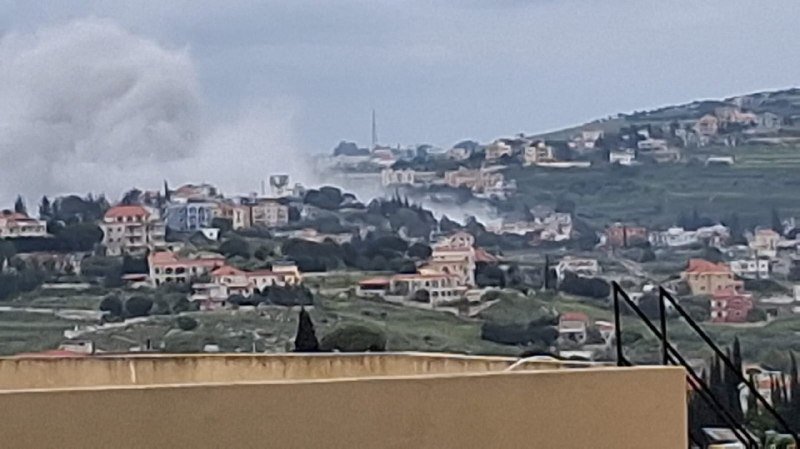
Hezbollah declared victory before the smoke cleared. On the afternoon of May 5, 2026, the group announced that it had launched a surface-to-air missile at an Israeli Air Force helicopter operating over the Biyache area of southern Lebanon at 13:35 local time and, in its framing, struck the aircraft. The Israeli military painted a different picture: an unsuccessful SAM attempt had been identified, no damage was caused, and no IDF personnel were injured. Two accounts. One incident. No independent confirmation yet of what actually happened to the aircraft — or whether it was struck at all.
This is not a trivial discrepancy. In a conflict where the gap between claimed and actual effects has defined everything from ground operations to diplomatic negotiations, the immediate framing of an incident carries weight well beyond the military record. Hezbollah needs to demonstrate capability and resolve to a domestic audience and to sponsors in Tehran. The IDF needs to maintain operational security while projecting competence. Both objectives are better served by a story that flatters rather than one that reports accurately. That tension is not unique to this moment — it is structural to how both sides communicate during active hostilities — but its consequences compound as the risk of escalation grows.
What the Sources Actually Say
The thread is narrow: Hezbollah's media arm issued a statement, the IDF Spokesperson confirmed an attempted launch with no consequences, and Israeli outlets including KAN cited the attack as having caused no casualties or material damage. That is the complete evidentiary base for this incident as of 12:36 UTC on May 5, 2026. Hezbollah claims a hit. Israel says the attempt failed. Neither side has released footage, telemetry, or third-party verification.
What we can say with confidence is that a surface-to-air missile was launched from Lebanese territory toward an Israeli military aircraft. That itself is a significant operational event — the use of SAMs against fixed-wing or rotary platforms marks an escalation in the scope of acceptable targeting that both sides have maintained implicit red lines around. Whether the missile reached its target is presently unverifiable; what is verifiable is that an attempt was made, and that attempt was recorded and announced by both parties in contradictory terms.
The IDF's statement is precise in the way institutional statements tend to be when an incident cannot be fully contained: it acknowledges the attempt, notes the failure, and moves on. Hezbollah's statement is triumphant in the way militant communication tends to be when domestic messaging requires a win. Neither account is transparent in the way an independent military audit would be. Readers treating either claim as settled fact are operating on incomplete information.
Why These Contradictions Matter More Than the Incident Itself
The episode is instructive less as a military event than as a window into how information warfare operates in the current phase of the conflict. Both sides have learned, through years of sustained contact, that narrative control shapes outcomes as much as battlefield performance. International observers — and the diplomatic brokers who engage with both parties — respond to the framing as much as the facts. A successful SAM launch that is never announced is invisible to the diplomatic record. An announced-but-missed SAM launch can be spun as a success and absorbed into the next round of normalisation talks.
This creates a structural incentive to announce, and to announce optimistically. Hezbollah, operating from a position of relative military disadvantage against a state air force with superior surveillance and strike capability, has a particular interest in demonstrating that its air defence posture is viable and improving. The Biyache incident, if it produced even a claimed hit, serves that interest regardless of what the telemetry shows. The IDF, for its part, has an interest in minimising the salience of every successful interception — because acknowledging that it needed to intercept a SAM is itself an admission that the threat environment is active. The language of "unsuccessful attempt" is precisely calibrated to that interest.
Neither side is lying in a straightforward sense. The IDF is not denying that a SAM was launched; Hezbollah is not inventing the launch entirely. The divergence lies in the interpretation of effect — whether the aircraft was struck, whether the interception succeeded, whether anyone was at risk. These are questions that could be resolved by footage, wreckage analysis, or independent verification, none of which is presently available. Until such verification emerges, the contradictory framing is not a puzzle to be resolved — it is a feature of the information environment, not a bug.
The Regional Context That the Framing Omits
The immediate contradiction between Hezbollah's claim and the IDF's account plays out against a backdrop of ongoing hostilities along the Lebanon-Israel border that has persisted for more than a year in its current intensified phase. The Rules of Engagement governing this corridor have shifted repeatedly — what was a tacit arrangement in the years following the 2006 war has given way to a pattern of tit-for-tat escalation in which both sides test thresholds and retreat when the cost becomes disproportionate. The use of SAMs against helicopters is not routine in this pattern. It represents an expansion of the targeting envelope that has previously been confined to drones, ground fire, and anti-tank weapons.
Hezbollah's decision to deploy a surface-to-air capability — even in an attempted rather than confirmed successful engagement — signals that the group believes it has both the material and the political cover to escalate itsRules of Engagement. The timing matters. This incident occurred on the same day as broader diplomatic activity regarding the conflict's northern front, and the claim of a successful strike — whether or not it happened — arrives at a moment when the political pressure on both sides to show strength before concessions is acute. The IDF's decision to issue a calibrated response rather than a major escalation signal suggests it is managing this pressure on its side as well.
The risk is that each announced success, even a fabricated one, raises the threshold for what counts as a satisfactory response. If Hezbollah's claim is accepted by its audience as fact, the next attempted strike carries a higher burden of proof — and a higher cost if it succeeds. The IDF's calibrated denial, meanwhile, may be insufficient to deter the next attempt if the information environment already registers a Hezbollah win. This dynamic — where announced fiction outcompetes confirmed fact in shaping escalation calculus — is one of the most durable features of this conflict, and this episode is a clean illustration of it.
What Remains Uncertain
The sources presently available do not allow a definitive judgment on whether the Israeli Air Force helicopter was struck. Hezbollah's statement claims a hit; the IDF Spokesperson says the attempt was unsuccessful with no damage and no casualties. Both accounts are institutional — neither is independently verifiable, and neither includes corroborating evidence such as video, radar data, or third-party confirmation. Whether the missile reached the aircraft, whether the interception worked, and what the actual condition of the platform is — these questions are unanswered in the public record.
What is answered is that a SAM was launched from Lebanese territory at an Israeli aircraft, that the incident is being used by both sides to serve distinct narrative objectives, and that the gap between the two accounts is itself the story. For readers in 2026, the temptation is to treat one account as correct and the other as false. The more accurate read may be that both accounts are functional — designed not to report what happened, but to shape what happens next.
This publication framed the incident as a case study in competing institutional narratives rather than treating either side's account as dispositive — a deliberate choice given the absence of independent corroboration in the available record.
Wire provenance
This editorial synthesis draws on the following public wire/social posts:
- https://t.me/englishabuali/1324
- https://t.me/idfofficial/12447
- https://t.me/wfwitness/8921
- https://t.me/thecradlemedia/4452
- https://t.me/abualiexpress/2987