Hormuz Declared World's Most Dangerous Maritime Corridor as Tensions Escalate
The British Maritime Trade Operations Department has labelled the Strait of Hormuz the most dangerous passage for ships worldwide, underscoring a widening risk to global energy supply chains as regional hostilities and maritime incidents multiply.
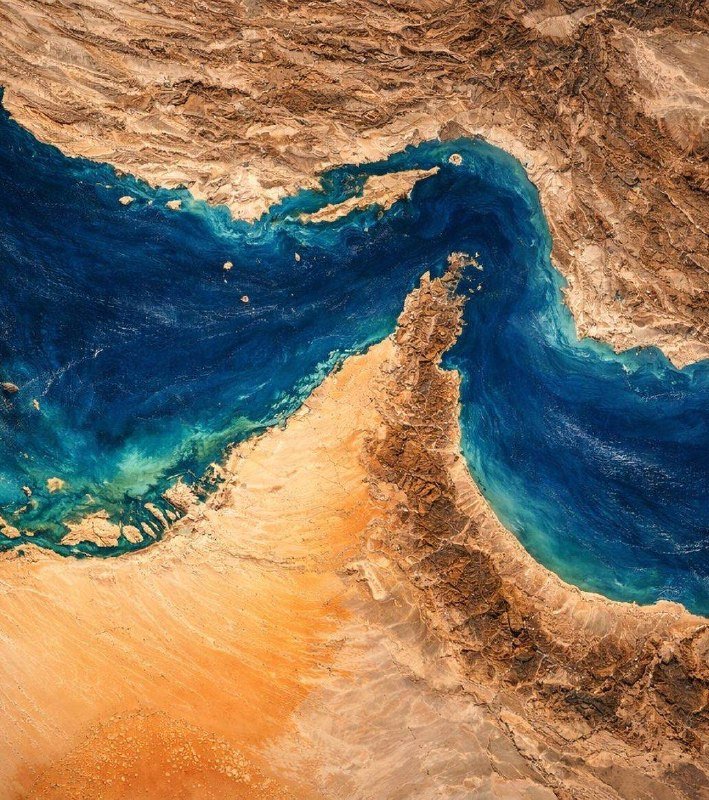
The British Maritime Trade Operations Department (UKMTO) declared on 5 May 2026 that the Strait of Hormuz had become the most dangerous maritime passage in the world for commercial vessels — a designation that signals the corridor's transformation from a routine transit chokepoint into an active theatre of escalating risk.
The warning, reported across multiple regional wire services, follows a string of maritime incidents, continued military posturing by Iranian-aligned forces, and the lingering fallout from broader Middle Eastern hostilities that have spilled into adjacent waters. The Hormuz strait handles roughly 20 to 25 percent of global oil trade and approximately 20 percent of the world's liquefied natural gas shipments, making any deterioration in its security a structural concern for energy markets well beyond the Gulf.
The Immediate Risk Landscape
The UKMTO's characterisation of Hormuz as the planet's most hazardous shipping lane comes amid reported incidents that have made independent vessel operators increasingly cautious. Commercial shipping through the strait — a 21-mile-wide channel bounded by Iran to the north and the United Arab Emirates and Oman to the south — has been subject to a succession of close encounters, boarding attempts, and interference claims over the past eighteen months.
The corridor's geography is unforgiving: the narrowest shipping lanes sit just two nautical miles apart, meaning vessels have limited room to maneuver and almost no ability to avoid proximity to coastal military assets. For naval analysts and marine insurers alike, that geometry has always made Hormuz a friction point. What has changed is the operational tempo of maritime interference — not all of it attributable to state actors, but much of it occurring under the political umbrella of forces aligned with or tolerated by Tehran.
Western naval contingents, including US and British assets in the Gulf, have maintained a persistent presence designed in part to deter interference with commercial shipping. The US Navy's Fifth Fleet has long framed its mission in terms of freedom of navigation. Yet freedom-of-navigation patrols in confined waters, particularly around contested or semi-contested maritime boundaries, carry inherent escalation risk — a dynamic that neither side appears eager to openly manage through formal channels.
Regional Dynamics and the Iranian Position
From Tehran's vantage point, the security of the Persian Gulf is a matter of national sovereignty, not merely strategic advantage. Iranian officials have repeatedly argued that the presence of foreign military assets in what they consider regional waters constitutes an provocation rather than a stabilising force. That framing, while distinct from the Western narrative of deterrence and freedom-of-navigation protection, is internally coherent: Iran sees itself as surrounded by American bases and under sanction pressure, and views naval posturing in the strait as a legitimate response to what it characterises as encirclement.
This publication finds that the Iranian counter-argument deserves structural seriousness, not dismissal. The Hormuz region is not simply a chessboard for great-power competition — it is a neighbourhood where a sovereign state has legitimate interests in the conduct of foreign naval forces. That does not make interference with commercial vessels acceptable; it does mean that any robust Western response requires an acknowledgment of the underlying grievance structure, not just the incident surface.
The pattern of incidents — some confirmed, some alleged, some still under investigation — has been difficult to disaggregate cleanly. Iranian-aligned groups have conducted drone and rocket attacks on vessels in recent months; US and allied forces have intercepted what they describe as weapons shipments bound for proxies. The result is a maritime environment where the baseline risk has genuinely elevated.
Commercial Shipping and the Insurance Fallout
The human and financial consequences of an unsafe Hormuz are not abstract. Marine insurers have been adjusting risk assessments for Gulf transits for more than a year, with war-risk premiums for vessels entering the northern approaches rising substantially since late 2024. Several shipping companies have publicly rerouted vessels around the Cape of Good Hope — adding approximately ten to fourteen days to journey times and significant fuel costs — rather than navigate a strait where the threat calculus has become genuinely unpredictable.
That rerouting carries a cost that filters through to oil markets. Tanker rates for Cape-transit voyages have climbed as demand for the longer route increased. When freight costs rise, landed costs rise. For net oil importers in South and Southeast Asia — nations with limited strategic petroleum reserve capacity — the compounding effect of higher freight and elevated spot prices is a genuine macro risk, not merely a shipping-industry curiosity.
The Strait of Hormuz, unlike the Suez Canal, cannot be circumvented by another physical route. Every barrel of oil that transits the strait must continue to do so unless it is left in the ground. That structural dependency on a single, narrow corridor — controlled, in part, by a state with a documented grievance against Western policy — is the core reason this warning matters beyond the immediate incident cycle.
Stakes and the Forward View
The consequences of an unchecked deterioration in Hormuz security extend across several time horizons. In the near term, the immediate losers are commercial shipping operators, energy traders, and importing nations that depend on uninterrupted Gulf supply. The winners, in a perverse calculus, include alternative LNG exporters able to charge premium prices to buyers seeking to diversify away from Gulf supply, as well as geopolitical actors who benefit from Western economies absorbing the cost of regional instability.
Over a longer horizon, persistent rerouting of tankers would reshape global trade flows in ways that cannot easily be reversed. The Cape route, once normalised, becomes the baseline — which means more spent on fuel, more wear on vessels, and a structural increase in the delivered cost of Middle Eastern oil regardless of what happens at the wellhead. The strait would not have become irrelevant; it would have become expensive to use.
What remains genuinely uncertain is whether the current escalation is tactical — a series of pressure tactics designed to extract concessions or signal displeasure ahead of diplomatic engagement — or represents a structural shift toward a more adversarial maritime posture by Iranian-aligned forces. Western intelligence assessments have not publicly resolved that question, and the available evidence permits competing interpretations.
The UKMTO's designation of Hormuz as the world's most dangerous shipping lane is not, in itself, a new development. It is the formalisation of a condition that many in the industry had already priced in. What it signals is that the gap between the formal risk classification and the operational reality has, in the assessment of British maritime authorities, finally closed.
This publication's coverage of the Strait of Hormuz emphasises the structural dependency of global energy markets on a single corridor whose security is contested by multiple parties with incompatible interests. Western wire framing tended to foreground US naval deterrence activity; this piece surfaces the Iranian sovereignty framing and the commercial shipping cost pathway as equally structural elements of the story.
Wire provenance
This editorial synthesis draws on the following public wire/social posts:
- https://t.me/tasnimnews_en
- https://t.me/JahanTasnim
- https://t.me/alalamarabic
- https://en.wikipedia.org/wiki/Strait_of_Hormuz