The Hormuz Gambit: How China's Iranian Oil Dependency Became the Fault Line in a New Gulf Standoff
Treasury Secretary Scott Bessent has publicly pressed Beijing to use its dominant position in Iranian oil trade as leverage against Tehran — but China's energy calculus makes the ask far more complicated than Washington is letting on.
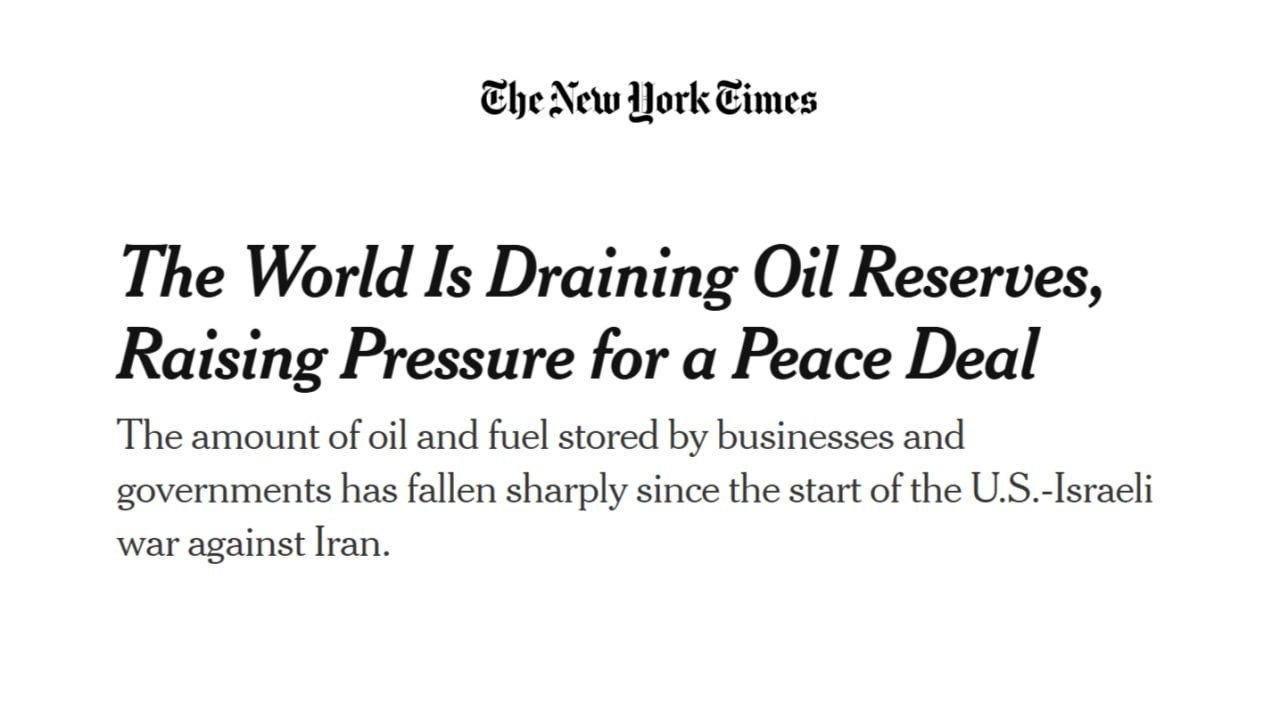
On 4 May 2026, Treasury Secretary Scott Bessent did something his predecessors rarely do in public: he named the price of a relationship. Addressing reporters ahead of a summit between Presidents Trump and Xi Jinping, Bessent urged China to use its dominant position in Iranian oil trade to convince Tehran to de-escalate tensions in and around the Strait of Hormuz. The strait, a narrow passage between Oman and Iran through which roughly a fifth of the world's oil flows, had become the centrepiece of a fast-escalating confrontation. Iranian forces had struck commercial vessels. The UAE port of Jebel Ali — one of the world's busiest transshipment hubs — had come under threat. Washington had launched what it described as a new operation to reopen the waterway. And Bessent, speaking in his capacity as Treasury Secretary, was telling China that the moment had come to pick a side.
The framing from the US side was straightforward: China buys approximately 90 percent of Iran's oil exports, according to figures cited by Bessent himself. Beijing therefore holds what the administration regards as decisive leverage. Use it, or be seen as abetting the disruption of global energy markets. The message was calibrated for a diplomatic audience, but its implications were blunt. China, in Washington's calculus, has the power to cut off Iran's principal revenue stream — and can therefore compel Tehran to stand down.
That reading, however, elides the structural forces that bind China and Iran together. Beijing's appetite for Iranian crude is not a diplomatic favour it can withdraw at American request. It is a consequence of deliberate industrial policy and energy security doctrine — a doctrine that took shape precisely because Washington had shown itself willing to weaponise access to Middle Eastern oil against countries Beijing regards as strategic partners. Understanding why China cannot simply pivot on Iran requires understanding what Tehran actually means to Beijing's energy architecture.
The Energy Dependency That Isn't Simple
The figures Bessent cited are not in dispute. China is Iran's largest oil customer by a wide margin, absorbing the bulk of Tehran's exports in a trade relationship that has grown more significant as US sanctions have progressively squeezed other buyers out of the market. But presenting that relationship as leverage Beijing can deploy at will misreads the dynamics on both sides of the equation.
For China, Iranian oil serves a specific function in the national energy mix: it is comparatively accessible, priced below benchmark crudes, and — crucially — flows through routes that do not depend on US-allied chokepoints. The Strait of Malacca, the Indian Ocean, the waters around Taiwan — these are all transit vulnerabilities that Washington has the operational capacity to exploit in a crisis. Iranian crude, purchased under contracts that sidestep the dollar-denominated spot market, insulates Beijing against exactly the kind of secondary sanctions regime the US has deployed against Iran.
This is not incidental. China's energy security doctrine, articulated across successive five-year plans, explicitly identifies diversification away from dollar-denominated supply chains as a strategic objective. Iranian oil is not simply a commodity China buys because it is cheap — it is a component of a broader hedging strategy. Walk that back, and Beijing is not merely disappointing a diplomatic partner; it is dismantling a structural buffer it spent years constructing.
Iran understands this calculus as well as Washington does. Tehran has cultivated its Chinese relationship precisely because Beijing's interests in resisting US financial pressure and maintaining affordable, sanctions-hardened supply lines run parallel to Iran's own. The two countries have expanded their trade in yuan-settled contracts. They have deepened port and infrastructure cooperation. Iranian officials have made clear, in briefings carried by Iranian state media, that they regard their partnership with China as a counterweight to Western economic architecture — not a disposable convenience.
The framing that Beijing can simply flip a switch and Iran falls into line therefore requires Beijing to absorb real costs: the loss of a diversified supply line, a signal of unreliability to a partner it has cultivated for over a decade, and an admission that its energy security doctrine is conditional on US approval. These are not concessions any Chinese government is likely to make lightly — least of all one that is simultaneously navigating a tariffs confrontation with Washington on a separate front.
The Hormuz Operation: Military Posture Meets Diplomatic Pressure
The US operation launched in early May 2026 — described by Reuters as a new mission to reopen the Strait of Hormuz — introduced a military dimension to a diplomatic dispute. Iranian strikes on ships, including vessels transiting near UAE waters, had prompted the deployment. The timing of Bessent's public appeal to China, made simultaneously with the announcement of the military operation, was not coincidental. Washington was communicating on two frequencies at once: a show of force in the waterway, and a request for Chinese intervention in Tehran.
The dual-track approach is familiar from previous Hormuz crises, but its efficacy depends on Chinese willingness to cooperate — and there is reason to doubt that willingness is present in this instance. Beijing has historically avoided publicly confronting Iran over regional behaviour, even when US officials have pressed for exactly that kind of pressure. The structural logic is consistent: a China that helps the US contain Iran in the Gulf is a China that signals it can be managed through diplomatic pressure from Washington. That is not a signal Beijing has historically been willing to send.
There is a further complication embedded in the operation itself. The Strait of Hormuz is not simply a geopolitical abstraction — it is a functioning commercial corridor whose traffic patterns reflect the operational decisions of private shipping companies, insurers, and flag-state registries. Iranian intimidation of commercial vessels has historically produced a self-executing effect: shipowners reroute around the Cape of Good Hope, insurers reprice risk, and the strait's throughput drops without any single Iranian action closing it entirely. The US military operation, however robust, cannot on its own restore commercial confidence. That requires a diplomatic resolution — which in turn requires a party willing to deliver it.
The Dollar Architecture Underneath
The Hormuz standoff sits inside a larger contest that Washington has increasingly framed in explicit financial terms. The Trump administration has tied Chinese cooperation on Iran to the broader negotiating dynamic around tariffs, technology restrictions, and the structural conditions of the bilateral economic relationship. Bessent's public appeal was not delivered in a vacuum — it came as part of a diplomatic sequence that included the upcoming Trump-Xi summit, ongoing tariff discussions, and a Treasury Department posture that has positioned secondary sanctions as a primary instrument of foreign policy.
The dollar's role in this architecture is central. A substantial portion of global oil trade settles in dollars, and the US financial system retains the capacity to cut off access to dollar-denominated transactions for entities it deems sanctions-relevant. Iran's ejection from the dollar-denominated oil market — driven by successive rounds of sanctions — is what made the Chinese yuan-settled bilateral trade relationship attractive in the first place. Tehran cannot sell its oil for dollars; Beijing is willing to buy it for yuan. The arrangement serves both parties precisely because it circumvents the architecture Washington uses to enforce compliance.
For China, then, the request that it help contain Iran in the Gulf is simultaneously a request that it use its position within an alternative financial architecture to reinforce the dollar-denominated one. That is a structural contradiction Washington may not be eager to acknowledge publicly, but it is one that Beijing certainly recognises.
Historical Parallels and What They Do and Don't Tell Us
Hormuz has flared before. The 2019 crisis, triggered by Iranian seizures of British-flagged vessels, produced a similar sequence: US naval posturing, diplomatic pressure on Iran, and calls for allied support. China did not publicly pivot that year. Neither did it during the earlier 2011-2012 tensions that followed the Strait being raised explicitly by Iranian officials as a potential response to Western sanctions. The pattern suggests Beijing's approach to Hormuz is calibrated less on the immediacy of any particular crisis and more on the structural question of whether it regards US freedom of action in the Gulf as consistent with its own interests.
The current moment has distinctive features. The scale of US tariff confrontation with China, the explicit linkage between Hormuz and the Trump-Xi summit agenda, and the public register of Bessent's appeal all mark this episode as more openly transactional than its predecessors. But the underlying dynamic — Beijing weighing the costs of helping the US against the costs of defying it — remains recognisable from earlier cycles.
What the precedent cannot tell us is whether this moment is different in kind. The energy transition, the maturation of Chinese domestic oil production, and the growing complexity of Iranian-Chinese industrial cooperation all introduce variables that did not exist during earlier Hormuz episodes. Whether Beijing has more or less capacity to pressure Tehran than it did in 2019 depends on facts about the bilateral relationship — investment flows, infrastructure commitments, the relative urgency of Iranian crude to Beijing's near-term energy balance — that the available sources do not fully resolve.
Stakes: Who Wins If the Standoff Holds
The proximate stakes are clear. A strait that runs at reduced throughput raises insurance premiums, increases transit times, and flows upward into energy prices for consumers in Asia and Europe. The US naval operation, absent a diplomatic resolution, addresses the security dimension without solving the commercial one. Shipowners make routing decisions based on assessed risk, not on the presence of American destroyers in the vicinity.
Iran, for its part, is wagering that the combination of energy market sensitivity and US-China strategic rivalry creates space for it to continue operating below the threshold that would trigger direct US military action. Tehran has made its capacity to threaten Hormuz explicit — that explicitness is itself a deterrence signal. The calculus has limits: Iranian officials know that sustained commercial disruption invites escalation options Washington has so far preferred to avoid. But the logic of provocation is not total; it is calibrated.
China's position is the most structurally interesting. Beijing has consistently avoided being cornered into a binary choice between Western-aligned stability and its own bilateral relationships with sanctioned states. The Hormuz appeal puts that avoidance to the test. If Beijing refuses to pressure Tehran, it absorbs the reputational cost of appearing to enable disruption. If it applies pressure successfully, it surrenders a piece of the alternative financial architecture it has spent years constructing. Neither outcome is obviously attractive. The most likely Chinese response, based on historical pattern, is neither full compliance nor outright refusal — but a diplomatic posture that preserves options while extracting whatever concessions the summit dynamic offers.
The deeper stake is whether the dollar-denominated energy order can be held together through diplomatic pressure on its outliers, or whether the structural fragmentation of that order — visible in the yuan-settled Iranian oil trade, in the Gulf states' parallel hedging between dollar and non-dollar infrastructure — has already progressed past the point where bilateral pressure on a single actor can restore the previous equilibrium. The Hormuz crisis is, in this reading, a symptom rather than a cause. The question it poses is whether the architecture of global energy finance is genuinely as flexible as Washington needs it to be.
This article was reported from open-source wire reporting and publicly available US Treasury Department briefings. Monexus covered the Trump administration's Hormuz operation as a naval and commercial story; the dominant wire framing weighted US-China diplomatic pressure and military posturing. This piece foregrounds the structural energy and financial architecture that makes Chinese compliance with Washington's request structurally complicated — a dimension that received comparatively less attention in the initial wave of coverage.
Wire provenance
This editorial synthesis draws on the following public wire/social posts:
- http://reut.rs/42MsJxZ
- http://reut.rs/3PlsqHq
- https://x.com/unusual_whales/status/2051331459974131712
- https://x.com/Polymarket/status/2051241696231317504