The Hormuz Gambit: How Iran's Strait Threat Is Redrawing the Map of Global Energy Politics
Tehran's warning that ships violating its regulations in the Strait of Hormuz will be met by force has sent shockwaves through energy markets. With tanker traffic not expected to normalise until August at the earliest, the confrontation is exposing the fragility of a global oil system that has never fully adapted to chronic Persian Gulf instability.
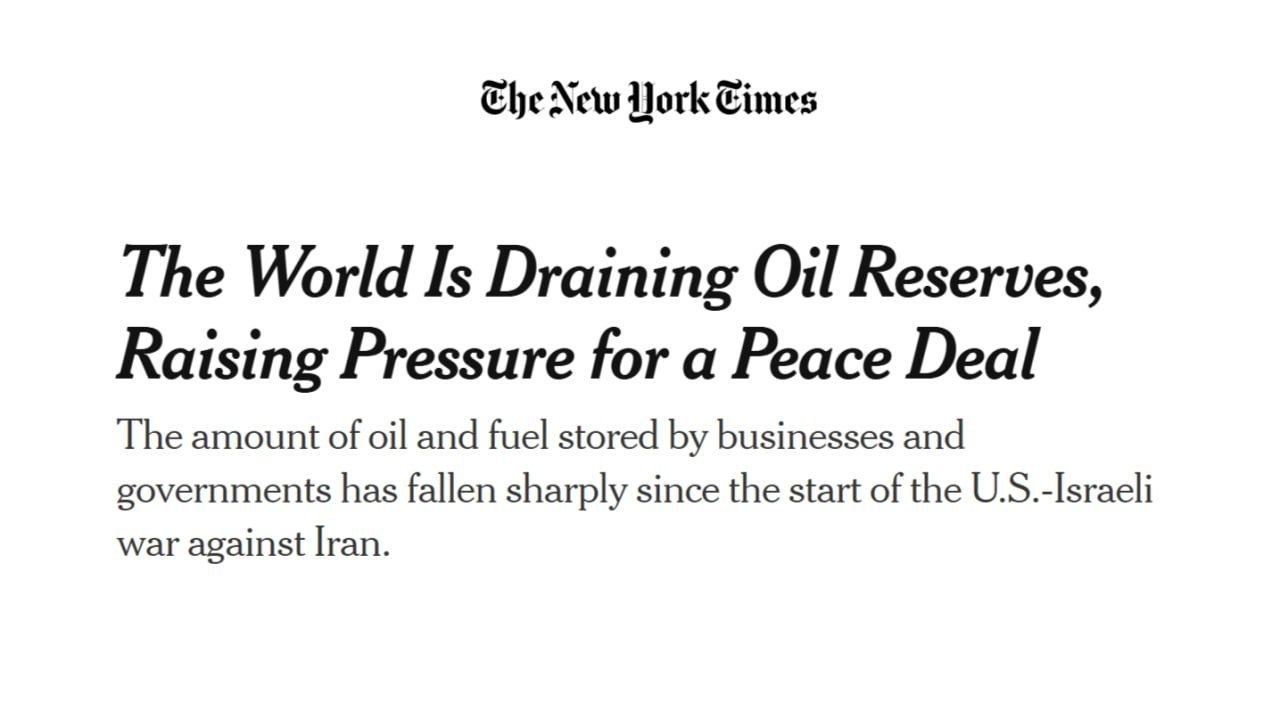
The warning came in terse, official language from Tehran on 4 May 2026, but the message to global shipping was unambiguous: any vessel that does not comply with Iranian regulations in the Strait of Hormuz will be turned back by force. Within hours, a shipping-industry captain with direct knowledge of Hormuz transit procedures told Al Jazeera that no commercial vessel would volunteer to test that threat. 'No ship will be a hero,' the captain said. The statement, delivered without the rhetoric that typically accompanies Iranian naval posturing, reflected a practical calculation that has now settled over the waterway through which roughly one-fifth of the world's oil passes.
The confrontation — triggered by what Tehran describes as an attack on an alleged Iranian warship by United States forces in the Strait — has escalated faster than many analysts expected. Traders on the Kalshi prediction market now assign a low probability to normalisation of Hormuz traffic before August 2026 at the earliest, a signal that the market does not yet see a diplomatic off-ramp. What began as a naval incident has become a结构性 test of whether the global energy system can absorb a prolonged disruption to one of its most critical chokepoints without a sustained price shock.
The Incident and Its Immediate Aftermath
The precise sequence of events leading to the confrontation remains contested, but the broad contours are clear from Iranian state communications and independent shipping reports. Iranian authorities maintain that a US vessel opened fire on an Iranian warship operating in or near the Strait, an account US officials have not yet confirmed in public statements. Tehran's response was not limited to diplomatic protest. The Islamic Revolutionary Guard Corps naval command issued the warning about enforcement of what Iran terms its maritime regulations — a reference to requirements that foreign vessels transiting the Strait identify themselves and comply with protocols Iran asserts it has the right to impose, claims that Washington does not recognise.
Within the shipping community, the reaction was swift and revealing. The captain quoted by Al Jazeera gave voice to what a senior executive at a major tanker company described privately as a collective pause — a unanimous decision among commercial operators not to be the first to resume normal transit patterns while the threat environment remains unclear. That reluctance is itself a form of economic pressure. When tanker companies, acting in concert through shared risk assessments, refuse to enter a waterway, the effect on freight rates and crude availability is immediate regardless of whether a single shot is fired.
The Geometry of the Dispute
The Strait of Hormuz sits at the intersection of several competing claims that have never been fully reconciled. Iran insists that it exercises sovereign rights over the waterway, a position grounded in a UN maritime convention it has ratified but that the United States has not. Washington operates from the premise that the Strait is an international waterway subject to freedom of navigation, a principle US naval forces have enforced by presence rather than by treaty. That legal ambiguity has always existed. What has changed is the willingness of Tehran to escalate from a policy of asserting sovereignty rhetorically to enforcing it operationally.
The distinction matters because the consequences of each approach are categorically different. A legal claim that goes unchallenged is a bargaining chip; a legal claim backed by a credible threat of force transforms the bargaining dynamic. Iran has historically been cautious about actually closing the Strait — its own oil exports also flow through those waters — but the current posture suggests a calculated risk that the economic costs of disruption will fall unevenly and that the asymmetry will advantage Tehran in any extended confrontation.
Energy Markets and the Pricing Problem
The Strait's significance to global energy is not merely symbolic. Roughly 21 million barrels of oil and refined products pass through the waterway daily, according to long-standing International Energy Agency estimates. A sustained reduction in traffic of even 10 to 15 percent — well short of a full closure — would tighten the market in a way that refineries in Asia, Europe, and the Americas would feel within weeks. The market reaction so far, as reflected in prediction-market pricing, suggests traders are not pricing a brief incident. They are pricing a scenario in which the disruption persists long enough to affect inventory management decisions at refineries that typically plan on a 30-to-45-day forward window.
The strategic logic for Iran is paradoxical but coherent. A short, sharp disruption would likely trigger a US diplomatic and possibly military response designed to reopen the waterway. A prolonged, ambiguous threat — one that keeps commercial traffic away without an overt act of closure — generates economic pain without providing Washington with a clear casus belli. The goal, from Tehran's perspective, is not a dramatic closure that invites intervention but a quiet bleed that raises the cost of the confrontation for the United States and its allies in a way that might eventually produce diplomatic concessions.
Precedent and the Question of Escalation
Iran has threatened Hormuz disruption before, most notably during the tanker wars of the 1980s Iran-Iraq conflict and again during periods of heightened tension with the United States in the 2000s and early 2010s. On each occasion, the threat has ultimately not been carried to its logical extreme, partly because Iranian officials have calculated that the costs of full closure would be unacceptable to their own oil-dependent economy. The current situation is distinguished not by the novelty of the threat but by the specific trigger — an alleged attack on an Iranian warship — which introduces a dimension of wounded-pride politics that complicates de-escalation calculations.
The US approach under the current administration has been to maintain a policy of maximum pressure on Iran's oil exports while avoiding direct military escalation that might unite Iranian public opinion behind a government that otherwise faces significant economic discontent. Whether that policy framework is adaptable to a situation in which Iran is the party escalating, rather than the one absorbing sanctions, is an open question that the next several days will begin to answer.
What Happens Next
The immediate stakes are concrete. If commercial traffic does not resume within the next four to six weeks, the knock-on effects will reach well beyond the Strait. Asian refineries that rely on Iranian crude under existing sanctions waivers — there are currently a handful, per diplomatic reporting — will face supply questions; European buyers with contract obligations will look to alternative sources that are not immediately available in sufficient quantity; and US policymakers will confront pressure to demonstrate that the global energy system cannot be held hostage by a regional power, even one with legitimate grievances about sovereign territorial incidents.
The Kalshi pricing — assigning normalisation to August or later — reflects a market that is doing its own risk assessment and concluding that the diplomatic path is longer than it was a week ago. That assessment may be wrong; a back-channel negotiation, a presidential tweet, a naval miscalculation in either direction could resolve the incident before it calcifies into a new status quo. But the fact that the market is pricing a prolonged disruption is itself a form of geopolitical information: it tells us that the people with money riding on the outcome do not trust the institutional mechanisms — diplomatic communications, naval hotlines, third-party mediation — that have historically managed these incidents.
That is the most honest thing the market has said so far. The Strait of Hormuz has always been a place where the gap between legal principle and physical reality was managed by habit, by mutual restraint, and by the understood costs of disruption. If Tehran is genuinely prepared to enforce its regulations by force, and if Washington is not prepared to respond by reopening the waterway militarily, then the world is living through the end of an arrangement that was never formalised and never as stable as it appeared.
This publication's coverage of the Strait of Hormuz confrontation draws on Iranian state communications and shipping-industry sources rather than on initial US administration statements, which had not provided a detailed public account of the naval incident as of the time of writing. Wire reports from Al Jazeera English and X (formerly Twitter) accounts citing Iranian official positions form the primary evidentiary basis.
Wire provenance
This editorial synthesis draws on the following public wire/social posts:
- https://t.me/aljazeeraglobal
- https://t.me/aljazeeraglobal
- https://x.com/unusual_whales/status/1951947399825457153