The Hormuz gambit: how a waterway became the world's most dangerous flashpoint
Secretary of State Marco Rubio confirmed on 5 May 2026 that the United States has implemented a naval blockade of Iran's coast, framing the operation as a defensive measure against Tehran's attempts to impose fees on vessels transiting the Strait of Hormuz. The confirmation, delivered at a State Department briefing, comes as Washington simultaneously acknowledged that Iran has not yet breached a fragile regional ceasefire — but officials on both sides warn the margin for miscalculation is perilously thin.
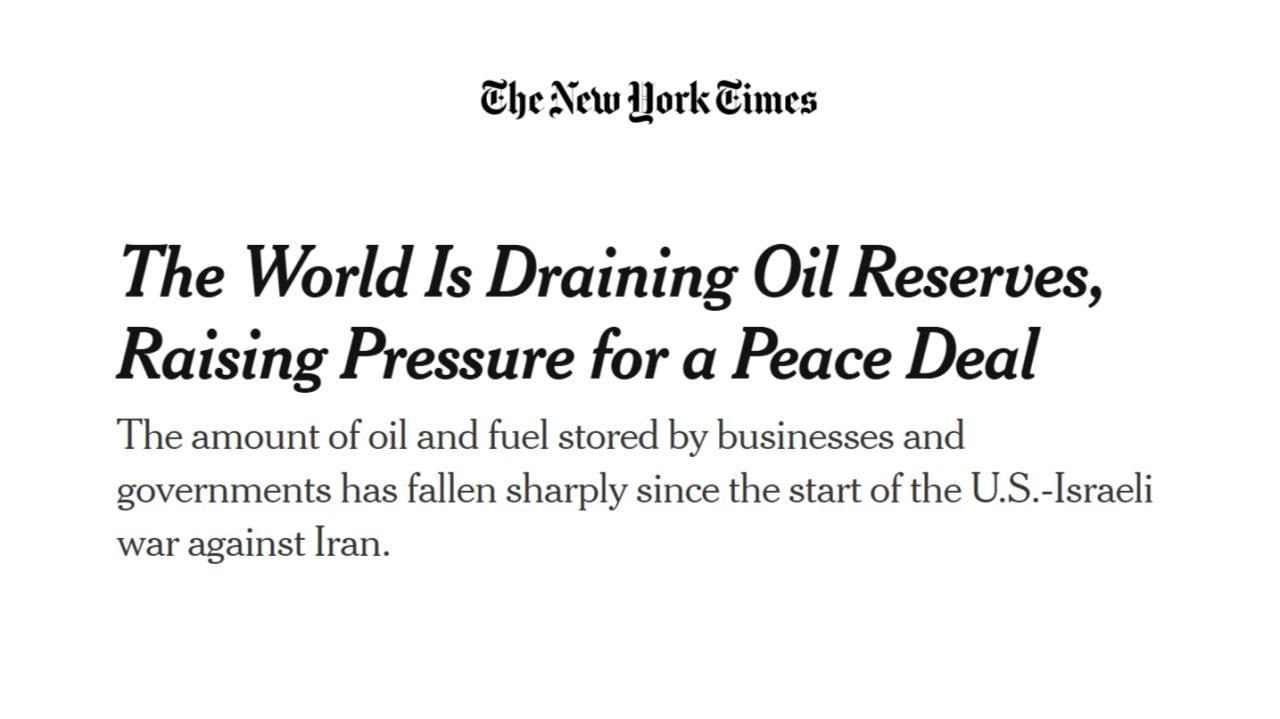
The Strait of Hormuz has handled a fifth of the world's oil trade for decades. On 5 May 2026 it became the epicentre of a confrontation that analysts on both sides of the Atlantic describe as the most acute US-Iran face-off since the Iranian revolution. Secretary of State Marco Rubio confirmed at a State Department briefing that the United States has imposed a naval blockade along Iran's coastline, describing the operation in explicit terms: a defensive measure to counter what the administration characterises as Iran's campaign to normalise the extraction of transit fees from commercial vessels. "If everyone…" Rubio began, before the briefing was paused for classified addenda — but the framework was clear enough. The United States does not recognise any Iranian right to levy charges on ships in international waters, and it has deployed naval assets to enforce that position by force.
The confirmation arrived within hours of Washington stating that Iran had not, at that point, crossed the threshold of the fragile ceasefire brokered in the earlier phase of the regional conflict. An exchange of fire between US forces and Iranian positions had occurred — but the administration chose to frame that incident as contained, not as a breach. That framing buys diplomatic room. It does not, however, resolve the underlying dynamic: two parties locked in a sequence of calibrated escalations, each step defensible on its own terms, the aggregate effect far less predictable.
The blockade in plain terms
A blockade is an act of war under international law. The United States has historically been reluctant to declare one explicitly, preferring euphemisms — "freedom of navigation operations," "enhanced maritime security posture." Rubio's use of the word "blockade" marks a deliberate shift in language, and therefore in legal and political framing. The administration is no longer describing harassment of Iranian patrol boats or periodic transits of the strait. It is describing an ongoing physical interdiction of maritime commerce bound for Iranian ports.
Iran's response has been consistent: the Hormuz passage is an international waterway, fees are a sovereign prerogative, and any attempt to blockade Iranian coastline is illegal under the United Nations Convention on the Law of the Sea — a convention the United States has never ratified but consistently invokes when its own interests align. Tehran's position is not new. What is new is that Iran had been taking concrete steps toward enforcement, stationing assets and making representations to shipping insurers and flag-state registries that transit would henceforward carry conditions. The US response has been to close that question permanently, at gunpoint if necessary.
A ceasefire in name only
The ceasefire Washington cited was never a comprehensive arrangement. It was a pause — brokered under pressure, observed selectively, subject to different interpretations on each side. Iran's reading of what it covers and what it permits has never been identical to Washington's. That gap matters because it creates space for what military planners call the fog of interface: incidents that neither side intended as escalatory but that each reads as crossing a line.
The exchange of fire reported on 5 May falls squarely in that category. Initial accounts describe a US vessel attempting to force open passage for a commercial tanker that Iranian coast guard assets had flagged for inspection. The firing was limited and停了下来 — FOT matter whether that停 was a decision or an operational constraint. What matters is that it happened, and that both sides are now watching to see what the other draws from it.
Hormuz as geopolitical pressure point
The strait is 21 miles wide at its narrowest. Roughly 20 million barrels of oil pass through it daily, according to the US Energy Information Administration — a figure that has remained stable for years but that carries enormous leverage precisely because supply chains and pricing models have been built around its continued openness. Disruption does not require closure. Even sustained uncertainty — the signal that passage is no longer reliable — is enough to move tanker insurance premiums, squeeze refiners, and inject risk pricing into markets that have spent years absorbing other forms of geopolitical noise.
That leverage has made Hormuz a perennial instrument of Iranian foreign policy. The Islamic Republic has periodically threatened closure, staged mini-blockades of its own, and used the strait's significance as a negotiating chip in talks with the West. What it had not succeeded in doing — until recently — was converting a threat into a normalised revenue or administrative mechanism. The US decision to blockade rather than negotiate suggests Washington concluded that normalisation was underway and that waiting would only deepen Iran's position.
Escalation geometry and the risk of miscalculation
The pattern that Al Jazeera's analysts identified on 5 May — neither side willing to compromise, the probability of miscalculation increasing with each iteration — is structurally familiar from a dozen comparable standoffs. The logic runs as follows: each side escalates in response to the other's moves, interpreting its own actions as defensive and reactive. The other side interprets the same actions as aggressive and initiatory. Escalation becomes self-reinforcing not because either party wants it but because neither can afford to be seen as yielding. The blockade is "defensive" in Washington's framing because the fee regime was the original provocation. The fee regime is "defensive" in Tehran's framing because US economic warfare against Iran predated it.
What breaks this logic is not rationality but accident — a signal misunderstood, a vessel struck in error, a commander on scene who reads ambiguous orders as requiring engagement. Rubio's language on 5 May was calibrated: firm, declarative, framed as already-complete rather than as a threat. That calibration is meant to deter by clarity. It also narrows the diplomatic off-ramp. If the United States says the blockade is a defensive measure already implemented, it cannot easily reverse it without appearing to have blinked. If Iran says the blockade is illegal and will be resisted, it cannot easily absorb it without appearing to have capitulated.
Stakes and forward view
The consequences of sustained confrontation in Hormuz are not abstract. Shipping insurers — Lloyd's and the consortiums that underwrite global tanker fleets — will reprice risk if the standoff persists. Asian refiners, particularly in Japan and South Korea, have limited strategic reserve capacity and depend on steady flows through the strait. European markets, already navigating post-energy-shock recalibrations, would face fresh supply pressure. The economic transmission from a Hormuz disruption to retail fuel prices in import-dependent economies is measured in weeks, not months.
The military stakes run parallel to the economic ones. A confrontation that remains at the level of the current exchange of fire is survivable for both governments. A confrontation that claims a commercial vessel — a tanker crew, a-flagged hull — changes the political calculus on all sides. It would give Iran a concrete grievance to present to international bodies and to its own population. It would give the US administration a concrete incident around which to build a broader case for pressure. Neither outcome is in the interests of the civilians, sailors, and traders who transit the strait daily.
What remains uncertain — and the sources do not yet settle — is whether the ceasefire architecture has any residual capacity to absorb the current confrontation, or whether it was always a provisional arrangement that the first serious stress test would shatter. Rubio's confirmation of the blockade, and the precision with which it was delivered, suggests the administration does not believe the former. That judgment may be correct. It is also, for the moment, unverifiable from open sources. What is verifiable is that the ships are still moving, the guns are still pointed, and the gap between "defensive measure" and "act of war" has narrowed to something that now depends on a single decision — possibly made by someone far from the negotiating rooms where the language was chosen.