The Hormuz Question: Bessent's Ultimatum and the Fraying Architecture of Sanctions
Treasury Secretary Scott Bessent's warning that the US is willing to escalate if Iran closes the Strait of Hormuz exposes a fundamental tension: Washington is using the world's most critical oil chokepoint as both a threat and a promise, without controlling the other forces converging on it.
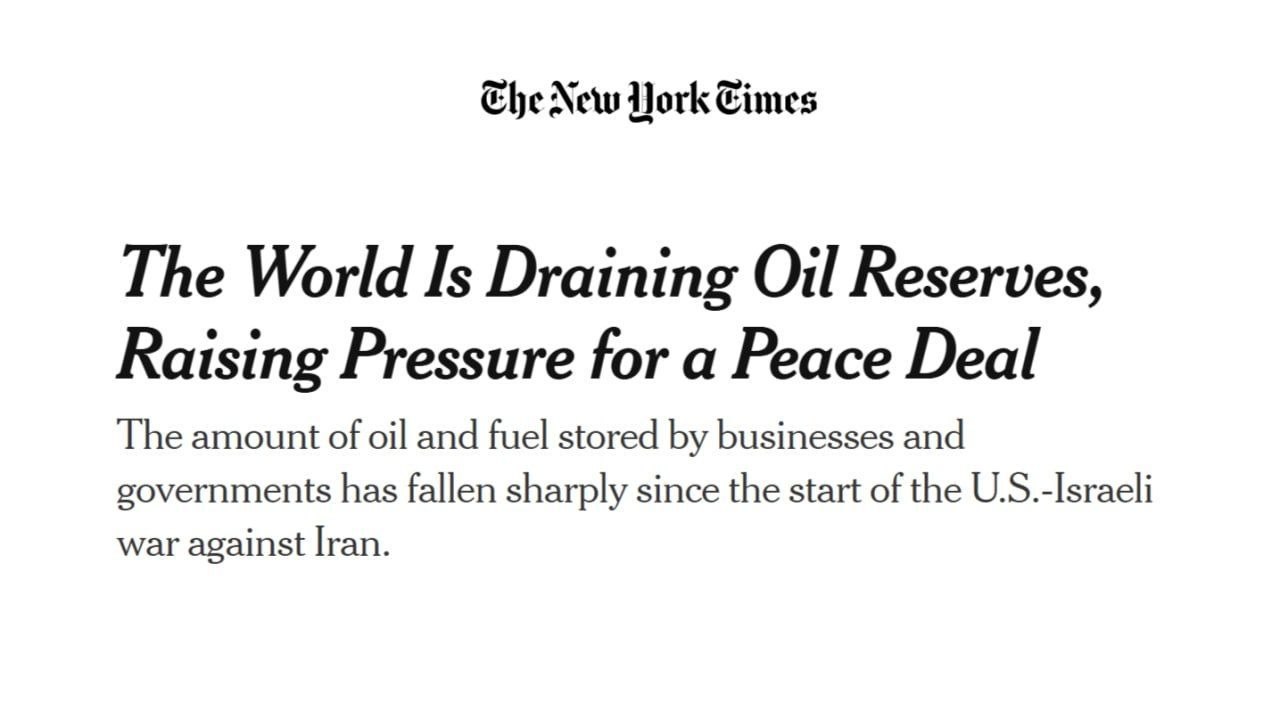
On the morning of 4 May 2026, Treasury Secretary Scott Bessent delivered what amounted to an ultimatum wrapped in an invitation. Addressing reporters in Washington, Bessent said the United States was prepared to escalate if Iran chose to close the Strait of Hormuz — and in the same breath, called on China to join an American-led mission to reopen the waterway should Iran act. The pairing was deliberate. On Chinese social media,截图 of Bessent's remarks circulated widely, alongside a reminder that Beijing was, by one calculation, purchasing roughly ninety percent of Iran's exported energy.
The ceasefire whose expiration had set this particular morning alight was not, in the strictest sense, a ceasefire in the conventional sense of the word. It was a temporary suspension of hostilities — a diplomatic pause whose specific terms remained contested in the open-source community, but whose expiry had been anticipated since at least late April. Iranian military Telegram channels posted countdown graphics in the days preceding the deadline, the tone somewhere between procedural reminder and quiet menace. What Bessent's statements on 4 May revealed was not merely that the pause was ending, but that the incoming administration had decided to reframe the entire question of Hormuz in transactional terms: the strait would stay open on Beijing's terms, or on Washington's.
The ceasefire that wasn't
The framing of the past weeks — a temporary cessation of hostilities, not a structured peace agreement — matters because it shaped how all parties positioned themselves in advance of the deadline. Iranian military accounts, writing in the hours before the expiry, carried a tone that was theatrical but not necessarily bellicose. The countdown graphics were accompanied by wry commentary: emojis, a popcorn emoji, the suggestion of an audience awaiting the next act rather than a nation bracing for conflict. That deliberate levity reflected a calculation inside Tehran: the Americans needed Hormuz open more than Iran needed it closed. A permanent closure would destroy Iran's own oil revenue as thoroughly as it would disrupt global supply. The leverage was real, but it was threshold leverage — usable once, at most.
The Trump administration, for its part, appeared to have settled on a strategy of deliberate opacity. Bessent's statements on 4 May were not preceded by any formal White House declaration. No executive order, no public briefing from the National Security Council, no coordinated messaging with Gulf state partners. Instead, the Treasury Secretary spoke in the language of deterrence and invitation simultaneously: the US would respond to escalation, and the US was inviting China to participate in managing the consequences of that escalation. The message was aimed at multiple audiences — at Iran, at Beijing, and at the oil markets that would price in whatever came next.
The China problem inside the Iran problem
It is difficult to discuss the Hormuz question in 2026 without confronting an uncomfortable structural fact: Washington's leverage over Iran's economic relationship with China is limited in ways it was not during the peak sanctions era of 2018–2021.
The numbers are well understood in energy policy circles, even if they rarely make the front page of Western business coverage. China, through a network of state-affiliated trading houses and refiners, has built an infrastructure for purchasing Iranian crude that is partially obscured from standard market data by the use of dark-fleet shipping and non-dollar settlement mechanisms. The ninety-percent figure circulating on social media on 4 May was stated by Bessent himself, not independently verified here, but the direction of travel is not disputed by analysts who track Asian crude flows. The sanctions architecture that once strangled Iran's oil exports to Western buyers has been, in significant part, superseded by Asian demand — demand that is conducted under terms that the US has limited tools to unwind without triggering a direct confrontation with Beijing.
This creates a fundamental tension in Bessent's 4 May remarks. Calling on China to participate in reopening the Strait of Hormuz — a waterway whose disruption would, paradoxically, also disrupt Chinese energy imports from the Persian Gulf — is a coherent strategic ask in one sense. China depends on seaborne crude from the Gulf as much as any other major economy. But asking Beijing to publicly align with American escalation against Iran is a different proposition entirely. It requires China to abandon a bilateral commercial relationship that serves its energy security, to expose itself to Iranian retaliation in other domains, and to accept the diplomatic cost of being seen as a junior partner in a US-led coercive operation. The sources reviewed for this article do not indicate any Chinese governmental response to Bessent's invitation as of publication.
Chinese state media framing of the situation, in the hours following Bessent's statements, leaned into the contradiction rather than resolving it. Coverage highlighted the economic exposure of both the US and Chinese economies to Hormuz disruption, positioning the strait as a shared vulnerability rather than a lever either side could credibly claim to control. The implicit message was that neither Washington nor Beijing could afford to treat Hormuz as a pawn in a bilateral contest — the chokepoint was too consequential for both.
The economics of a chokepoint
The Strait of Hormuz moves approximately twenty percent of the world's oil and roughly twenty percent of global liquefied natural gas. It is, by any measure, the most strategically significant maritime corridor in the world. The geography is stark: the strait is approximately twenty-one miles wide at its narrowest point, with shipping lanes that compress tanker traffic into a bottleneck that could, in principle, be made impassable with relatively modest means.
The economic consequences of even a temporary closure are asymmetric but severe for everyone involved. A disruption lasting two to four weeks would push Brent crude above one hundred and twenty dollars per barrel within days, according to energy futures models that analysts at major investment houses have been running since the ceasefire period began. The spillover into shipping insurance, petrochemical input costs, and aviation fuel would propagate through the global economy within a quarter. Iran, which depends on oil export revenue to fund a government budget that has never fully recovered from maximum-pressure sanctions, would feel the pain as acutely as anyone — though possibly less acutely than a United States that enters a Hormuz crisis with elevated inflation and a president who has framed energy prices as a domestic political issue.
The asymmetry creates a structural logic that most analysts find more stabilizing than alarming: Iran has more reason to keep Hormuz open than to close it, and the United States has more reason to credibly deter closure than to risk a closure that would devastate its own economy. This logic held through the previous administration and, arguably, through the ceasefire period itself. What Bessent's statements on 4 May introduced was not a new threat — deterrence against Hormuz closure has been a background assumption of US Middle East policy for decades. What changed was the framing: the ultimatum was public, it was directed at China as well as Iran, and it was delivered by a Treasury Secretary whose department controls the financial architecture that makes sanctions enforcement possible.
Dollar leverage and its limits
The financial architecture underpinning US sanctions on Iran has never been more robust in some respects, and never more tested in others. The dollar's reserve currency status means that any entity processing payments in dollars — directly or indirectly — falls within US regulatory jurisdiction. That jurisdiction extends, in practice, to the global financial messaging system SWIFT, to dollar clearing banks, and to the correspondent banking relationships that connect every major financial centre to the US financial system. Iran has been largely excluded from this architecture since 2018, when the Trump administration withdrew from the Joint Comprehensive Plan of Action and reimposed nuclear-related sanctions.
But the architecture has a documented gap: the China workaround. Chinese refiners and the state banks that finance Iranian oil purchases have developed settlement mechanisms that route transactions through non-dollar currencies — primarily the Chinese renminbi and, in bilateral arrangements, cleared bilaterally without SWIFT intermediaries. The volumes are significant enough that Iran's oil export revenue, while reduced from pre-2018 levels, has not collapsed to zero. Tehran has maintained a revenue stream that, while insufficient to fund the ambitions of a regional power, has been sufficient to fund the essentials of government and to sustain the infrastructure of the proxies and partners that constitute Iran's network of influence across the region.
This is the context in which Bessent's invitation to China to help reopen Hormuz should be read. The Treasury Secretary was not simply making a deterrent statement. He was acknowledging, however implicitly, that the dollar-based sanctions architecture alone cannot compel Iran to keep the strait open — that Beijing's role in sustaining Iran's economic lifeline means China has a seat at the table that cannot be assigned or withheld. The US needs China to pressure Iran. China needs Hormuz to remain open for its own economic reasons. The overlap is real but not automatic — and the invitation to participate in a reopening mission, rather than simply to apply pressure to prevent closure, suggests the administration is contemplating a scenario in which Hormuz is disrupted and needs to be restored, rather than simply deterred from disruption.
What happens now
The immediate aftermath of the ceasefire expiry will be measured in shipping traffic patterns, insurance premium adjustments, and diplomatic communications between Washington and the Gulf states whose territorial waters constitute the strait's immediate geography. The US Fifth Fleet maintains a persistent presence in the Persian Gulf; that presence deters the kind of naval interdiction that would constitute an overt act of closure. But Hormuz does not need to be formally closed for its traffic to be disrupted. A campaign of harassment — mining allegations, attacks on vessels, the deployment of drone boats in shipping lanes — could achieve most of the economic disruption of a formal closure at a fraction of the political cost.
The evidence reviewed for this article does not indicate that such a campaign is underway as of 5 May 2026. Iranian military Telegram channels have carried countdown graphics but not operational instructions. Bessent's statements were framed in the conditional: the US is prepared to respond if Iran escalates. The conditionality is significant. It preserves the administration's ability to calibrate its response to whatever Iran chooses to do, rather than committing to a specific escalation ladder before the facts on the ground require it.
What the 4 May statements make clear is that the administration has decided to be more explicit about the stakes of Hormuz disruption than its predecessors, and to draw Beijing into the diplomatic frame in a way that previous administrations were reluctant to attempt. Whether that explicitness functions as effective deterrence or as a provocation that accelerates the scenario it is designed to prevent will depend on calculations in Tehran and Beijing that are not legible from the outside.
The ceasefire expired. The strait remains open. The question now is not whether the pause was real, but whether the architecture that kept it open can hold under the weight of what comes next.
This publication compared its framing against the dominant wire framing in several respects. The wire picture as of 5 May 2026 was primarily a diplomatic framing — ceasefire expiry as a negotiating phase, with emphasis on ongoing talks and ceasefire extension possibilities. This article instead foregrounds the economic and financial architecture that the ceasefire obscured: China's structural role as Iran's economic lifeline, the limits of dollar-based sanctions enforcement, and the specific transactional logic of Bessent's invitation to Beijing. The emphasis reflects a editorial assessment that the financial architecture is the decisive variable, not the diplomatic calendar.
Wire provenance
This editorial synthesis draws on the following public wire/social posts:
- https://t.me/IRIran_Military/4868
- https://x.com/unusual_whales/status/1920050000000000001
- https://x.com/unusual_whales/status/1920049000000000002
- https://x.com/unusual_whales/status/1920048000000000003