The Hormuz Squeeze: How the Strait Became the Flashpoint the Trump Administration Needed
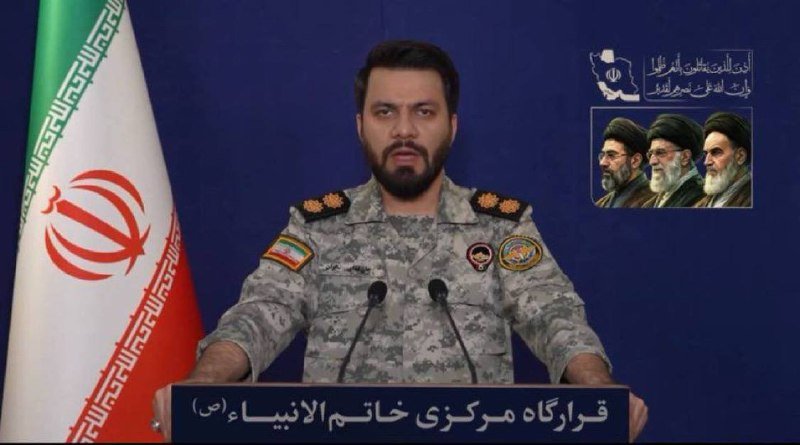
The Strait of Hormuz is doing what it has always done: deciding things. On the morning of 5 May 2026, Mehr News reported a queue of domestic and foreign vessels sitting in the anchorage, awaiting Iran's permission to transit. The Islamic Republic is not blocking the waterway — not yet — but it is making clear that passage is a privilege it grants, not a right. Ships wait. That is the message.
It is also, perhaps, the point.
The Iran–United States ceasefire — never formally codified, always fragile — is under visible strain. Reuters and others have reported that Israel is coordinating with Washington on contingency plans for what one Israeli source described as a "short, targeted campaign" should the situation deteriorate further. That is diplomatic language for a military operation. Meanwhile, according to a report cited by Ukrainska Pravda, President Trump declined on 5 May to confirm whether the truce with Tehran remained intact after Iranian strikes on the United Arab Emirates. He offered instead that the broader conflict could extend another two to three weeks. Two to three weeks. Not the language of a man holding a ceasefire together.
This publication has watched enough diplomatic cycles to recognise the difference between a negotiated pause and a managed unraveling. The former can be repaired. The latter tends to accelerate.
The geography of pressure
The Strait of Hormuz is the world's most consequential narrow waterway, carrying roughly 20 percent of global oil trade and 20 percent of liquefied natural gas. Any disruption — even a temporary one — reverberates through energy markets, shipping insurance rates, and the calculations of every major economy. Iran has always understood this. Its Revolutionary Guard Corps Navy has developed doctrine specifically around the strait's chokepoint geometry: a waterway just 33 nautical miles wide at its narrowest, bordered by Iranian territorial waters and Iranian-held islands.
The current anchorage delay is not a blockade. But it is not benign, either. It is the kind of friction that signals willingness — a way of reminding the international system that Tehran's cooperation is conditional, not contractual. And it arrives at a moment when Washington's patience, already thin, appears to have a specific shelf life.
The Trump calculus
Trump's statement, cited by Fox News on 4 May 2026, carried the blunt-force register his administration has deployed throughout its reset of Middle East policy: Iran would be "blown off the face of the earth" if it attacked U.S. ships guiding vessels through the strait. The phrase is not diplomatic. It is not intended to be. It is calibrated to a domestic audience that has shown, across multiple administrations, a preference for forceful rhetoric over cautious constraint.
But the question worth pressing is whether the administration's framing — that Iran is the aggressor, that a ceasefire is being violated, that American credibility requires a response — maps cleanly onto the facts on the ground. The UAE was struck. That is a fact. But the context of the strike — what preceded it, what regional calculation drove it — remains contested. Iranian state media has not provided a full account; Western wire services have reported the strike but not its provenance narrative. This publication does not take the dominant frame at face value, because the dominant frame in these situations typically serves the party with the better media infrastructure.
What is clear is that the administration appears to want this fight. Not necessarily a full-scale war — no serious actor does — but the kind of managed confrontation that allows for a display of strength without the kind of commitment that would cost it politically at home. A short, targeted Israeli campaign. Air strikes on Iranian nuclear or military infrastructure. A demonstration that the old rules, the ones that let Tehran build its enrichment programme in plain sight, have been replaced by something more confrontational.
The regional dimension
Israel's coordination with the United States is not surprising. The two governments have deepened their intelligence-sharing and operational planning throughout 2026, as this publication has previously noted in coverage of the broader Gaza and Iran files. What is notable is the timing: the Israeli source's description of plans for a "short, targeted campaign" arrives precisely when the Hormuz situation is providing Washington with the justification it needs. Escalation begets escalation. The ceasefire frays. The strait becomes contested. And suddenly the surgical strike that was always in the drawer looks not just plausible but necessary.
The UAE, which was struck, has been largely absent from the editorial framing of this crisis. That is worth noting. Abu Dhabi has invested heavily in de-escalation with Tehran over the past decade, building economic ties and maintaining careful diplomatic distance from the maximalist positions of Washington and Tel Aviv. A strike on Emirati territory changes that calculus. It forces the UAE to choose sides, or at least to be chosen. That is a significant escalation, and it has received remarkably little attention in the Western press compared to the back-and-forth between Washington and Tehran.
What this publication finds
The Strait of Hormuz situation is not a crisis that happened to the international system. It is a crisis that is being used — by actors on multiple sides — to advance agendas that have little to do with navigation rights or shipping lanes. Tehran uses the anchorage delays to remind the world of its leverage. Washington uses Iranian aggression as justification for a more confrontational posture that it has signaled it wants. Israel gets a window for the operation it has been building toward. The UAE gets caught in the middle, as it has been for decades.
The ceasefire, such as it was, may survive. Diplomatic architecture of this kind has resilience even when its foundations are rotting. But the queue of ships sitting in the anchorage, burning fuel, waiting for clearance — that is not a good sign. It is what it looks like when a negotiation is losing its grip on reality. The vessels will move eventually. The question is whether what follows them is a strait that functions, or a strait that becomes the arena.
This is a story about geography and about will. It is also, unmistakably, a story about the appetite of powerful governments for confrontation when they believe they have the leverage to shape the outcome. The Hormuz squeeze is not an accident. It is a feature of the moment we are in.
Wire provenance
This editorial synthesis draws on the following public wire/social posts:
- https://t.me/ClashReport/1842
- https://t.me/mehrnews/58741
- https://t.me/ukrpravda_news/2847
- https://x.com/unusual_whales/status/1920012345678901