The Strait of Hormuz Standoff Exposes the Limits of American Power Projection
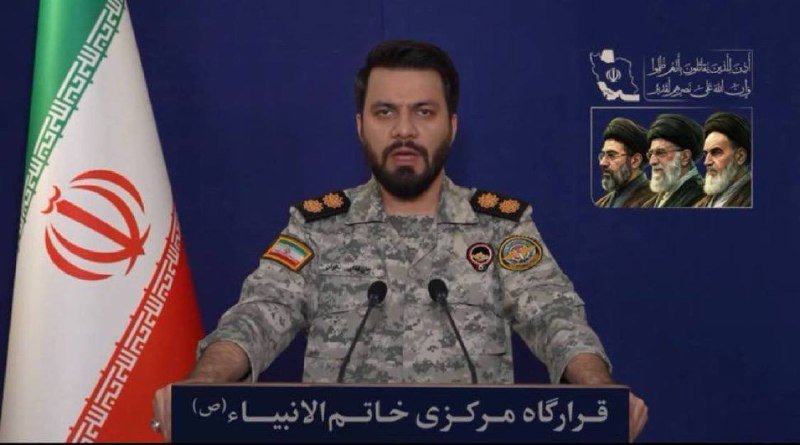
Iran has given notice. Ships that disregard its regulations in the Strait of Hormuz will be met by force. That warning, issued through state-adjacent channels on 4 May 2026, is not merely rhetorical. As reported by The Indian Express, the broader disruption to the Strait — a waterway through which roughly a fifth of the world's oil passes — has already qualified as a global energy emergency. The question now occupying diplomatic capitals is not whether Iran can be persuaded to step back, but whether anyone has the leverage to compel it.
What makes this moment distinct is not the choreography of confrontation — the missile firings, the threats, the carrier deployments — but the clarity with which the standoff exposes the distance between American military reach and American political will. The hardware exists to reopen the Strait by force. The coalition capable of sustaining that operation under modern conditions of economic interdependence does not.
The Military Picture
Reports from Iranian state-adjacent military channels describe anti-ship ballistic missile launches from Isfahan Province, a distance of approximately 800 kilometres, toward the Strait of Hormuz. If confirmed, the capability — demonstrated rather than merely claimed — represents a qualitative upgrade in what Tehran can hold at risk. Satellites, drones, and naval assets have long operated in and around the Persian Gulf. What has changed is the price of presence.
Israeli newspaper Maariv, citing assessments from regional intelligence circles, noted on 5 May 2026 that Iran continues rebuilding its capabilities and imposing its agenda in the Strait. The assessment was blunt: Iran has so far won the battle, and no clear prospect exists for reversing that outcome through pressure. That framing, from a publication not predisposed toward sympathy for Tehran, is itself significant. It suggests that within the intelligence community of a frontline American ally, the current trajectory is not a temporary inconvenience awaiting resolution.
The Strategic Arithmetic
The Strait of Hormuz is not merely a shipping lane. It is the hinge on which Gulf energy economics turn — roughly 20 percent of global oil and liquefied natural gas shipments transit its narrowest point, the 34-kilometre-wide shipping channel at its entrance. To hold it is to hold a trigger. Iran has understood this geometry for decades. The question is why that understanding is suddenly producing results now, after years in which American regional posture was treated as sufficient deterrence.
The answer lies partly in what has changed on the American side. Years of domestic political fracture over Middle Eastern engagement, combined with the structural realities of a Gulf region where Chinese energy demand now anchors a significant portion of oil flows, have made the costs of a forceful reopening calculation genuinely different from what it was two decades ago. Washington can still act. What it cannot do easily is assemble the multilateral framework that would make a sustained reopening operation politically defensible across allied capitals whose economies depend on uninterrupted access.
The energy markets have already registered the shift. Disruption at Hormuz does not simply raise prices in the short term — it re-prices the political risk premium embedded in every long-term oil contract. Buyers who can diversify will diversify. Buyers who cannot will begin building longer-term relationships with suppliers who do not face the same chokepoint vulnerability. Both outcomes redound to Iran's benefit.
The Counter-Argument and Its Limits
It is worth stating the alternative case clearly, because a publication committed to evidence-based analysis owes its readers more than the dominant framing. The view from Washington and its Gulf partners holds that Iran has overplayed its hand — that economic pressure, secondary sanctions, and diplomatic isolation will erode the regime's capacity to sustain a long-term posture at the Strait. Under this reading, the current standoff is a pressure point, not a turning point.
The difficulty with that position is not that it is incoherent. It is that the sources do not indicate momentum moving in that direction. Iranian military channels have described ongoing operations and stated intentions without visible capitulation. The Maariv intelligence assessment, sourced from a credible regional vantage point, found no consensus pathway to forcing a reversal. And the energy disruption itself, as reported by The Indian Express, has already deepened into a structural, not merely episodic, problem.
What Comes Next
The immediate horizon is not resolution but escalation management. The United States retains the capacity to close the Strait by other means, and regional partners retain the capacity to absorb economic disruption for a time. But managing a standoff is not the same as winning one, and the longer the current posture holds, the more the facts on the ground begin to look like facts in the diplomatic record.
The deeper consequence is less visible but more durable. A Strait of Hormuz that operates under Iranian imprimatur — even incompletely, even contested — is a Strait that recalibrates every energy security calculation from Beijing to Berlin. It is a Strait that normalises a new distribution of power in a region Washington has treated as its sphere of influence for fifty years.
The current moment does not prove that American power is finished in the Gulf. It proves that American power, divorced from a coalition willing to bear the costs of its deployment, has a ceiling. That ceiling is the Strait of Hormuz, and Iran has found it.
Wire provenance
This editorial synthesis draws on the following public wire/social posts:
- https://x.com/sprinterpress/status/1919818912347398393
- https://t.me/IRIran_Military/8471
- https://x.com/unusual_whales/status/1919768965349581256