IMF Chief Warns of Steep Economic Price if Middle East Conflict Persists to 2027
IMF Managing Director Kristalina Georgieva has warned that a sustained Middle East conflict into 2027 would impose severe, cascading costs on the global economy — a caution grounded in the fund's modelling of interconnected commodity, trade, and currency vulnerabilities.
Kristalina Georgieva, Managing Director of the International Monetary Fund, told reporters on 4 May 2026 that the institution's modelling pointed to significant global economic deterioration if the Middle East conflict is not resolved before 2027. Speaking from Washington, Georgieva said the consequences would not remain confined to the region. Commodity markets, shipping corridors, and currency pressures would propagate outward — raising costs for energy importers, straining debt sustainability in developing economies, and compounding post-pandemic inflation pressures that have not fully receded in most industrialised nations.
The IMF's assessment carries weight precisely because it is not a political statement. The fund's credibility rests on economic modelling, historical data cross-referencing, and surveillance of 190 member economies. When Georgieva speaks of economic risk, she is reporting the output of that system — and on this occasion, that output is a warning.
The specific mechanisms of risk
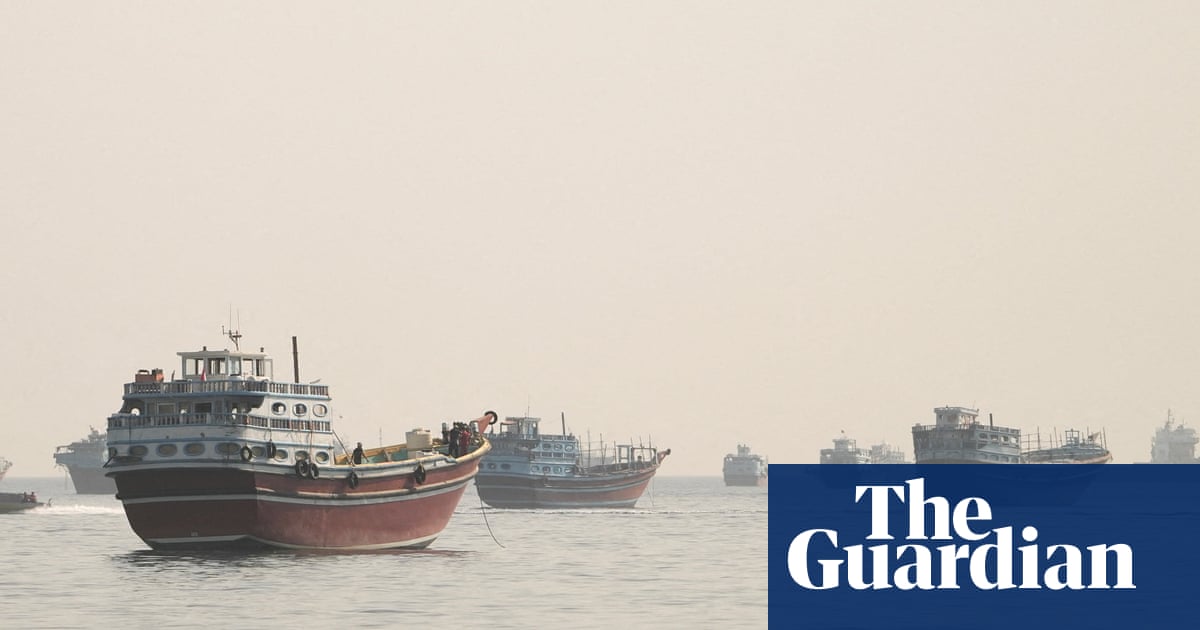
The channels through which a prolonged Middle East conflict would damage the global economy are not abstract. Energy pricing is the most immediate: oil markets remain sensitive to supply disruption in a region that accounts for a substantial share of global exports. Even a temporary closure or interdiction of transit corridors — the Strait of Hormuz alone moves roughly a fifth of the world's liquefied natural gas — would register immediately in import-bill inflation across Asia and Europe.
Beyond energy, shipping and trade logistics would face cascading disruption. The Suez Canal, traversed by roughly 12–15 percent of global trade by volume, has already experienced period closures and detentions during periods of regional escalation. Diversion around the Cape of Good Hope adds significant time and cost to supply chains still recovering from post-pandemic bottlenecks.
The currency dimension is harder to model but no less real. Dollar pricing of commodities creates automatic pass-through effects: a stronger dollar — which tends to appreciate during geopolitical risk events as capital seeks safe-haven assets — raises the effective cost of oil imports for economies whose currencies do not move in lockstep. For households already strained by elevated inflation in the aftermath of the 2022–2023 price shock, the compounding effect on purchasing power is direct and immediate.
Central banks in the developing world face a particularly acute version of this bind. They must simultaneously support growth, defend currency stability against dollar inflows and outflows, and manage debt loads that have grown since the pandemic. The IMF's own April 2026 projections revise global growth downward, with downside scenarios explicitly anchored to geopolitical instability extending beyond a twelve-month window.
Why the IMF's framing matters — and where it warrants scrutiny
The IMF occupies a specific institutional position: it is neither a Western government nor a regional actor, yet it is funded substantially by Western members and historically has operated within a dollar-denominated governance structure. That gives its public warnings a particular kind of authority — but also invites scrutiny of whether the worst-case framing is the most probable outcome or a strategic communication designed to concentrate policy attention.
There is a legitimate counter-question here. Middle East conflict scenarios span a wide range of intensity and duration, and the IMF's own economists acknowledge difficulty pricing geopolitical risk into standard growth models. The fund has previously issued warnings about crisis scenarios — the 2020 recession, the 2022 energy shock — that materialised at or near predicted scale. But it has also issued warnings that did not fully translate into the outcomes suggested by the models. Whether Georgieva's 2027 framing reflects a high-probability central case or a tail-risk precaution is not fully clear from public statements.
What is clear is that the underlying data is not neutral. Oil prices are up 23 percent year-over-year as of April 2026. Inflation in most G7 economies remains above the two-percent targets central banks formally prefer. Several large developing economies are navigating debt restructuring processes. The geopolitical-economic connection is not invented; it is being measured.
The structural picture beneath the warning
If there is a broader pattern worth noting, it is not the specific conflict du jour but the cumulative fragility accumulating in the global economic architecture. Dollar hegemony — the arrangements through which international trade, commodity pricing, and sovereign debt issuance flow through dollar-denominated systems — has been a structural constant for decades. That constancy is now under accumulating pressure from multiple directions simultaneously: US sanctions used as first-order geopolitical instruments, BRICS economies pursuing bilateral trade in local currencies, alternative payment messaging systems like China's CIPS and Russia's SPFS, and periodic discussions in strategic policy circles about whether the dollar's role as a geopolitical weapon has reached a threshold where it incentivises structural substitution.
None of this means the dollar is about to collapse. But it does mean the system's stability is lower than it was, and that fragility is not evenly distributed. When disruptions occur — supply shocks, conflict-driven trade disruptions, currency volatility — the shock-absorption capacity of the current architecture is less than it was in prior cycles. Georgieva's warning is about economic cost, but the structural framing beneath it is about the declining resilience of the order that prices that cost.
For the world's majority — those outside the United States, the European Union, and other reserve-currency issuers — this structural dynamic is not abstract. A world in which commodity trade moves through non-dollar channels, in which financing costs are determined by different credit architectures, and in which the rules governing development lending are contested — that world does not distribute costs evenly. Whether the dollar-based system or a successor arrangement delivers better outcomes for the Global South is a question the data does not yet answer cleanly. What the IMF's data does suggest is that the transition is not cost-free, that the costs are most acute for those least able to absorb them, and that a conflict extending to 2027 would accelerate a transition that is already underway.
Stakes and forward view
The stakes are concrete and asymmetric. Western economies, holding reserve currency status and structural advantages in capital market access, have more capacity to absorb geopolitical-driven economic shocks than economies that do not. The latter — developing nations in sub-Saharan Africa, South and Southeast Asia, and Latin America — face the compounded pressure of transition costs, climate-driven adjustment, and infrastructure deficits simultaneously. Georgieva's warning is, in this sense, a warning not to them but about them: they bear the cost of instability they did not create.
Whether that asymmetry generates political pressure for reform — whether the BRICS trajectory accelerates, whether the dollar's weaponisation generates sufficient pushback to trigger structural rebalancing — remains to be seen. The IMF's data, at minimum, measures the cost of the current arrangement. That measurement, from an institution not known for dramatic public interventions, is itself significant.
What remains genuinely uncertain is whether the conflict extends to 2027, whether the economic models capture the political variables accurately, and whether the policy responses — from central banks, from finance ministries, from multilateral institutions — are proportionate to the risk being flagged. The IMF has issued the warning. The question is who acts on it, and in which direction.
This publication covered the IMF warning in the context of structural economic fragility and Global South exposure — a framing distinct from the more general risk narratives in the mainstream wire services, which tended to present the warning as a commodity-price scenario rather than a systemic-order question.
Wire provenance
This editorial synthesis draws on the following public wire/social posts:
- https://t.me/tasnimnews_en/38728
- https://en.wikipedia.org/wiki/International_Monetary_Fund