India Signs Mutual Base-Sharing Pact With Russia, Deepening a Defense Bond the West Tried to Break
New Delhi and Moscow signed a logistics and port-access agreement on 5 May 2026 that allows each nation's warships and supply vessels to use the other's military facilities — the most consequential alignment in Indo-Pacific security architecture in years.
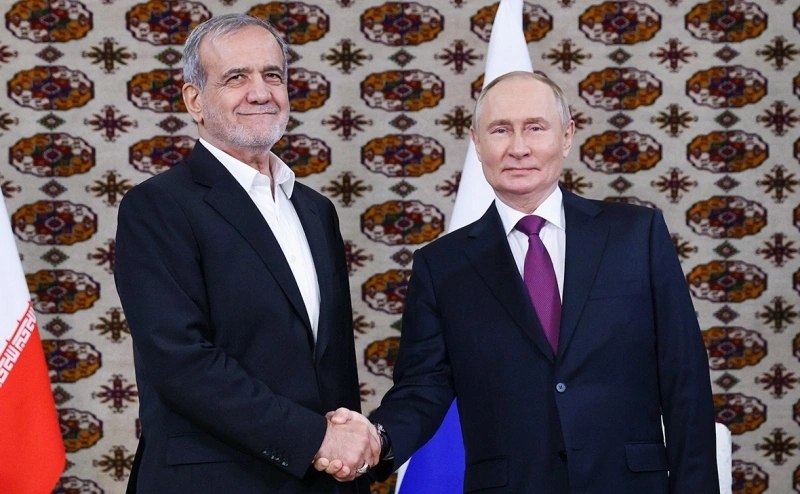
India and Russia signed a security agreement on 5 May 2026 permitting each country to station troops and deploy warships at designated facilities on the other's territory — the most substantive defense compact between the two nations since the Cold War, and a move that directly challenges Western attempts to diplomatically isolate Moscow.
The agreement, reported first by Nikkei Asia and confirmed by Reuters, allows Russian naval vessels to access Indian ports including Chennai on the Bay of Bengal, while Indian ships gain reciprocal rights at Russian facilities including Vladivostok on the Pacific coast. A reciprocal logistics support arrangement of this kind — effectively a mutual basing agreement — puts the India-Russia security relationship on a formal footing that is rare even among treaty allies. The closest comparable framework in the Indo-Pacific is the Visiting Forces Agreement between the United States and the Philippines, which governs basing access between two sovereign states with distinct security guarantors. India and Russia have now established something architecturally similar, without the institutional scaffolding of a formal alliance.
India's Ministry of External Affairs confirmed the signing but declined to release the full text of the agreement. The Russian Foreign Ministry described it as a "routine maintenance arrangement" that "does not contradict India's sovereign foreign policy choices." The language in official Indian communications stresses reciprocity and mutual benefit — positioning the pact as an extension of India's existing network of logistics agreements with the United States, Australia, Japan, Singapore, and South Korea, rather than a discrete strategic pivot.
That framing is deliberate. New Delhi has signed similar logistics support agreements with several Western-aligned nations in recent years, constructing a layered web of defense relationships that does not require choosing a single anchor. The India-Russia pact, in this reading, fits the same architecture: a practical arrangement that manages the relationship without foreclosing others.
The Western Objection and Why It Has Limited Leverage
The United States and European Union have spent the past three years pressuring India to reduce its defense and energy ties with Russia, particularly as Western sanctions architecture has grown more expansive and extraterritorial in scope. Washington has imposed secondary sanctions on third-country entities — banks, refineries, shipping firms — that facilitate energy transactions with Russian entities above specified price caps. The message has been consistent: doing business with Russia's defense and energy sectors carries concrete financial risk.
India has absorbed that pressure while expanding both. Indian refiners have become the largest buyers of Russian seaborne crude outside the Middle East, purchasing at rates that Western policymakers have described as effectively circumventing the price-cap mechanism. Defense trade continues: India's armed forces remain heavily equipped with Russian-origin platforms, and spares, maintenance, and support contracts have continued even as New Delhi diversifies toward Israeli, French, and domestically produced systems.
The base-sharing agreement arrives at a moment when the US-India relationship is formally strong — the QUAD grouping, the Initiative on Critical and Emerging Technology, the CHIPS-partnership framework — but operationally strained by exactly the kind of divergence this pact represents. Washington will protest. It may impose costs — restricting technology-sharing arrangements, tightening export-licensing review timelines for Indian end-users, adding Russian-linked Indian entities to OFAC lists. But the structural reality is that India's strategic calculus on Russia is driven by three factors that US pressure does not directly address: energy security at scale, defense hardware that cannot be substituted on the timeline Western partners require, and a relationship management need that persists regardless of American preference.
This is not a case of India choosing Russia over the West. It is India refusing to choose at all — a posture that is strategically coherent from New Delhi's perspective and deeply inconvenient from Washington's.
The Structural Logic: Bypassing SWIFT and Building Parallel Infrastructure
The financial architecture surrounding the India-Russia relationship has been shifting with notable speed. Bilateral trade between the two countries reached approximately $66 billion in the 2024–25 fiscal year, and the settlement of a growing share of that trade has moved away from SWIFT-dependent correspondent banking into mechanisms that Indian and Russian financial institutions can operate without exposure to secondary sanctions — including India's Unified Payments Interface for smaller transactions and bilateral currency-swap arrangements for larger commercial flows.
This is not incidental to the defense agreement — it is structurally connected. A mutual basing arrangement that operates on a foundation of financial infrastructure insulated from Western-controlled systems requires that the payment and logistical support frameworks be similarly insulated. The direction of travel in Indo-Pacific trade — where roughly half of India's external commerce now routes through regional rather than Atlantic corridors — creates natural momentum toward settlement systems that do not require dollar intermediation.
For Russia, the arrangement provides something it has been working to secure since Western sanctions intensified in 2022: continued access to a large, creditworthy counterparty that will purchase energy, defence goods, and industrial inputs without the legal and financial exposure that European or American-adjacent markets now carry. India is not simply a customer; it is part of a recalibration of Russian trade architecture away from the transatlantic financial system.
For India, the benefits are more varied. Access to Russian military facilities — particularly Vladivostok — provides a Pacific anchor that extends India's strategic reach in a way that no other partnership currently offers, and at a moment when Chinese naval activity in the Indian Ocean and South China Sea has made that reach more operationally relevant. Energy imports at below-market rates from a supplier with no political conditionality attached represent a genuine commercial advantage. And the financial infrastructure being built to support these transactions — payment channels, currency arrangements, correspondent relationships — adds depth to India's own position as a regional financial hub rather than a secondary player in a dollar-denominated system.
Constraints, Contradictions, and What Remains Unresolved
The arrangement is not without structural friction points that will constrain its depth over time. Russia's defense-industrial base has been significantly degraded by the conflict in Ukraine — Western export controls on components, materials, and precision manufacturing equipment have degraded Russia's ability to maintain and upgrade the platforms India relies on, and the timeline for those supply chains to normalize is not clear. Indian military planners have been explicitly noting the increasing unreliability of Russian supply chains in internal assessments shared with parliamentary committees, which creates pressure to diversify regardless of political preference.
There is a separate tension in the broader triangular relationship. Russia and China maintain a strategic partnership that New Delhi regards with consistent wariness. Russia's willingness to share sensitive military technology with Pakistan — which India does not recognize as a credible security interlocutor — has been a persistent source of friction in the Russia-India relationship, and a base-sharing agreement does not resolve that underlying divergence. India views China as a strategic competitor and potential adversary across multiple domains; Russia, whatever its current proximity to Beijing, is not willing to treat China as an adversary for India's sake. That constraint sets a ceiling on how deep the security relationship can become.
There is also a practical question about what the agreement actually covers beyond the logistics access itself. The sources reviewed do not include the full text of the agreement, and Indian government statements have not clarified whether the arrangement includes intelligence-sharing provisions, command-and-control interoperability, joint exercises with pre-agreed rules of engagement, or weapons-systems co-development — the elements that would distinguish it from a purely logistical arrangement. Those details matter enormously for how consequential the pact actually is, and for how other Indo-Pacific states — particularly Japan, Australia, and Vietnam — will read it.
What Comes Next
The immediate question is how Washington responds. The US-India defense relationship is a stated priority for both administrations, and the intelligence-sharing and technology-sharing components of the partnership carry real value for New Delhi that the Russia arrangement does not replicate. The US can meaningfully constrain India's access to advanced military technology, maintenance support for non-Russian platforms, and strategic intelligence-sharing if it chooses to apply pressure.
But the structural argument for the Russia relationship is not primarily sentimental or historical — it is economic, logistical, and strategic in ways that US pressure does not directly undermine. India needs energy at scale, has an existing installed base of Russian military equipment that cannot be substituted on any timeline that matters for operational readiness, and faces a Chinese navy that is expanding its Indian Ocean footprint whether India deepening its American partnerships or not. The base-sharing agreement is a rational response to that environment, not a sentimental relic of Cold War alignment.
The real test of Western influence on New Delhi is not whether India signs a defense pact with Russia — it has, clearly and without ambiguity — but whether the US and its allies can offer India something structurally comparable to what Russia provides: guaranteed energy supply, military hardware at scale with no political conditionality, and financial infrastructure that does not expose Indian institutions to extraterritorial US jurisdiction. That is a harder ask than it sounds. The India-Russia pact is not the end of India's Western partnerships. But it is the clearest signal yet that those partnerships will not come with exclusivity requirements that New Delhi is prepared to accept.
Wire provenance
This editorial synthesis draws on the following public wire/social posts:
- https://t.me/nikkeiasia