Iranian Foreign Minister Arrives in Beijing for Diplomatic Push Amid Shifting Global Alliances
Iran's Foreign Minister Abbas Araghchi arrived in Beijing on Tuesday for what officials described as continuation of ongoing diplomatic consultations, arriving amid parallel Chinese declarations of solidarity with Cuba against what Beijing called illegal US sanctions.
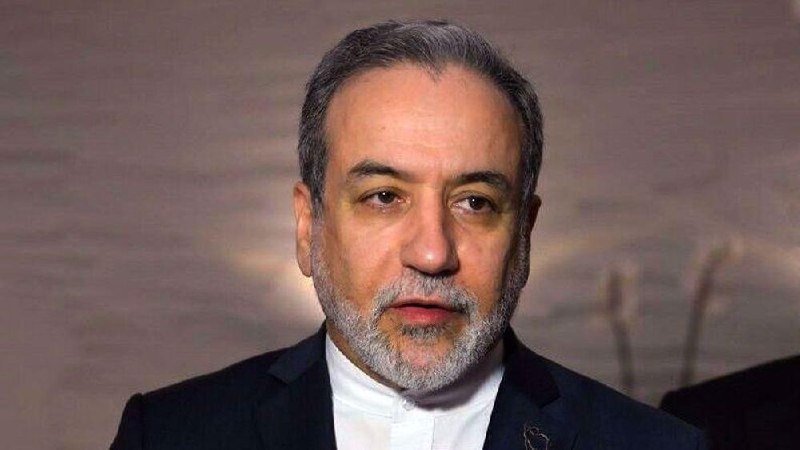
Iranian Foreign Minister Abbas Araghchi arrived in Beijing on Tuesday, 5 May 2026, for diplomatic consultations that Iranian state media framed as part of a broader push to deepen Tehran's engagement with major non-Western powers. The visit, confirmed by Iran's Foreign Ministry and reported by Mehr News and Tasnim, comes as China simultaneously issued a sharp condemnation of United States sanctions on Cuba, framing the embargo as a violation of the rights of the Cuban people and a breach of Cuban sovereignty.
The dual timing of Araghchi's arrival and China's Cuba statement illustrates a pattern that has defined Beijing-Tehran relations over recent years: two states whose interests converge on challenging what they characterise as American overreach, whether in the Middle East or the Caribbean. The question is not simply whether Iran and China see eye to eye, but whether their diplomatic synchronisation amounts to a structured alternative to the US-led international order, or whether it reflects shorter-term strategic convenience.
What the Visit Signals for the Iran-China Relationship
Iranian state media described Araghchi's trip as the continuation of diplomatic consultations with various countries, a formulation that deliberately avoids specificity about agenda items. The Tasnim news agency, which is affiliated with Iran's Islamic Revolutionary Guard Corps, noted that Araghchi would meet his Chinese counterpart to discuss bilateral relations and regional and international developments. The phrasing mirrors language used in previous Iranian diplomatic engagements this year, suggesting the visit is part of a structured programme rather than a reactive move.
China is Iran's largest trading partner and a critical economic lifeline as Tehran remains under sweeping Western sanctions over its nuclear programme. Bilateral trade has grown despite the restrictions, with energy exports forming the backbone of the commercial relationship. China's willingness to continue purchasing Iranian oil — even as US officials press Beijing to reduce energy imports from Iran — has been a persistent source of friction between Washington and Beijing. For Tehran, the relationship provides not just revenue but also diplomatic cover: a veto-wielding permanent member of the UN Security Council that has consistently rejected Western pressure on Iran.
Chinese state media, meanwhile, presented the timing of Araghchi's visit against a backdrop of Washington's enforcement actions against Cuban sovereignty. The Chinese Foreign Ministry's statement that it strongly supports Cuba in protecting its national sovereignty and security, and strongly opposes any interference in its internal affairs, was issued within minutes of the announcements about Araghchi's arrival. That synchronisation is unlikely to be coincidental.
Cuba as a Test Case for Chinese Multipolar Diplomacy
The Chinese statements on Cuba are notable for their directness. The Foreign Ministry described US escalation of illegal unilateral sanctions imposed on Cuba as a serious violation of the rights of the Cuban people. The framing mirrors Beijing's language on other flashpoints — including Ukraine and the South China Sea — in which China positions itself as a defender of sovereign equality against what it characterises as hegemonic coercion by the United States.
For China, expressing solidarity with Cuba serves multiple purposes simultaneously. It reinforces Beijing's narrative of standing with developing nations against Western pressure, which resonates across the Global South. It also demonstrates that Chinese diplomatic commitments extend beyond major strategic relationships to states that Washington considers adversaries. And it provides a counter-weight to narratives that cast China as primarily self-interested in its global engagement — a charge that has grown louder as Chinese investment in Latin America has expanded.
The timing — on the same day Araghchi arrived — suggests Beijing wanted to signal that its partnerships across the developing world are not siloed. The message to Washington is that any strategy premised on isolating individual states will face resistance from a growing coalition of states willing to publicly align against US sanctions policy.
The Structural Shift These Moments Represent
The convergence of Iran's Beijing visit and China's Cuba statement points to something larger than bilateral diplomacy. What is taking shape, across multiple regions and multiple issue-areas, is a pattern of diplomatic coordination that US analysts have been tracking for years but that has accelerated since the introduction of comprehensive Western sanctions on Russia in 2022. The shared framework is not ideological — Iran and China are not natural allies in any conventional sense — but strategic: both states share an interest in challenging the architecture of US financial and diplomatic power.
The mechanism is not a formal alliance. There is no Warsaw Pact equivalent, no binding treaty that mandates mutual support. Instead, the coordination operates through regular diplomatic contact, synchronised public statements, and practical cooperation in areas like energy trade and technology-sharing. The effect, for Washington, is functionally similar to a formal alliance: it means that actions taken against one state are likely to be met with public opposition from the other, and that the costs of confrontation are distributed across a broader network than they would be in a bilateral contest.
This matters for how the US structures its own diplomacy. The traditional approach — applying maximum pressure on individual target states with the expectation that isolation would produce concessions — becomes harder to sustain when targeted states have access to diplomatic and economic alternatives that they did not have a decade ago. China's role is central here, not because Beijing is the architect of a coordinated anti-Western strategy, but because it provides the economic depth and diplomatic weight that makes alternative networks viable.
What Remains Uncertain
The sources do not provide specifics on what agreements or understandings Araghchi is expected to reach in Beijing, nor do they indicate whether nuclear negotiations — a persistent subplot in Iran-West relations — were on the formal agenda. Iranian officials have given conflicting signals in recent months about the prospects for reviving the 2015 Joint Comprehensive Plan of Action, and the current US administration has maintained the maximum pressure posture inherited from the prior White House.
It is also unclear whether Araghchi's visit to Beijing is part of a broader regional tour that will include other capitals, or whether the Beijing leg is a standalone trip. The Mehr News report described the visit as part of continuing diplomatic consultations with different countries, which leaves open the possibility of subsequent stops. Whether those include Moscow — Iran and Russia have deepened their cooperation significantly since 2022 — is not addressed in the current sources.
What is clear is that the diplomatic temperature between Beijing and Tehran remains elevated, and that both sides have a structural interest in presenting a united front against what they frame as Western pressure. The question for US policymakers is whether the infrastructure now exists to make that front effective — and whether the costs of acting against it have risen past the threshold of what Washington is prepared to absorb.
This publication's wire intake gave substantial space to the Iranian and Chinese state media framing. Western diplomatic sources on the visit were not reflected in Tuesday's thread and are not incorporated here.
Wire provenance
This editorial synthesis draws on the following public wire/social posts:
- https://t.me/alalamarabic/458921
- https://t.me/alalamarabic/458918
- https://t.me/alalamarabic/458891
- https://t.me/alalamarabic/458888
- https://t.me/mehrnews
- https://t.me/tasnimnews_en
- https://t.me/JahanTasnim