Iran's Beijing Gambit: Araghchi's Visit and the Geometry of Sanctions Evasion
Iran's foreign minister arrived in Beijing on 5 May 2026 for consultations that go beyond bilateral ceremony — they reflect a deepening alignment that complicates Western efforts to isolate Tehran over its nuclear programme and regional activities.
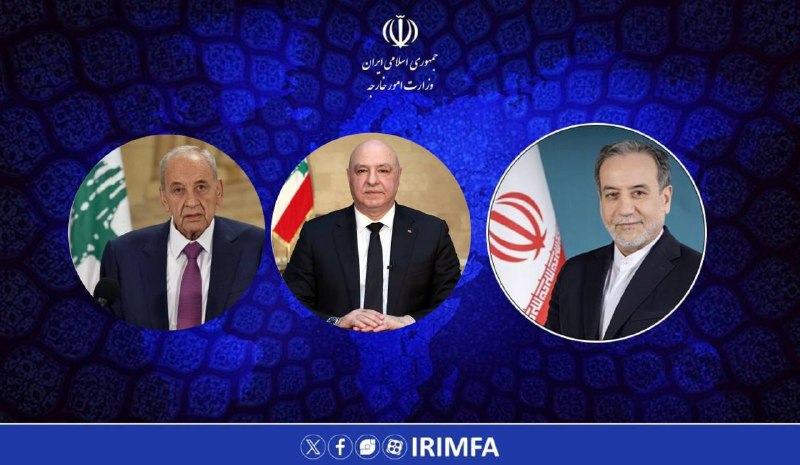
When Abbas Araghchi's plane touched down in Beijing on the morning of 5 May 2026, the greeting was formally warm but operationally significant. The Iranian foreign minister had come to meet his Chinese counterpart, Wang Yi, and the agenda — as described by the Iranian Foreign Ministry — covered bilateral relations alongside regional and international developments. What that phrasing obscures is the weight of the conversation: this is a relationship that has grown from diplomatic courtesy into something closer to strategic necessity, shaped by the cumulative pressure of Western sanctions, the paralysis of the Joint Comprehensive Plan of Action, and a shifting map of alliance across the Global South.
The visit was announced across multiple Iranian state-adjacent Telegram channels on the morning of 5 May, with near-identical language confirming that the trip was part of "continued diplomatic consultations" and that the two foreign ministers would discuss matters spanning the bilateral relationship to the broader international order. The coordination in messaging suggests preparation, not improvisation — Tehran knows what it wants from Beijing, and Beijing has signaled willingness to receive.
The Partnership That Grew in the Shadow of Maximum Pressure
The China-Iran strategic partnership did not emerge overnight. It was formalised in a 25-year cooperation agreement signed in March 2021, a document whose precise terms remain partially classified but whose broad outlines are known: Chinese investment in Iranian energy and infrastructure in exchange for reliable crude oil supply, and diplomatic cover in international forums where Tehran faces pressure. That framework was always about more than trade. It was a statement of intent — that Iran would not be made to choose between its economic survival and its strategic autonomy.
For Beijing, the relationship serves several functions simultaneously. China is the world's largest crude importer, and Iranian oil — sold at a discount precisely because of sanctions — offers a cost advantage that Chinese refineries have consistently exploited. The International Energy Agency estimates that Chinese refiners have maintained significant import volumes from Iran despite US sanctions, routing cargoes through opaque intermediary jurisdictions to obscure the supply chain. Beijing has never publicly acknowledged this as policy; instead, it positions its energy relations with Iran as entirely legitimate commercial activity protected by international law. China's position, stated repeatedly through the foreign ministry and in statements to the UN Security Council, is that sanctions regimes imposed unilaterally by the United States lack legal basis under international law and must not be enforced against third parties.
That framing matters. It is not merely a diplomatic courtesy — it is a direct challenge to the architecture of US financial sanctions, which rely on the global reach of the dollar and the willingness of third-country banks and companies to avoid secondary sanctions exposure. China's stated position removes any ambiguity about where Beijing stands on that architecture.
The Nuclear Talks and the Diplomatic Pressure Points
Araghchi's Beijing visit arrives at a moment of particular sensitivity in the nuclear file. Indirect negotiations between Iran and the United States — mediated by Oman and occasionally by European interlocutors — have resumed after a period of stagnation, and Araghchi has been central to that process as Iran's lead negotiator. The talks are not going well, according to sources familiar with the discussions, and the fundamental divergence remains what it has been for years: Washington insists on铐 restrictions that Iran insists are sovereignty violations, and Tehran wants sanctions relief that Washington is reluctant to provide until Iranian behaviour changes.
The timing of the Beijing visit, then, is not accidental. Iran is communicating to the United States — through the channel that Washington cannot shut down — that it has options. A successful outcome in Beijing, in terms of expanded economic cooperation or diplomatic reassurance, would give Araghchi additional leverage in whatever round of nuclear talks follows. China, for its part, has consistently maintained that the Iran nuclear issue must be resolved through dialogue and that the Joint Comprehensive Plan of Action — which the United States unilaterally withdrew from in 2018 — remains the appropriate framework. Beijing's position is that restoring the agreement is the most direct path to regional stability, and that maximum pressure campaigns have only hardened Tehran's position.
This analysis finds some corroboration in the trajectory of Iranian nuclear behaviour since 2018. Uranium enrichment levels have climbed steadily, research on advanced centrifuge variants has continued, and International Atomic Energy Agency access to monitoring sites has been periodically curtailed — all consistent with a country that has concluded the costs of compliance without the benefits of sanctions relief are too high to bear.
The Regional Map: Syria, the Gulf, and the Architecture of Resistance
The discussions in Beijing on 5 May also covered "regional" matters — a category that in current Iranian foreign policy encompasses several distinct but interconnected theatres. The fall of the Assad government in Syria in late 2024 removed a keynode in Iran's regional architecture, severing a supply line to Hezbollah and requiring Iran to rebuild its influence across a more complex terrain. Lebanon's political landscape has shifted. Yemen's Houthis have demonstrated their capacity to disrupt Red Sea shipping in ways that have drawn Western military response. The Palestinian issue remains unresolved. Each of these theatres involves relationships that Iran is managing and, in some cases, rebuilding.
China's interest in this space is not ideological — it is strategic and economic. Beijing has consistently sought to expand its influence across the Middle East as part of its broader Belt and Road orientation, cultivating relationships with states on both sides of several divides. China's position on the Gaza conflict has been notably more sympathetic to the Palestinian cause than the Western主流, reflecting both its stated commitment to the two-state solution and its interest in maintaining goodwill across a region where Chinese economic presence is growing. Chinese companies hold infrastructure contracts across the Gulf; Chinese workers are present in significant numbers in several regional states. Stability, in Beijing's calculus, is preferable to disorder — but the kind of stability Beijing prefers is one that does not require alignment with US-led security frameworks.
The Dollar Question and the Multipolar Response
There is a structural dimension to this visit that goes beyond any single bilateral relationship. The conversations Araghchi is having in Beijing take place inside a broader context in which multiple states are re-examining their relationship to the dollar-denominated international financial system. US sanctions on Russia — sweeping, comprehensive, and enforced with secondary measures against third-country institutions — have alarmed states across Asia, the Middle East, and the Global South. The message these states draw from the Russia experience is not subtle: dollar dominance is a policy instrument that the United States will deploy, and any country could be next.
China has invested heavily in alternatives: the Cross-Border Interbank Payment System, bilateral currency swap agreements, and the promotion of the yuan in oil pricing frameworks. Iran, under severe sanctions pressure, has become an enthusiastic participant in this architecture of financial de-dollarisation. Bilateral oil trade between Iran and China is increasingly settled in yuan or through barter-equivalent mechanisms that sidestep the SWIFT system entirely. Iran's central bank has developed protocols for managing these transactions in ways that reduce exposure to US secondary sanctions.
This is not, as some Western analysts frame it, a coherent challenge to dollar hegemony — it is a set of practical adaptations by states seeking to preserve economic relationships under conditions of financial coercion. The gap between the two characterisations matters: one implies a coordinated ideological project, the other a rational response to coercive pressure. The evidence supports the second reading more than the first. Iran is not exporting a revolutionary financial ideology; it is finding workable solutions to an immediate problem.
What Comes Next
The outcomes of Araghchi's Beijing consultations will unfold over the coming days and weeks. What is already clear is the direction of travel: Iran-China relations are deepening across economic, diplomatic, and security dimensions, and the visit on 5 May is a milestone in that trajectory rather than a departure from it.
For the United States, the challenge is structural. The tools available to pressure Iran — sanctions enforcement, diplomatic isolation, military deterrence — all function less effectively when the target state has a major power willing to provide economic sanctuary and diplomatic cover. The Obama administration's approach, which made China a partner in applying pressure on Iran, has no obvious analogue in the current US political environment, where any accommodation with Beijing is treated as appeasement.
For China, the relationship with Iran is one element of a broader strategy of cultivating relationships across the Global South that reduce American leverage over the international system. Beijing will not break with Tehran over Western concerns about Iranian nuclear behaviour — not because it endorses that behaviour, but because the alternative, alignment with a US-led pressure campaign, would require China to sacrifice the strategic autonomy it has spent decades building.
The conversation in Beijing on 5 May is unlikely to produce a dramatic announcement. What it will produce is continuity — an increment of economic integration, a deepening of diplomatic coordination, a reinforcement of the signal that Iran is not isolated and that its partnerships are resilient. In a diplomatic environment where isolation has been the primary tool of Western pressure, that signal is itself a significant outcome.
Desk note: Wire coverage of Araghchi's Beijing visit was concentrated in Iranian state-adjacent Telegram channels and regional outlets. Western wire services carried the visit as a factual matter but gave limited space to the strategic framing — the structural logic of why Iran and China are drawing closer, and what that means for the sanctions architecture the West relies on to constrain Tehran. This article attempts to correct that asymmetry.
Wire provenance
This editorial synthesis draws on the following public wire/social posts:
- https://t.me/wfwitness/2842
- https://t.me/wfwitness/2840
- https://t.me/MyLordBebo/1891
- https://t.me/TheCradleMedia/5148
- https://t.me/TheCradleMedia/5146
- https://t.me/TheCradleMedia/5144