Iran's Hormuz Mechanism Proves That American Presence Is Not American Power
Tehran's activation of an official maritime traffic management system for the Strait of Hormuz on 5 May exposes a structural gap: the US Navy can transit the strait, but it cannot govern it.
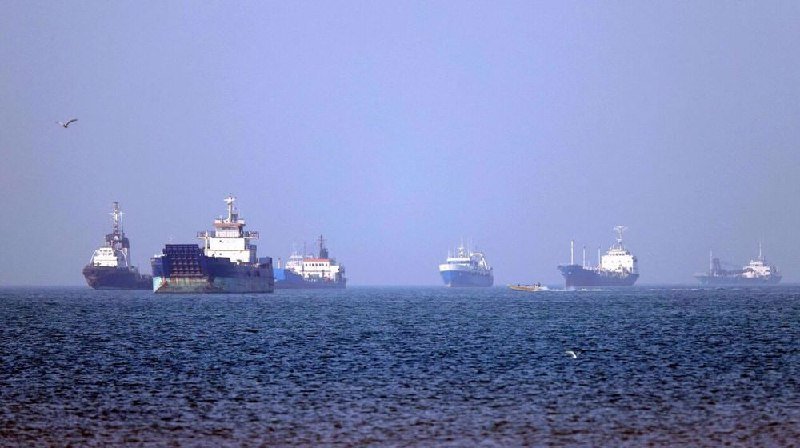
The world watched as the US Navy sailed its destroyers through the Strait of Hormuz last month. The dispatch was framed as a show of force — a message, delivered at weapon-point, that American naval power still governs the world's most critical oil chokepoint. Iran watched too. And then it acted. On 5 May 2026, Iran officially activated a new mechanism for governing all vessel traffic through the Strait of Hormuz, according to Iranian state media. The timing was deliberate. The message was not subtle: whatever the Americans demonstrated in their destroyers' passage, Tehran has now demonstrated something more lasting — a system of control that outlasts any single transit.
The contradiction at the heart of American strategy in the Persian Gulf has been building for years. Presence has been confused with dominance, and the conflation has been expensive — in credibility, in leverage, and now in the currency that matters most: institutional control over a waterway the world cannot do without.
The Transit That Wasn't a Victory
Press TV reported on 5 May that Iran had developed and put into operation a new system for managing Strait of Hormuz traffic. The report included a simulated reconstruction — what Iranian state media described as an investigation exposing what it called the failure of the US destroyers' transit stunt, a passage that reportedly came close to what Press TV characterized as destruction. The language was calibrated for domestic audiences, but the underlying claim was serious: the American show of force was not the demonstration of supremacy it was marketed as.
Hebrew-language media, reporting on the same developments on 5 May, put the assessment more bluntly. Iran, the coverage suggested, had won the battle and imposed its goals in the Strait of Hormuz. The question being asked in Tel Aviv was not whether Iran would raise the white flag — the assessment was that it would not — but what the new equilibrium meant for a region built on the assumption of American maritime predominance.
The American narrative and the regional narrative are diverging. Washington frames freedom of navigation operations as proof of continued hegemony. The region — or at least the parts of it that have no reason to perform deference to Washington — reads the same operations and sees a power demonstrating its capability precisely because the normal condition no longer holds.
Sovereignty Without Recognition Is Still Sovereignty
The mechanism Iran launched is not a military action. It is an administrative claim — a set of protocols, screening procedures, and regulatory requirements that vessels transiting the strait must now navigate. Iranian state media described it as a formal system governing maritime traffic through the waterway, developed and officially operational as of 5 May 2026. Whether the system is enforceable against a US carrier group is a separate question from whether it exists — and its existence changes the terms of any future confrontation.
Tehran has not claimed the right to close the strait outright. It has claimed the right to manage it. That distinction matters. A blockade is an act of war. A traffic management system is a bureaucratic主权 assertion — one that other states have to engage with regardless of whether they recognise the authority behind it. Ships that transit must now consider not just the physical hazards of the passage but the regulatory architecture Iran has imposed on it. That is a qualitative change in the operating environment, and it was achieved without firing a shot.
The Chokepoint That Cannot Be Substituted
The Strait of Hormuz handles roughly 20-25 percent of global oil trade, depending on the accounting methodology. Liquefied natural gas flows through it as well. Every alternative route — the Saudi pipeline network, the Ceylon-Maritime Corridor proposals, the theoretical Trans-Arabian route through Turkey — carries constraints that make it a supplement rather than a replacement. Geography is not a negotiable interest. The strait is narrow, tidal, and flanked by Iranian territory on its northern shore. No amount of naval presence changes the fundamental fact that the waterway runs through a jurisdiction Iran has spent decades making itself indispensable to.
The mechanism Tehran launched does not need to close the strait to be consequential. It needs only to add friction — delays, procedural requirements, the constant presence of Iranian naval oversight — to a passage that global energy markets have historically assumed would remain unimpeded. Each day of elevated friction is a price signal. Each price signal creates political pressure on governments that have no alternative routing to protect. Iran understands this calculus. The mechanism it has activated is not primarily a military instrument; it is a market instrument wrapped in legal language.
What Washington Must Decide Now
The US Navy has the firepower to contest Iran's claims in the strait. It has demonstrated that capability in the destroyers' April passage. What it does not have — and what no amount of naval presence can manufacture — is the legitimacy that comes from being the recognised governing authority over a waterway Iran has just formally claimed the right to administer. These are different things, and conflating them has been the central error of American Gulf policy for two decades.
The question now is whether Washington responds to the mechanism as a challenge to be militarily neutralised or as an operational reality to be diplomatically managed. The first option risks a confrontation in one of the world's most strategically sensitive waterways, with oil markets as the immediate casualty. The second option requires accepting that American naval supremacy and American governance of the Strait of Hormuz are not the same thing — and that Tehran has been making that argument, quietly, for years.
Iran raised its flag on 5 May. Not over a military position, but over an administrative one. The world did not stop to notice. It should have.
Wire provenance
This editorial synthesis draws on the following public wire/social posts:
- https://t.me/presstv
- https://t.me/presstv
- https://t.me/presstv