When Accusation and Denial Collide: Iran's Khatam-ul-Anbiya and the UAE Crisis
The UAE Ministry of Defence reported an Iranian missile and drone attack on May 5, 2026. Within minutes, Iran's Khatam-ul-Anbiya Central Headquarters denied it outright — and warned of a crushing response if the UAE allows its soil to be used against Tehran. The gap between the two statements raises more questions than answers about who's driving escalation in the Gulf.
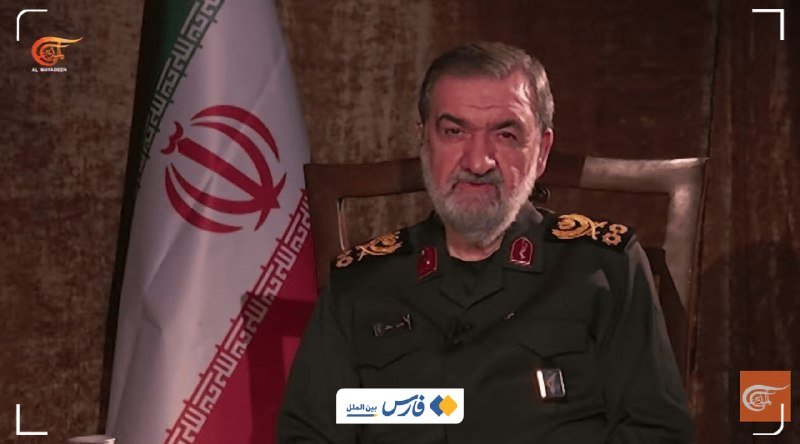
On the evening of May 5, 2026, the UAE Ministry of Defence published a short, sharp statement: Iran had launched a missile and drone attack against Emirati territory. The claim carried a red-flash dateline and spread rapidly across regional wire services. Within twenty minutes — the gap itself a signal of how seriously Tehran takes the allegation — Iran's Khatam-ul-Anbiya Central Headquarters published its own readout. Iran's armed forces, the statement read, had carried out no such operations against the UAE in the preceding days. And then, in language that pivoted from denial to threat, the spokesperson added: if any action against Iran is launched from UAE soil, the response will be crushing and regrettable. The word regrettable is doing unusual work in a sentence that otherwise reads like a declaration of war.
The two statements cannot both be fully accurate. Either the UAE's Ministry of Defence has documented an incident that Iran categorically denies, or the UAE has deployed language — "missile and drone attack" — to describe something that fits a different category entirely. What is not in doubt is that the episode fits a pattern that has become familiar in Gulf security dynamics: a triggering event, a prompt denial, and an adjacent warning that says more about the overall state of regional relations than the original claim does.
The Architecture of the Denial
Khatam-ul-Anbiya Central Headquarters is not a minor voice in Iran's military establishment. The command, which sits within the Islamic Revolutionary Guard Corps structure, functions as Iran's joint operations centre — the body that would coordinate any cross-border kinetic response. When its spokesperson speaks, he speaks with the authority of the institution that manages Iran's most sensitive military communications. That this platform was chosen for the denial — rather than, say, a foreign ministry briefing — signals that Tehran wanted the denial to carry operational weight, not just diplomatic polish.
The denial itself was precise. It did not say "we did not attack." It said the armed forces had not conducted missile or drone operations against the UAE in the past days — a phrasing that leaves open the possibility of a covert or proxy-level operation, or an operation by a different branch, neither of which would necessarily register in Khatam-ul-Anbiya's official accounting. Whether that semantic precision reflects genuine ignorance about what happened or deliberate ambiguity is not a question the sources currently resolve.
The Warning and What It Reveals
The second half of the Khatam-ul-Anbiya statement was not a denial at all. It was a threat. "If any action is taken against Iran from the territory of the UAE, we will give a crushing and regrettable response," the spokesperson said, invoking the name of Allah. The conditional structure matters: Iran is not accusing the UAE of hosting a strike. It is telling the UAE what will happen if it does. That is a different kind of message — one aimed less at the incident itself and more at the broader posture of the Emirates in the ongoing shadow war between Iran and its regional adversaries.
The UAE has maintained formal diplomatic engagement with Tehran even as it has deepened security ties with the United States and expanded normalisation agreements with Israel. That balance — hosting US military infrastructure while keeping an embassy open in Tehran — has always carried friction. The Khatam-ul-Anbiya statement reads as a reminder that Tehran is watching which direction that balance tilts.
Framing the Incidents
Several framings compete here. The first, and most straightforward, is that the UAE detected a real Iranian attack — perhaps a limited probing operation or an IRGC-aligned actor acting without explicit authorisation — and reported it accurately. Under this reading, Iran's denial is a reflexive cover operation, and the threatening second half is the real signal: Tehran is not ruling out future escalation from Emirati territory.
A second reading runs the other direction: the UAE has an interest in presenting Iran as the aggressor at a moment when it is under pressure from Washington to demonstrate its commitment to the anti-Iranian security architecture in the Gulf. Naming an Iranian attack — even an ambiguous one — serves that political purpose. The denial, under this reading, is truthful, and the UAE's claim is a deliberate construction.
A third possibility is that both sides are partially correct about facts that are fundamentally ambiguous. The Gulf's kinetic landscape is increasingly populated by drones, loitering munitions, and naval systems whose attribution is genuinely difficult. A maritime or border incident involving unmanned systems could be simultaneously described by the UAE as an Iranian attack and by Iran as something that did not involve its armed forces — and both descriptions could be honest accounts of an event whose classification remains genuinely contested.
The sources do not currently allow adjudication between these readings. What they establish is that the diplomatic temperature between the two states rose sharply on May 5, that Iran delivered its response through a senior military channel rather than a foreign ministry one, and that the conditional warning about UAE soil suggests Tehran believes the Emirates is not merely a bystander in the regional conflict.
The Stakes and the Horizon
The immediate risk is miscalculation. A statement that the Khatam-ul-Anbiya spokesperson describes as crushing and regrettable is not a calibrated signal — it is a maximum-pressure formulation designed to produce anxiety in Abu Dhabi and deterrence in Washington. Whether it deters or provokes depends on how the UAE and its security partners interpret the underlying incident. If the UAE responds with a proportional statement, the episode may close. If it responds with a visible security measure — expanded US presence, a naval movement, a public attribution to Congress — Tehran's conditional threat becomes a new floor in the relationship, not a one-time warning.
The longer horizon is the architecture of Gulf security. The UAE has spent years cultivating a position as the Gulf's most diplomatically sophisticated actor — maintaining relations with Tehran, hosting normalisation summits, projecting a posture of commercial openness even as the region fragmentates along proxy lines. A series of incidents like the one on May 5 tests whether that position is sustainable, or whether the pressures from both sides are narrowing the space in which the Emirates can operate.
What the Khatam-ul-Anbiya spokesperson made clear, in the part of the statement that received less attention than the denial, is that Tehran does not view UAE neutrality as a stable equilibrium. It views UAE soil as a potential battleground — and it is telling Abu Dhabi exactly what will happen if it ever becomes one.
This publication noted that the UAE Ministry of Defence statement circulated on evening wire services carrying a red-flash alert designation, while Iranian state media led with the denial as a primary item. The gap in how different outlets framed the same event — as an incident, as a denial, as a threat — reflects the structural difficulty of attribution in the Gulf's current security environment, where kinetic events routinely outpace the institutional capacity to verify them.
Wire provenance
This editorial synthesis draws on the following public wire/social posts:
- https://t.me/farsna/124583
- https://t.me/tasnimnews_en/89127
- https://t.me/presstv/45821
- https://t.me/DDGeopolitics/23410
- https://t.me/mehrnews/67891