The New Equation Nobody Asked Iran to Declare
Mohammad Bagher Qalibaf's social media declaration that a new Hormuz equilibrium has taken shape deserves more attention than Western capitals are currently giving it.
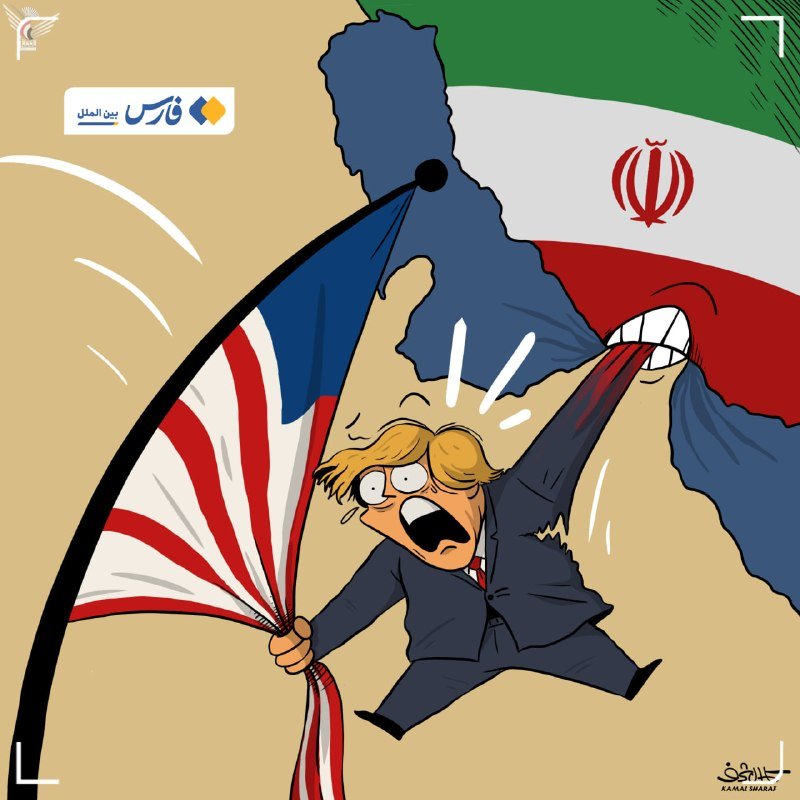
Mohammad Bagher Qalibaf has a message for Washington, and he chose to deliver it from the parliament in Tehran rather than through the usual diplomatic channels. "The continuation of the current situation is intolerable for America," the speaker of the Islamic Republic's Majlis wrote on the X platform on 5 May 2026. "While we haven't even started yet." The qualifier landed like a threat wrapped in patience. Qalibaf was not simply complaining about sanctions. He was telling the world's sole superpower that the existing arrangement — the one Washington has spent decades defending — has become, in Tehran's assessment, untenable for Iran. And that Iran has so far declined to act on that assessment.
This is not standard parliamentary boilerplate. It is the language of a state that has decided to reframe a standoff as already resolved in its own favor, and is now inviting the international system to catch up.
The Strait as Bargaining Chip — Recalibrated
The Strait of Hormuz is where this calculation becomes specific rather than abstract. Roughly a fifth of the world's oil passes through the narrow Persian Gulf mouth; the shipping lanes that feed it sit within easy reach of Iranian shore-based missiles, drones, and naval assets. Every US administration for three decades has treated freedom of navigation through Hormuz as a core interest requiring visible military presence — carrier strike groups, allied naval partnerships, and frequent freedom-of-navigation operations designed to remind Tehran that the Red Sea and Gulf are not its lake.
Qalibaf's language reframes that presence as the very thing the new equation is superseding. The Mehr News account of his statement leads with what the speaker called "the new equation of the Strait of Hormuz" — a phrase that does not describe a proposal but an accomplished shift. By declaring that the equation is "being stabilized," Qalibaf is effectively claiming that Hormuz has already become safer for Iran and more precarious for the United States than the American public understands. The burden of disruption, he is suggesting, now sits with whoever wants to preserve the old arrangement.
This is strategic communication at its most calibrated. The statement does not describe a specific military action or a new weapons system. It describes a condition. And in doing so, it plants a flag: whatever negotiations, sanctions, or regional tensions follow, they are now operating in a framework Iran has declared rather than one the United States controls.
The Leverage Arithmetic
Qalibaf's second sentence is the one that should concentrate minds in European capitals, in Asian energy ministries, and on trading desks from Singapore to Rotterdam. "While we haven't even started yet" implies a menu of options Iran believes it has not yet exercised. The statement does not specify what those options are, which is precisely the point. Ambiguity about escalation capacity is a tool only if it remains ambiguous enough to be credited.
The Hormuz threat — or rather, the Hormuz threat that Iran has spent years suggesting it could make but has exercised only partially — sits at the top of that menu. Disrupting a fifth of global oil transit would immediately spike prices, cost the global economy billions, and put direct pressure on governments whose publics are already inflation-sensitive. The asymmetry is favorable to Iran: a temporary disruption costs Tehran little and extracts maximum leverage, while the United States must decide whether a response is worth the escalation it would almost certainly produce.
Washington has made clear it would treat any attempt to close or militarily coerce the strait as a red line. But the credibility of that commitment is tested against a growing list of red lines — Ukraine requires sustained Western support; China requires strategic focus; domestic political fatigue on overseas interventions is real. Iran is not oblivious to this arithmetic. Qalibaf's statement suggests Tehran believes the moment has arrived to make the calculation explicit: the strait's stability is not a given, and the cost of preserving it is about to rise.
The Factional Calculus — What the Sources Do Not Settle
The Telegram-sourced statements from Mehr News, Tasnim English, Fars News, and Al Alam all carry the same post verbatim, which suggests coordinated release rather than independent reporting. This is normal for significant Iranian statements. What the sources do not reveal is the internal political context — whether Qalibaf is voicing a hardliner consensus, positioning himself within a factional competition ahead of nuclear talks, or testing a line that other power centers will either ratify or quietly disavow.
What is clear is that the statement was issued on the speaker's personal X account rather than through an official parliament communiqué, which gives it a different quality — closer to a direct address than a policy announcement. That distinction matters because it removes the institutional buffer. Qalibaf is speaking in a personal capacity with an unmistakably political message, which allows him maximum rhetorical latitude while maintaining enough institutional cover to retreat from specifics if necessary.
Western observers will likely characterise this as standard Revolutionary-era bluster and move on. That response would be a mistake — not because the statement itself changes anything, but because the framing it establishes does. Iran is not asking the world to notice a threat; it is presenting a situation as already changed. The question is whether that framing catches before Western capitals formulate a response, and what price they pay if it does.
What Follows If the Equation Holds
The stakes are concrete and they run in more than one direction. For Washington, the statement is a signal that whatever deal emerges from any renewed nuclear talks will not be priced as if Hormuz's stability were a fixed asset. Iran is entering whatever negotiations follow with that card already on the table, already declared played. For Asian energy importers — Japan, South Korea, India — the statement reinforces a trend already visible in accelerated investment in alternative oil transit routes: the strait is reliable only until it is not, and the insurance premium on that uncertainty is rising.
For Europe, the calculus is more immediate. Russian gas disruptions have already pushed the continent toward more diversified energy relationships, but a Hormuz disruption would hit crude markets globally and transmit price shocks into industries that have not yet fully repriced geopolitical risk. Qalibaf's statement is not addressed to Brussels, but it lands there nonetheless.
The question this publication finds most worth sitting with is not whether Iran will act on its implied threat — the sources do not say — but whether the international system's response to the declaration will be treated as a matter of routine, and thus as implicit acceptance of the new framing, or as something requiring explicit correction. Iran is betting on inertia. The next few weeks will show whether that bet was wise.
Mohammad Bagher Qalibaf's post was published on the X platform at 06:03 UTC on 5 May 2026, and subsequently reported by Mehr News, Tasnim News English, Fars News, and Al Alam. Monexus did not independently verify the originating account.
Wire provenance
This editorial synthesis draws on the following public wire/social posts:
- https://t.me/mehrnews/125874
- https://t.me/tasnimnews_en/234891
- https://t.me/farsna/118923
- https://t.me/alalamfa/892341