Iran's State Media Is Doing What State Media Does
Tasnim News Agency's framing of Trump's Gulf posture reveals more about Tehran's information-war architecture than it does about American policy — but that does not make the underlying frictions imaginary.
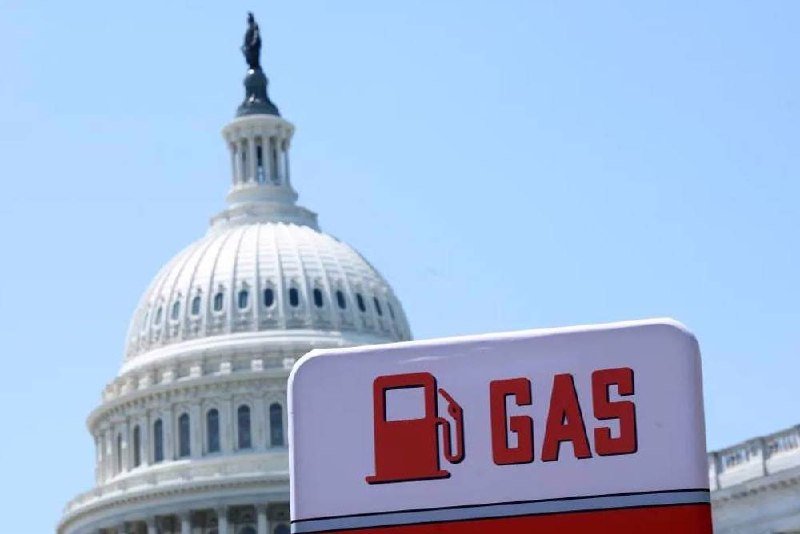
When Tasnim News Agency publishes a list of what it calls the "achievements" of the American "Freedom Project," the dispatch is not aimed at domestic Iranian audiences alone. It is a signal. The English-language feed, which monitors flagged Iran's state media output on 5 May 2026, listed three items: missiles striking a US naval frigate, an attack on the UAE port of Fujairah of unknown provenance, and rising gasoline prices inside the United States. Presented as a scoreboard, it reads as mockery. Analyzed carefully, it reveals something more instructive — about Tehran's information-war architecture, about how a state with limited conventional leverage manufactures the appearance of pressure.
The dispatch deserves scrutiny not because it is accurate — the missile claims and the Fujairah incident remain unverified by independent outlets at time of publication — but because the framing itself is a document. State media, by design, does not report events. It assigns meaning to events. Tasnim's choice of what to call a "project," what to count as an "achievement," and which audience it writes for in English are all deliberate. The publication is an artifact.
The machinery behind the message
Tasnim News Agency sits inside Iran's state media ecosystem, a structure that mirrors in form what other governments operate: a hierarchy of official outlets whose editorial line tracks official posture. English-language feeds exist to extend that line beyond Persian-speaking audiences. The channel's naming conventions — "Freedom Project" for what Washington presents as routine naval operations — are not neutral descriptors. They are positioning. A Western outlet would call the same posture a "Gulf deterrence mission" or "freedom of navigation operations." The Tehran framing inverts the language deliberately, borrowing the rhetorical register of the very forces it opposes.
This is standard practice among state-adjacent media across governments. The vocabulary of "regime change," "imperial overreach," and "Western aggression" travels easily when it is useful to the sender. What matters is not the novelty of the tactic but the consistency with which it is applied. Tasnim's thread on 5 May 2026 follows a familiar script: surface events, frame them as failures, present the list as evidence. The reader is meant to conclude that American presence in the Gulf produces instability, not security. Whether that conclusion is warranted is a separate question from whether the framing is intentional.
What the Gulf friction is actually about
The narrowness of the Strait of Hormuz concentrates risk. Roughly a fifth of global oil shipments pass through waters less than thirty nautical miles wide at the narrowest point. The United States Navy maintains a persistent presence there, as do the Islamic Revolutionary Guard Corps Navy and other regional actors. The operational overlap is real. vessels from multiple claimants transit the same corridors, with radar screens reading contacts that do not always announce themselves clearly. In that environment, a ship being struck — if verified — is not surprising. It is the predictable outcome of a crowded, contested, poorly-communicated waterway where multiple parties assert rights without a shared arbitration mechanism.
The Fujairah attack referenced in the dispatch is harder to locate factually. The thread cites an "attack from an unknown source," which Tasnim lists as an achievement worth crediting to American posture. If the attack is genuine and its origin genuinely undetermined, assigning it to any actor — let alone to the American presence — requires a causal argument the dispatch does not make. Unknown-origin incidents in contested waters are not unusual. Treating them as data points in a polemic requires the reader to accept the framing's premise without examination.
The gasoline gambit
The claim about rising American gasoline prices is the most revealing item in the list, and not in the way Tehran intends. Economic pressure on American consumers is a real phenomenon in 2026 — energy markets have been volatile, and retail fuel prices have moved in ways that complicate the domestic political calculus for any administration. Tasnim's framing implies a causal link between Gulf posture and pump prices. The mechanism is not specified. One might argue that a heightened US naval presence requires fuel itself, or that tensions in shipping lanes create insurance and transport cost markups that filter through to consumers. These arguments exist in the literature on sanctions economics. They are not self-evidently absurd.
But the same structural logic applies to Iranian consumers. Sanctions on Tehran's oil sector have compressed fuel availability and distorted domestic pricing for years. Iranian state media does not run dispatches crediting American sanctions with that outcome. The asymmetry is instructive. Tasnim's gasoline item is not an analysis of energy market dynamics. It is a political message calibrated for audiences inclined to see American power as self-defeating. The claim requires a reader who has already accepted its premises.
Why this framing survives contact with reality
None of the above makes the underlying frictions imaginary. The US naval presence in the Gulf is not costless to maintain. Regional actors genuinely contest American dominance of the shipping lanes. The Revolutionary Guard Navy operates with a doctrine that treats the strait as terrain to be contested, not merely traversed. Friction is structural, not manufactured from whole cloth.
What Tasnim's dispatch accomplishes is the conversion of genuine friction into a simplified narrative in which American presence is the problem, Iranian resilience is the counter-answer, and rising prices at American gas stations are the measure of success. The logic is tidy. It also happens to serve Tehran's strategic interest in legitimizing a posture that challenges the US-led maritime order. That the narrative is self-serving does not mean it is without audience. Viewers in the Gulf states, across the broader Middle East, and in parts of the Global South encounter versions of this framing regularly, not only from Tehran but from Moscow, Beijing, and a range of non-Western capitals whose information ecosystems do not defer to Western wire framing.
The question for Western communicators — and for newsrooms that cover this beat — is whether the counter-narrative engages the structural argument or simply dismisses it. Dismissal is easy. Engagement requires acknowledging that the Gulf is crowded, that multiple parties have legitimate security interests, that the strait's economics concentrate risk in ways that make naval presence both necessary and destabilizing, and that no single actor holds the complete account. Tasnim's dispatch is not that complete account. It is a polemic. Treating it as a data point rather than a message misses the operation entirely.
This publication's Gulf coverage typically leads with Western wire reporting; the Tasnim dispatch surfaced via intelligence monitoring feeds that track Iranian state-media English outputs for pattern analysis rather than factual verification.
Wire provenance
This editorial synthesis draws on the following public wire/social posts:
- https://t.me/tasnimnews_en/12458
- https://t.me/Middle_East_Spectator/4821
- https://t.me/rnintel/11092