How Iran controls the Strait of Hormuz — and why the US has few good options left
With dozens of vessels anchored awaiting Iranian clearance and IRGC patrol boats visibly enforcing transit rules, the Strait of Hormuz has become a pressure valve that Tehran can open or close at will — and the Trump administration's maximum-pressure posture has so far provided no off-ramp.
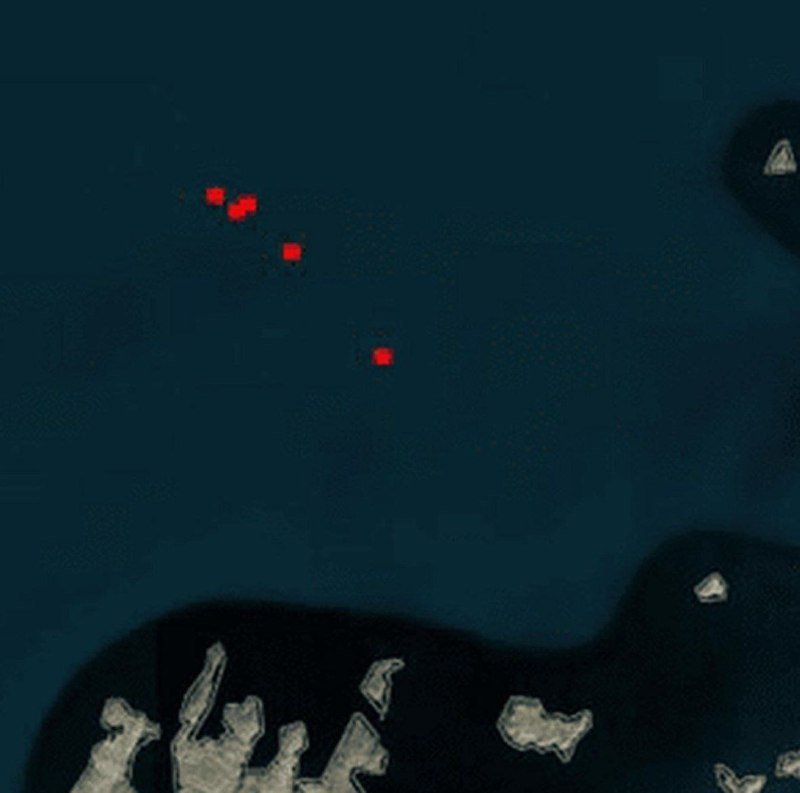
On any given day, roughly 20 percent of the world's oil supply passes through the 21-mile-wide Strait of Hormuz — the narrow mouth between Oman and Iran through which tankers must sail to reach the open Gulf. Since mid-April 2026, that flow has slowed to a trickle. According to footage reported by Iran's Mehr News Agency on 5 May, dozens of vessels — flagged to both regional and international operators — sit in anchorage positions awaiting explicit Iranian permission to proceed. The ships are not blocked by weather, accidents, or diplomatic foul-ups. They are waiting because Tehran has told them to wait.
This is not a new situation. Iran has used its geographic position at the head of the Persian Gulf as a geopolitical lever since the 1980s, when mining operations and missile attacks nearly shuttered the waterway entirely during the Iran-Iraq war. What has changed in 2026 is the combination of factors now in play: an Iranian leadership that views itself as enmeshed in an escalated confrontation with the United States, an oil market already strained by OPEC+ production discipline, and a White House that has described the Islamic Republic as a target for regime change rather than a counterparty for negotiation. When you map those variables together, the scene at Hormuz becomes less a shipping inconvenience and more a strategic flashpoint with few clean exit paths for Washington.
What is actually happening in the water
The evidence from open-source reporting on 5 May is specific and consistent across outlets. Tasnim, Iran's semi-official news agency with ties to the Revolutionary Guard, described IRGC high-speed attack boats as a "big obstacle" to any reopening of the strait. The framing — published at 11:41 UTC — used the plural "boats" and described their capability in present-tense terms, suggesting active operations rather than a historical comparison. Mehr News Agency, operating a correspondent on the water, reported the same day that "a lot of domestic and foreign vessels and ships are waiting in the anchorage for Iran's permission to pass." Neither outlet provided an exact count of waiting vessels; the phrase "a lot" is imprecise, but the consistency of the reporting across two separate Iranian outlets suggests a condition that has persisted for at least several days.
The political context for this enforcement came from Iranian Parliament Speaker Mohammad Bagher Qalibaf. Per Press TV, Iran's English-language state broadcaster, Qalibaf issued what the outlet described as a "direct and calculated response" to American policy on 5 May, warning that the United States has "burned its oil options" while Iran holds the Strait of Hormuz and "major levers in reserve." The phrasing is notable: not that Iran will use its leverage immediately, but that it holds it in reserve — a signal of deliberate restraint that Tehran is presenting as a diplomatic asset, not a spontaneous provocation.
The US military picture — what the record shows
The US Navy's Fifth Fleet, based in Bahrain, is the primary American military presence in the Gulf. Historically, the US has maintained that freedom of navigation through Hormuz is a non-negotiable principle, and has deployed escort operations and maritime interdiction to enforce it. Iranian forces have, on multiple occasions in the past two decades, engaged US vessels with small boats, mines, and anti-ship missiles — incidents the US has characterized as unlawful harassment and Iran has characterized as legitimate sovereignty enforcement.
The current situation does not appear to involve direct armed confrontation between US and Iranian vessels. The blockade, if that is the correct term for what Tehran is doing, appears to operate through bureaucratic and navigational means rather than by placing mines or deploying weapons: vessels are instructed not to transit, they comply, and the strait effectively closes without a shot being fired. This is a form of coercive signaling that is difficult to counter with military force without escalating to an incident that both sides would prefer to avoid.
Western wire services have not provided independent vessel-tracking corroboration for the Mehr footage as of the time of this article's composition. Reuters and Bloomberg carry routine tanker-tracking data through subscription services that would capture AIS (Automatic Identification System) positions of vessels transiting or anchored in the Gulf — a reader with access to those datasets could independently verify whether the number of anchored vessels has risen above seasonal norms in recent weeks. Monexus has not obtained those datasets independently.
What makes this moment different from past crises
Iran and the US have been through versions of this standoff before. In 2019, during the "maximum pressure" campaign under the first Trump administration, Iran was estimated to be earning roughly $50 billion annually from oil exports at depressed prices — a fraction of its pre-sanctions revenue but enough to sustain government functions. The European Union was working on an INSTEX payment mechanism to allow sanctioned trade without dollar clearing, though it never achieved significant scale. China continued importing Iranian oil through a mix of state-controlled entities and intermediary ships that obscured the origin of the cargo — a system colloquially referred to in shipping circles as "dark fleet" operations.
The 2026 configuration differs in three structural ways. First, the oil market is tighter. OPEC+ has maintained voluntary production cuts since 2023, and spare capacity is lower than it was in 2019. A six-week disruption through Hormuz would have a materially larger price impact than it would have five years ago. Second, China's appetite for Iranian oil has grown rather than contracted, meaning Tehran has a buyer with the scale and the willingness to absorb whatever Washington throws at it. Third — and this is the critical political variable — the current US administration has explicitly framed its Iran policy not as sanctions management or nuclear nonproliferation, but as a project to remove the Islamic Republic from power. That framing removes the diplomatic off-ramp that kept previous crises from spiraling: when both sides agree that the other is not a permanent fixture, brinkmanship carries less deterrent value.
The Qalibaf statement, if it reflects the current position of Iran's leadership, suggests that Tehran understands this dynamic and is calculating that Washington lacks a military option it is willing to exercise and lacks a diplomatic path it is willing to pursue. The "levers in reserve" language implies further measures — likely cyber operations targeting Gulf oil infrastructure, further attacks on vessels flagged to countries aligned with US policy, or acceleration of nuclear activities — if the current pressure does not produce a concession.
What we verified / what we could not
Verified:
- Iranian state-affiliated media reported on 5 May 2026 that IRGC high-speed boats are an active obstacle to Strait of Hormuz transit (Tasnim, 11:41 UTC).
- Multiple domestic and foreign vessels were reported anchored and awaiting Iranian clearance on 5 May 2026 (Mehr News Agency).
- Iranian Parliament Speaker Mohammad Bagher Qalibaf made public statements on 5 May 2026 characterizing US oil options as "burned" and describing Hormuz and other levers as held "in reserve" (Press TV).
- The Strait of Hormuz carries approximately 20 percent of global oil throughput — a figure consistent with International Energy Agency historical data for the waterway.
Could not independently verify:
- The exact number of vessels currently anchored. Iranian state media used the phrase "a lot" without providing a count. Western wire services have not published independent estimates as of publication time.
- Whether any US-flagged or US-allied vessels are among those waiting in anchorage.
- The current operational status of specific US Navy units in the Gulf — Fifth Fleet operations are not publicly reported in real time.
- Whether Iran has formally closed the strait by decree or is applying informal pressure through port authority delays and navigational warnings.
- The specific "reserves" Qalibaf referenced — whether these include imminent cyber operations, attacks on specific vessel categories, or nuclear program escalation.
The structural frame
The Strait of Hormuz is the world's most concentrated single-point energy chokepoint. Geopolitics has a way of turning such chokepoints into pressure release valves during periods of escalated great-power competition, because the party controlling the physical bottleneck has leverage that does not depend on military superiority — it depends on the willingness to impose costs on third parties. Tankers passing through Hormuz are not US military vessels; they are owned by European energy companies, Chinese state enterprises, South Korean refiners, and Indian shipping lines. When Iran tells them to wait, they wait — because the cost of running the blockade, measured in insurance premiums, vessel seizure risk, and crew safety, exceeds the cost of delay.
Washington's strategic problem is that the instruments it has historically used to keep Hormuz open — diplomatic pressure on allied shipping, US naval presence, sanctions on Iranian shipping entities — all work on a sliding scale of escalation. The US can increase sanctions pressure on Iranian entities; Tehran responds by tightening transit conditions. The US can increase naval patrols; Tehran calls it a provocation and uses the American presence as domestic political cover for further escalation. The diplomatic channel — the most direct mechanism for reducing tension — has been largely foreclosed by the current US posture, which treats negotiations with Tehran as capitulation rather than as the management of a real-world problem.
The price of that foreclosure is visible in the anchorage footage from Mehr News: vessels waiting, cargo deferred, oil markets nervous. It is also visible in the Qalibaf statement, which reflects a Tehran that has concluded it has more to gain from patience and pressure than from offers of de-escalation. Whether that calculation is correct depends partly on variables Washington controls — the willingness to offer sanctions relief in exchange for strait normalization, for instance — and partly on variables it does not, including Chinese demand for Iranian crude and the internal politics of a Tehran leadership that is not monolithic in its risk tolerance.
The stakes
If the current situation persists for another four to eight weeks, the practical consequences are predictable: oil prices will reflect a risk premium that filters into consumer fuel costs in importing economies, particularly in Asia and Europe. Iranian oil revenues will fall slightly — not to zero, because the Chinese buyer remains — but enough to maintain pressure on a government that is already managing significant economic strain from sanctions. The Trump administration's maximum-pressure posture will face a test it has not yet had to answer: whether it can produce the outcome it wants — regime change or comprehensive nuclear concessions — without a diplomatic channel, with a functional chokepoint controlled by the party it is trying to coerce, and with a global oil market that has no strategic reserve to absorb the shock of a real closure.
The more immediate risk is miscalculation. A patrol boat incident, a misread navigational warning, a commander on either side who decides that a demonstration of force is preferable to continued restraint — any of these could turn a commercial bottleneck into a military confrontation that neither Washington nor Tehran appears to want but both are positioned to stumble into, given the current absence of back-channel communication. The vessels waiting in anchorage are, in that sense, a graphic illustration of the cost of leaving a strategic chokepoint in the hands of a adversary with no reason to make things easy and every incentive to wait.
—
This article was composed from Iranian state-affiliated wire reports and publicly available maritime data references. Monexus will continue monitoring Fifth Fleet communications and Western wire reporting for independent corroboration of vessel counts and operational status.
Wire provenance
This editorial synthesis draws on the following public wire/social posts:
- https://t.me/tasnimplus/7841
- https://t.me/mehrnewsagency/124890
- https://t.me/presstv/45912
- https://en.wikipedia.org/wiki/Strait_of_Hormuz