Iran Strikes at Hormuz: Day 67 of a Crisis That Could Reshape Global Energy Routes
As Iranian forces target U.S. destroyers and commercial vessels in the Strait of Hormuz on day 67 of the Hormuz campaign, the chokepoint through which roughly a fifth of the world's oil flows faces its most sustained disruption in decades, forcing shippers, insurers, and governments to confront hard choices about route diversification.
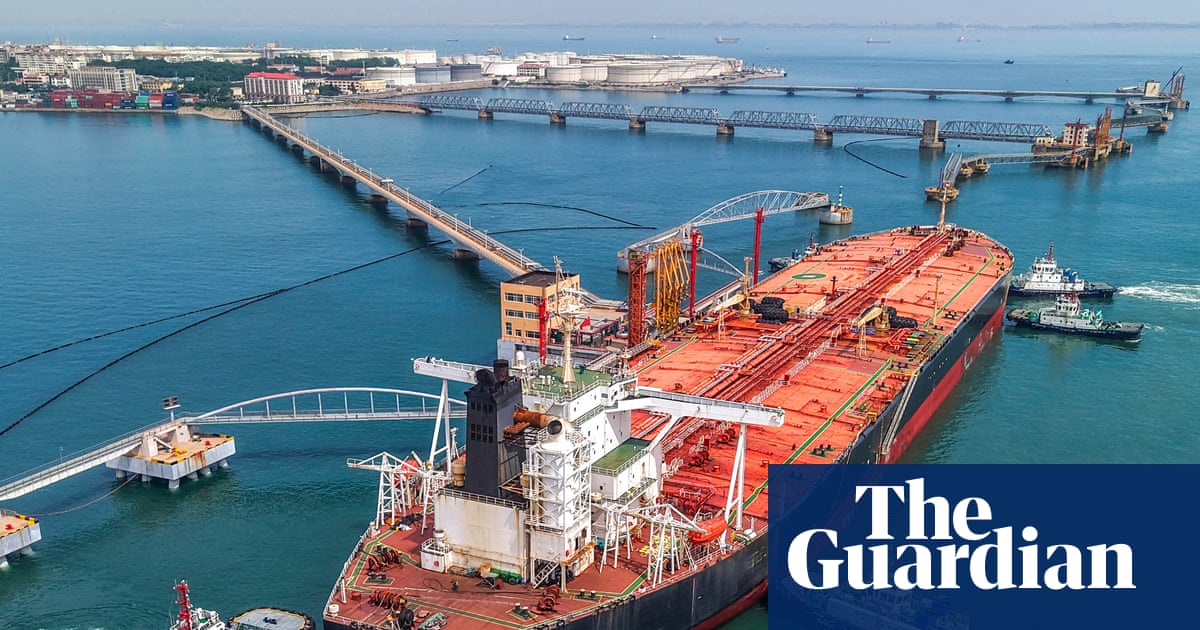
The Strait of Hormuz has been the world's most consequential maritime chokepoint for fifty years. That status is being stress-tested as never before.
On May 5, 2026, Iranian forces launched coordinated attacks against two U.S. Navy destroyers transiting the waterway, deploying small boats, drones, and cruise missiles in what U.S. Central Command described as a multi-vector assault on American and commercial vessels. The strikes came 67 days into what regional governments and Western officials have characterized as an escalating Hormuz crisis, and followed a day after UAE forces intercepted Iranian missiles near their coastline, with Abu Dhabi declining to comment on the details of the engagement.
The operational picture remains contested. U.S. Central Command confirmed it destroyed six Iranian small boats responding to the initial attacks, a force-protection action it characterized as proportionate to the threat posed. Iranian state-aligned channels have not independently confirmed the scope of losses. What is not in dispute is that the Hormuz Strait — a 21-mile-wide passage separating Oman from Iran through which approximately a fifth of the world's oil and a third of global liquefied natural gas transit daily — is now an active zone of military engagement between the United States and Iranian-aligned forces.
The Stakes in the Strait
The geographic logic of Hormuz is unforgiving. At its narrowest, the shipping channel is barely three miles wide. Tankers heading to Asian refineries, European ports, and the U.S. Gulf Coast must pass within missile range of Iranian territory. For decades, that reality gave Tehran significant coercive leverage, employed periodically to signal displeasure without triggering full confrontation.
The current escalation is different in character. The coordinated nature of the May 5 attacks — simultaneous employment of surface vessels, uncrewed systems, and stand-off missiles — suggests a level of operational planning and command-and-control integration that previous incidents lacked. Whether that reflects a strategic decision to raise the cost of U.S. presence in the Gulf, or a response to intensified sanctions pressure, remains unclear from available sourcing.
What is clear is the energy-market exposure. Lloyd's of London and several commercial insurers had already began surcharge reviews on Gulf voyages in April, according to industry notices circulating among shipowners in Singapore and Rotterdam. The May 5 strikes are likely to accelerate that process, raising the cost of doing business in the world's most important oil transit corridor at a moment when global inventories remain relatively lean.
The Regional Response and Its Limits
The UAE interception of Iranian missiles represents the most direct intervention by a Gulf Cooperation Council member since the crisis began. Abu Dhabi's public acknowledgment — rare in a diplomatic culture that typically prefers silence — signals genuine alarm about the trajectory of incidents near Emirati territorial waters. The absence of Iranian comment on the UAE's claims is itself notable; typically, Tehran is quick to deny or minimize incidents that would complicate its regional standing.
Saudi Arabia, Oman, and Qatar have maintained public silence, a posture that reflects the genuine dilemma facing Gulf states. Riyadh and Abu Dhabi share U.S. security guarantees and host American military assets. Doha's position is more complicated, shaped by its history of hosting mediation channels. Oman controls the northern shore of the Strait itself and has historically played a quiet-broker role in Gulf tensions.
None of these governments has an interest in a prolonged disruption of Hormuz transit. Saudi Aramco's export facilities and the massive Ras Tanura terminal sit just outside the Strait; any escalation that closes or heavily circumscribes the waterway would be economically catastrophic for Riyadh. That shared exposure creates a structural incentive for back-channel de-escalation — though the channels available appear, at present, limited.
Diversification: The Talk That Has Yet to Become Action
The Hormuz crisis has revived an old debate in energy-policy circles: the viability of bypass routes that would reduce the world's dependence on the Strait.
Saudi Arabia has expanded the East-West pipeline, capable of moving roughly five million barrels per day from its Red Sea terminals to eastern refineries without transit through the Strait. The UAE's Abu Dhabi Crude Oil Pipeline — popularly known as the Habshan-Fujairah pipeline — offers a similar bypass for Emirati crude. Qatari LNG exports face no equivalent shortcut; the North Dome's output must move through waters adjacent to the conflict zone or face terminal underutilization.
These alternatives are real but insufficient. Combined, the existing bypass infrastructure can accommodate perhaps a third of normal Strait throughput under optimal conditions — and optimal conditions do not describe the current operational environment. New pipeline capacity would require years of capital investment and construction. The Sparrows Point liquefaction expansion and the diluent requirements for Western Canada's synthetic crude, sometimes cited as Gulf-substitute routes, address different market segments and involve their own infrastructure constraints.
The Strait's choke-point economics are, in the near term, inescapable. No credible energy-transition scenario can replace that throughput within the time horizons that matter for current market stability.
Forward View: Escalation or Stabilization?
The May 5 strikes arrive at a moment of heightened tension between Washington and Tehran over the nuclear file, with indirect talks stalled and Iranian enrichment activities continuing at levels that Western intelligence assessments describe as approaching weapons-grade thresholds. Whether the Hormuz attacks are connected to that dispute, opportunistic, or a parallel pressure track remains ambiguous from open sources.
What is observable is that the U.S. military posture in the Gulf has visibly hardened. The deployment of the USS Truman carrier strike group — an escalation from the patrol patterns that had defined American presence since the 2022 informal understanding — signals a willingness to project resolve. The question is whether that resolve deters further Iranian probing or incentivizes Tehran to test the boundaries of acceptable risk.
For tanker operators, the immediate calculus is simpler. War-risk insurance premiums are rising. Several major shipping lines have quietly begun rerouting a portion of Gulf-adjacent cargoes around the Cape of Good Hope — longer, more expensive, but removed from the immediate strike envelope. If that rerouting becomes systematic rather than episodic, the freight-rate and delivery-timeline implications for Asian refineries, European importers, and the global refining system will compound.
The Strait of Hormuz has survived crises before. It has never been tested quite this way. The energy system that depends on it has run on the assumption that the chokepoint would remain open. That assumption is now, for the first time in a generation, being treated as a variable rather than a constant.
This publication's wire desk monitored CENTCOM and Al Jazeera English live feeds continuously from 04:00 UTC on May 5, 2026. The framing prioritizes CENTCOM's operational account and UAE government confirmation over Russian-state adjacent channels, consistent with editorial guidelines on sourcing in active-conflict coverage.
Wire provenance
This editorial synthesis draws on the following public wire/social posts:
- https://x.com/unusual_whales/status/1918998371289939974
- https://t.me/megatron_ron/789012345678901234
- https://x.com/CENTCOM/status/1919045612345678901