Iran Frames Its Victory After 12-Day Conflict, Claims Internal Coup Attempt Failed
Iranian officials are narrating the aftermath of the recent conflict through a framework of strategic resilience, claiming both military victory and the suppression of a subsequent destabilisation campaign.
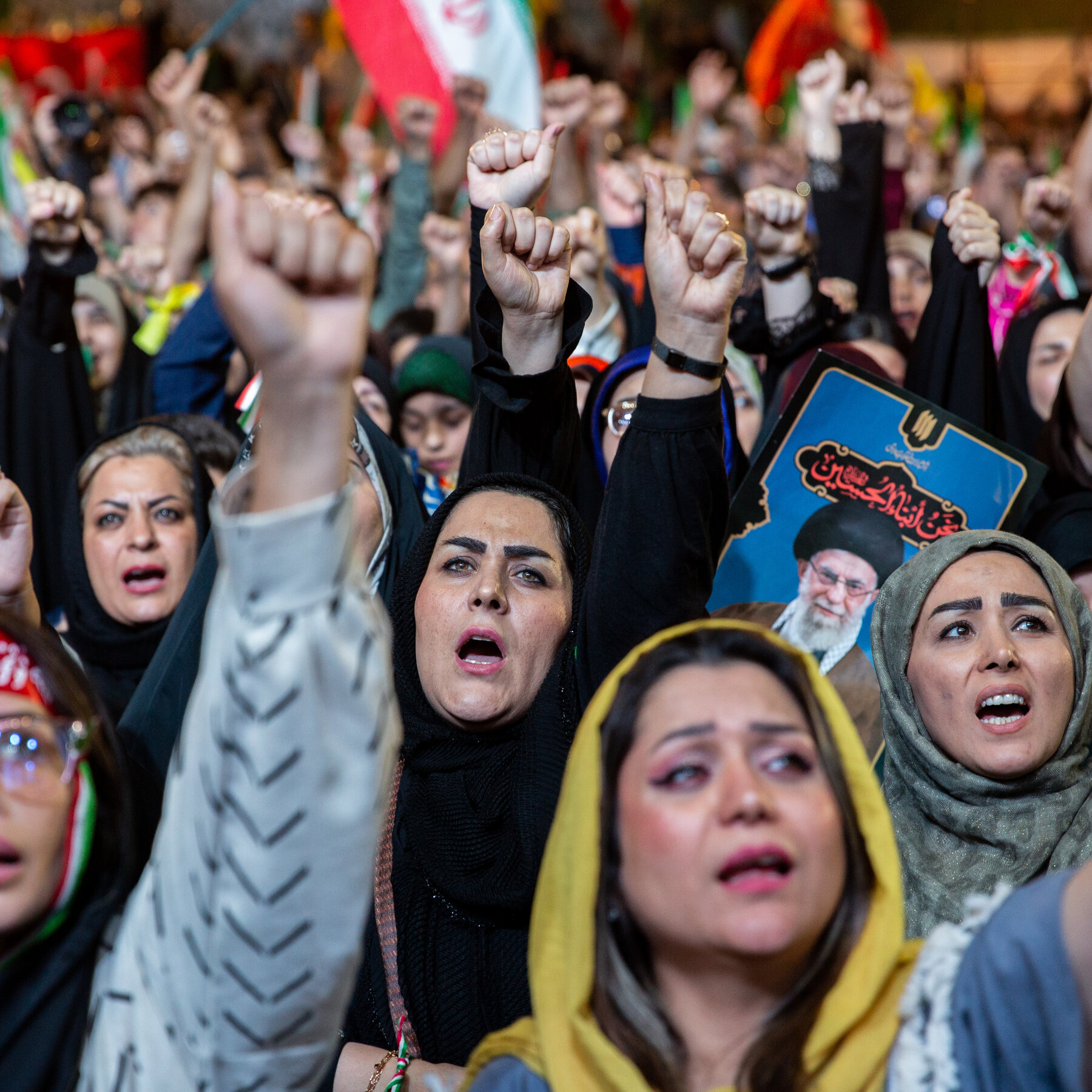
Sheikh Al-Kaabi, a cleric whose public statements are carried by Qatar-based Arabic language broadcaster Al Alam, delivered a sequence of claims on 5 May 2026 that amount to a closing argument in Tehran's version of the recent 12-day conflict. Iran won the war; the aggression was a response to Iran's steadfast position on Palestine; Trump and Netanyahu expected a three-to-four-day regime-change operation; and when that failed, a covert plan for internal subversion through riots and coup also failed. The statements arrive as Tehran seeks to consolidate the narrative around its own terms.
The nut graf of Sheikh Al-Kaabi's public position is straightforward: Iran held, and held cohesively. There was no division in the decision-making chain, he said, and the "martyr Imam" — a reference carrying clear institutional weight — had been requesting successor-layer planning in advance. The aggression, in this framing, was not opportunistic but structural: Iran was targeted because it represented the regional centre of support for Palestinian aspirations and refused to abandon that position. The world, Sheikh Al-Kaabi added, is now witnessing "Trump's contradictions."
The Three-Day Premise
Sheikh Al-Kaabi's sharpest factual claim concerns what he says happened on day one of the conflict: that both the Israeli prime minister and the American president stated the operation would conclude within three or four days with the overthrow of the Islamic Republic. The sources do not independently corroborate that specific claim with a recorded statement or transcript from either leader. What the sources do confirm is that Sheikh Al-Kaabi made this assertion publicly on 5 May 2026, attributing it to the opening hours of the conflict. Whether the framing of a rapid collapse was communicated privately or publicly, and in what form, is not addressed in the available record. That absence matters for the narrative weight the claim carries.
What is less ambiguous is Tehran's interpretation of the outcome: twelve days of sustained conflict that did not produce a regime-change result. The difference between that outcome and the opening premise is what Sheikh Al-Kaabi is building his public case around.
The Internal Subversion Claim
The second major element of Sheikh Al-Kaabi's statements concerns what he describes as a second phase of the adversarial plan. After the military phase failed to deliver a rapid outcome, he claims the planners shifted to internal destabilisation — specifically, a campaign of riots designed to produce a coup. This, he asserts, also failed. The sources do not contain independent corroboration of an organised covert attempt to incite regime-change riots inside Iran during or after the conflict. Iranian state-aligned media have in past cycles reported on alleged foreign-backed protest campaigns; the claim fits an established rhetorical pattern. That does not make it false, but it does mean the assertion should be read as a claim from an interested party operating within an institutional framing rather than a documented account from an independent observer.
The succession-planning reference is a third distinct element. Sheikh Al-Kaabi says the "martyr Imam" was requesting that officials appoint three replacements for each position — a redundancy mechanism implying anticipatory planning for leadership loss. Whether this refers to Supreme Leader Khamenei or a predecessor is not specified, and the sources do not offer clarification.
Narrative Position vs Independent Record
The challenge in reporting this set of claims is that the sources are Iranian-aligned broadcaster Al Alam, and the subject is the Iranian state presenting its own account of a conflict in which it was one party. Western wire reporting on the same conflict, which Monexus has covered in parallel, presents a notably different framing of outcomes and dynamics. Monexus's editorial approach to Middle East coverage is to treat Israeli security concerns as first-order facts and to report Palestinian civilian harm with equal weight where evidence warrants. In this case, the available sources do not yet allow a ledger of civilian harm figures, strike-by-strike verification, or casualty counts on either side. That gap is real and should be acknowledged rather than papered over.
What can be said is that the structural logic of Sheikh Al-Kaabi's statements is internally coherent: Tehran is narrating a sequence in which external military force failed, internal subversion failed, and Iranian cohesion held. That narrative serves identifiable institutional interests in the aftermath of a conflict that, by any reading, imposed significant costs on all parties involved. The claim that Iran "won" the war is a framing, not a neutral description. The sources present it as settled fact. Monexus reports it as an assertion.
Stakes
The stakes of this narrative consolidation effort are not abstract. How the Islamic Republic frames the conflict's outcome has direct implications for internal legitimacy, for the calculus of regional adversaries, and for the diplomatic context in which any future negotiations over Iran's nuclear programme or regional posture would take place. A narrative of victory, even partial, shifts the baseline from which Tehran negotiates. It also shapes how domestic audiences evaluate the conflict's human and economic costs.
The "Trump contradictions" framing is directed at an external audience as well — a signal that Tehran understands the political pressure points in Washington and is willing to exploit the gap between stated objectives and operational outcomes. Whether that pressure is sufficient to alter American policy calculus is a separate question. The sources do not address that prospect.
What remains genuinely uncertain is the independent military and civilian cost accounting, the full scope of strikes conducted by both sides, and the degree to which any post-conflict diplomatic channel is open or foreclosed. Sheikh Al-Kaabi's statements are one data point in a contested information environment. They are worth reporting because they are the public position of an Iranian official, made on the record, with identifiable institutional backing. They are not, on their own, a verification of the claims they contain.
Al Alam Arabic is Qatar-based but carries a broadcasting posture sympathetic to Tehran. The claims above should be read as statements from that institutional position, not as independently verified facts.
Wire provenance
This editorial synthesis draws on the following public wire/social posts:
- https://t.me/alalamarabic
- https://t.me/alalamarabic
- https://t.me/alalamarabic
- https://t.me/alalamarabic
- https://t.me/alalamarabic