Iran Warns UAE Over American Military Presence as Drone-Strike Dispute Escalates
Tehran issues formal protest to Abu Dhabi following drone and missile strikes, demanding the Emirates cease cooperation with Washington and Tel Aviv or face unspecified consequences.
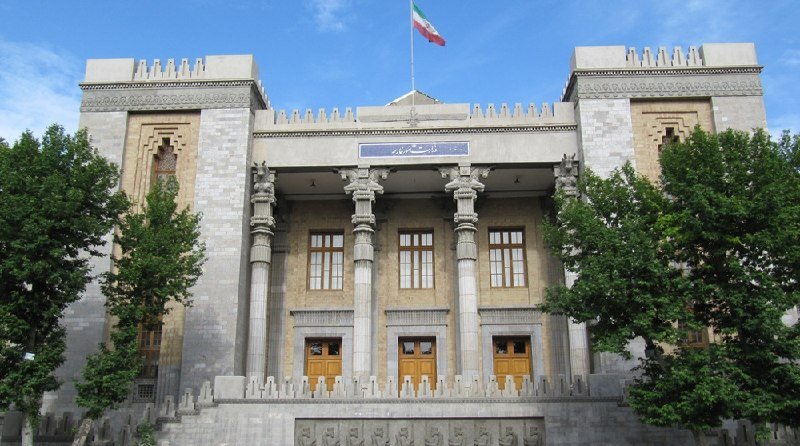
Iran's Foreign Ministry delivered a sharp warning to the United Arab Emirates on Monday, demanding Abu Dhabi end its cooperation with American military forces or accept the consequences for regional stability. The statement, published across official Iranian state media outlets at 20:28 UTC, rejected claims by the UAE that Iran was responsible for a series of drone and missile strikes in recent days — accusations Tehran called unjustified and politically motivated.
The escalation marks one of the most direct confrontations between Iran and a Gulf Cooperation Council member since the brief exchange of fire following the 2019 Abqaiq attacks. Iran's Foreign Ministry framed the UAE's allegations as a coordinated effort with Washington and Tel Aviv to undermine Tehran's standing ahead of any renewed nuclear negotiations. Abu Dhabi has not issued a public response as of publication time.
The Strike Dispute
The immediate trigger for the diplomatic breach is a set of drone and missile strikes whose origin remains disputed. The UAE publicly attributed the attacks to Iranian-backed groups — a characterisation Tehran's Foreign Ministry firmly rejected in a statement carried by Tasnim News Agency and subsequently amplified by PressTV. According to the Iranian account, the strikes were either misattributed or fabricated as part of a pressure campaign designed to justify expanded American military posture in the Persian Gulf.
The discrepancy between the two narratives points to a familiar opacity in Gulf security incidents. Attribution in contested airspace and waterways is rarely straightforward, and regional actors have historically used ambiguous strike events to test responses or shift diplomatic leverage. Neither side has provided independent verification of strike footage or debris analysis that would settle the question of responsibility.
What is verifiable is the formal diplomatic rupture. Iran's Foreign Ministry issued its statement on Monday 5 May 2026, within the same hour as the UAE's public accusation, suggesting the response was pre-prepared and designed to foreclose any period of ambiguity in which Washington might have moved to reinforce its Gulf partners.
The American Presence Question
The substance of Tehran's complaint goes beyond the strike attribution and addresses something it has long considered a strategic threat: the permanent American military footprint in the Arabian Peninsula. Monday's statement, distributed via the ministry's official Telegram channel and quoted in Persian-language state media, explicitly named the US military bases and equipment hosted on UAE territory as the core security concern.
"We warn of the dangerous consequences of Abu Dhabi continuing to host American military bases and equipment, as it undermines the security of the country," the statement read, according to a translation carried by Al-Alam News Network at 20:33 UTC on 5 May. A parallel statement added that the UAE "should refrain from continuing to collaborate with the US and Israel" — language that groups the American and Israeli security architectures together as a single threat axis.
The UAE hosts Al-Minhad Air Base and maintains intelligence-sharing arrangements with the US Central Command under a longstanding security partnership. American forces have used UAE territory as staging grounds for operations across the Middle East, including the ongoing missions against ISIS affiliates in Syria and Iraq. That infrastructure has long been a point of friction between Tehran and Abu Dhabi, but previous Iranian governments have largely confined objections to rhetorical protest rather than formal escalation.
That approach has now changed. The explicit linkage of UAE cooperation with Washington and Tel Aviv in a single diplomatic demand suggests the current Iranian leadership is willing to accept a higher level of bilateral confrontation in exchange for what it frames as a necessary defence of sovereignty.
The Regional Architecture Under Strain
The dispute arrives at a moment when the Gulf security architecture is already under significant stress. The Abraham Accords normalised relations between several Gulf states and Israel, a development Iran has consistently characterised as a security threat rather than a diplomatic opportunity. Saudi Arabia's separate track with Iran — pursued in the wake of the 2023 Chinese-brokered normalisation agreement — was meant to provide a channel for de-escalation between the two regional rivals. Monday's statement does not formally sever that channel, but it introduces a new and sharper note of confrontation into the relationship.
The UAE, for its part, has sought to position itself as a regional diplomatic hub — hostingCOP28, maintaining economic ties with Tehran, and projecting itself as a neutral venue for backchannel negotiations. That positioning becomes harder to sustain if Iran publicly names the American military presence as an intolerable security breach and demands its removal. The UAE is now faced with choosing between its historic security partnership with Washington and a bilateral relationship with Iran that Abu Dhabi has carefully cultivated to avoid being drawn into a broader Sunni-Shia contest.
American officials have not commented publicly on the Iranian statement as of filing. The absence of a US response — even a provisional one — leaves the diplomatic terrain unclear. Washington's regional posture, already complicated by the ongoing Russia-Ukraine conflict and renewed competition with China across the Indo-Pacific, may limit the appetite for a new front of confrontation with Tehran. But an explicit Iranian demand targeting US base infrastructure on Gulf territory cannot easily be met with silence.
Stakes and Forward View
If the Iranian demand is left without a direct US or UAE response, Tehran gains a diplomatic foothold: it has placed the question of American military presence in the Gulf squarely on the regional agenda, framing it as an Iranian red line rather than a settled fact. That framing, if left unchallenged, shifts the baseline of what constitutes acceptable behaviour from both Abu Dhabi and Washington.
If the UAE responds by reinforcing its American partnership — hosting additional capabilities or signing new basing agreements — Iran will face a choice between escalating further or accepting that its warning was ineffective. Neither outcome serves Tehran's interests in the short term. A sustained low-level confrontation, however, plays to Iran's strengths: it is more comfortable operating in ambiguity and grey-zone conflict than the UAE, whose economic model depends on stability and investor confidence.
What remains unclear is whether Monday's statement represents a deliberate Iranian strategy of confrontation or a reactive move designed to outflank an emerging US-UAE-Israel alignment. The sources do not provide insight into internal deliberations within Tehran. The language is forceful, but the consequences are unspecified — a reminder that formal diplomatic warnings often serve as the opening move in a longer negotiation rather than the opening shot of a crisis.
This publication covered the incident primarily through the lens of the formal Iranian statement, which had no direct counterpart in Western wire reporting at time of filing. The UAE accusation that triggered the exchange did not appear in the available Reuters or AP feeds as of 21:00 UTC, placing the burden of verification on Iranian state media and Gulf-watch Telegram channels operating in Persian and Arabic. The attribution dispute remains unresolved.
Wire provenance
This editorial synthesis draws on the following public wire/social posts:
- https://t.me/farsna/87432
- https://t.me/alalamarabic/58119
- https://t.me/GeoPWatch/12491