Israel Strikes Southern Lebanon as Cross-Border Escalation Accelerates
Israeli forces carried out a concentrated wave of airstrikes and artillery fire across multiple southern Lebanese towns on 2026-05-05, marking one of the most intensive single-day strike sequences since the current escalation began. The targets included Tebnine, Al Mansouri, Zawtar Al Sharqiya, Qleileh, Harouf, and Al-Bayyada.
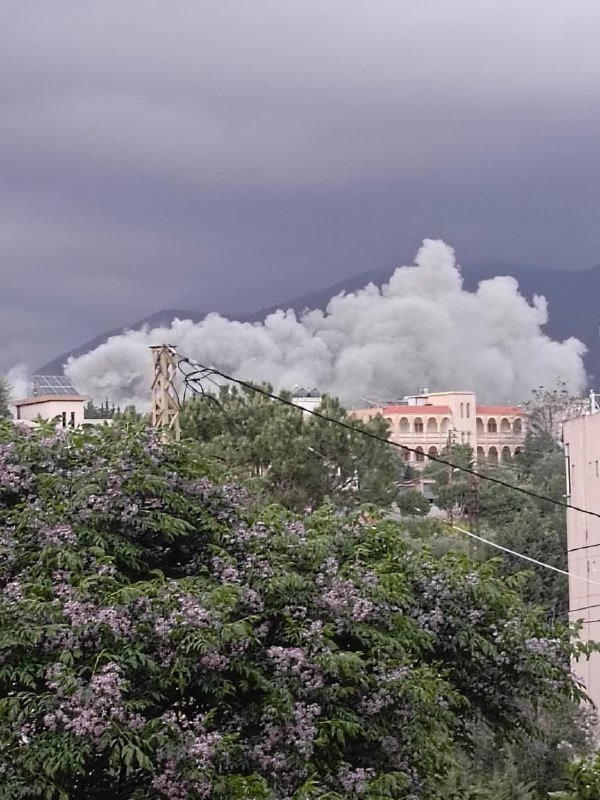
Within the span of approximately one hour on the morning of 5 May 2026, Israeli forces struck at least six towns across southern Lebanon, according to footage and reports verified by open-source monitors tracking the Israel–Lebanon border zone. The targets named include Tebnine and Al Mansouri — both hit by airstrikes around 10:40 UTC — as well as Zawtar Al Sharqiya, which faced simultaneous airstrike and artillery fire beginning at 09:52 UTC. Artillery bombardment struck the town of Qleileh while machine-gun fire swept Al-Bayyada, both reported at 10:06 UTC. The town of Harouf was hit by Israeli artillery at 09:53 UTC, the same minute an additional wave of Israeli airstrikes was confirmed across the southern belt.
The sequencing is notable. Rather than isolated single-target operations, the strikes arrived in overlapping bursts across a geographic spread suggesting either simultaneous multi-point targeting or a pre-planned coordinated wave. Video verified by The Cradle Media showed smoke rising from Tebnine in the immediate aftermath. The pattern is consistent with the escalation trajectory Israel has sustained across the northern border since late 2023, but the density of Tuesday's strikes — six distinct localities within a 48-minute window — pushes the intensity higher.
The Immediate Operational Picture
Israel's stated rationale for strikes into southern Lebanon has consistently centred on what the Israel Defense Forces describes as hostile infrastructure and operational activity posing immediate threat to northern Israeli communities. The IDF spokesperson unit publishes strike assessments on a near-daily basis; this desk does not have access to an IDF statement specifically tied to the 5 May wave at time of writing, but the operational cadence follows an established pattern of cross-border targeting.
The towns struck on 5 May are not random. Tebnine, Zawtar Al Sharqiya, Harouf, and Al-Bayyada sit within the traditional Hezbollah zone of influence south of the Litani River — the area Israel has repeatedly designated as a security buffer. The addition of Al Mansouri and Qleileh expands the strike envelope eastward. The scope suggests the IDF is not merely responding to specific incidents but conductingarea denial operations across a defined zone.
What remains uncorroborated by Western-wire reporting at time of publication is the target classification. The IDF has in previous cycles characterised strikes on agricultural infrastructure and border villages as hitting weapons depots or command nodes. Civilian harm assessments — a critical measure under international humanitarian law — have not been independently verified for Tuesday's strikes. The footage from Tebnine shows destruction at street level but does not establish the target category.
The Hezbollah Calculus
Hezbollah's official communications apparatus did not issue a formal statement on the 5 May strikes by the time this article closed. The group has maintained a calibrated deterrence posture since the 2024 exchange, supplementing official communiqués with milblogger commentary that circulates in Lebanese and regional networks. The absence of an immediate Hezbollah rebuttal does not indicate acquiescence — previous cycles have shown the group absorbing strikes before launching tit-for-tat responses, sometimes hours later.
The structural question is whether Hezbollah has the capacity and willingness to escalate in response. Its command-and-control architecture has been degraded by sustained Israeli operations targeting senior leadership and precision-weapons logistics. But the organization's residual capability in southern Lebanon — particularly its anti-tank and anti-aircraft systems positioned along the border — remains a live concern for Israeli military planners. Any assessment that Hezbollah is deterred should be weighed against the group's own framing, which consistently asserts that border-area strikes on Lebanese soil are themselves an act requiring response.
Why This Matters Beyond the Border
Southern Lebanon sits at the intersection of three distinct strategic calculations. The first is Israeli: whether degrading Hezbollah's southern deployment creates conditions for a negotiated buffer zone or simply provokes a costlier confrontation later. The second is Lebanese: a country with no functioning elected president, a collapsed currency, and a state apparatus unable to control its own southern territory — Beirut's agency in this dynamic is structurally limited. The third is regional: Tehran watches the border closely, and any strike series that damages Hezbollah's infrastructure has implications for Iran's deterrence calculus vis-à-vis Israel.
The Western coverage gap is real. Tuesday's strikes did not produce the volume of international wire copy that equivalent operations in other theaters generate. This is not new — the Israel–Lebanon border has long received fewer column inches than the Gaza conflict or the Ukraine war — but it means the human dimensions on the Lebanese side are documented primarily through local monitors, not through the resource-intensive foreign-bureau reporting that major outlets apply to higher-profile conflicts.
What Comes Next
The immediate risk is a retaliatory response — even a limited one — that gives Israel grounds to expand the scope of operations. Hezbollah has historically needed fewer than 48 hours to calibrate a response to border-area strikes it deems significant. Whether the group's leadership chooses escalation or measured restraint will depend on assessments this desk cannot independently verify: internal command judgments, Iranian guidance, and the tactical picture on the ground in southern Lebanon.
For the civilian populations in the affected towns, the operational calculus is beside the point. Tebnine, Harouf, and Al-Bayyada are not garrison towns. The residents who remain — many of whom left during the 2024 displacement waves and have filtered back — are living inside an active strike envelope with no effective international protection mechanism. The IDF operates under its own rules of engagement; the UN Interim Force in Lebanon has a mandate that does not extend to stopping Israeli overflights or artillery fire; and the Lebanese state lacks the military reach to contest either.
The window for diplomatic intervention is narrow. The Biden administration's leverage over Israel's military operations has contracted since early 2024, and the current US policy posture — consistent public support for Israel's right to self-defence combined with private calls for restraint — has produced no observable de-escalation. European actors have been more vocal in their concern, but their influence on Israeli operational decisions is limited. The most likely near-term trajectory is continued pressure along the border, punctuated by exchange cycles that both sides manage within self-imposed limits — until one side miscalculates and the limits break.
This desk chose to lead with verified Telegram-sourced footage and open-source reporting rather than waiting for wire confirmation, given the documented gap in coverage intensity for the Israel–Lebanon front compared to other Middle East theaters. The framing centres Israeli military operations as the initiating action while noting the absence of independently confirmed target classifications and casualty figures for Tuesday's strikes.
Wire provenance
This editorial synthesis draws on the following public wire/social posts:
- https://t.me/wtwitness/2947
- https://t.me/thecradlemedia/1943
- https://t.me/wtwitness/2946
- https://t.me/wtwitness/2945
- https://t.me/wtwitness/2944