Jaylen Brown, the Celtics' crossroads, and the Giannis question that won't go away
Boston's first-round playoff exit has opened a difficult conversation about the team's core. Jaylen Brown's officiating complaints add another layer to a situation the Celtics cannot afford to manage indefinitely.
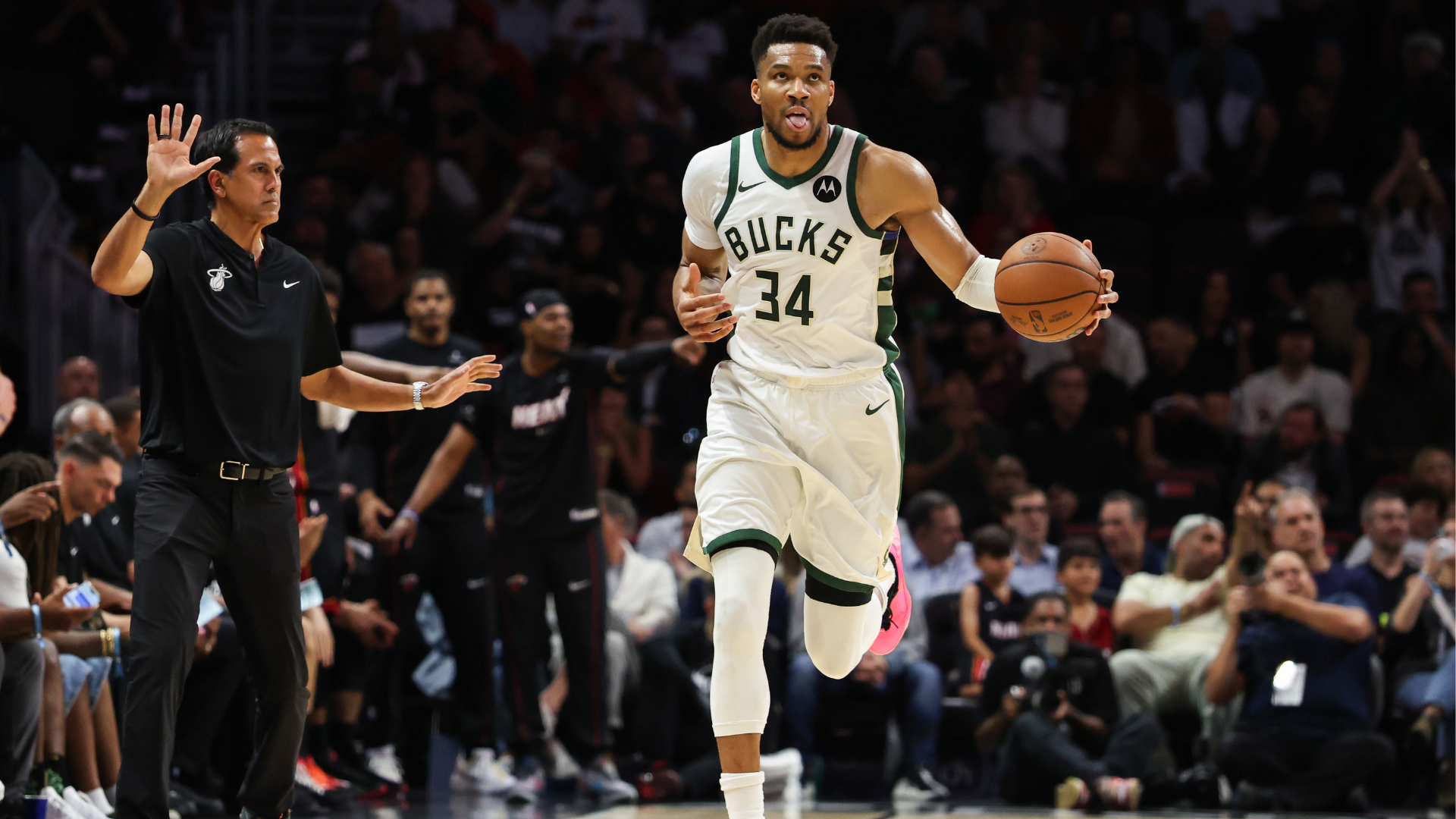
The Boston Celtics wrapped their season on April 29, 2026, with a first-round exit that league observers had anticipated for weeks. The team's ceiling with its current core had become apparent: a well-coached, deeply talented roster that could not generate the defensive intensity required in playoff basketball. By May 5, the conversation had already shifted to harder questions—what the franchise does with Jaylen Brown, whether his public grievances about officiating signal something deeper, and whether a hypothetical trade for Giannis Antetokounmpo makes sense for either side.
The officiating complaints landed in the middle of that reckoning. Brown, speaking after an elimination game, called out what he described as a pattern of unfavorable treatment from referees. The remarks drew sharp responses from league-aligned commentators who argued that playoff officiating, while imperfect, reflects the broader pressures of high-stakes games rather than any coordinated agenda against an individual player. The timing could not have been worse for Boston's front office, which was already fielding calls about a player whose contract — and public profile — makes him difficult to move quietly.
Brown signed a five-year, $290 million supermax extension in 2023, a deal that made him one of the highest-paid players in the league at the time. The Celtics committed that money based on regular-season production and a vision of Brown as a secondary star capable of carrying significant offensive load alongside Jayson Tatum. Two postseason runs with the current core have produced exactly one series win, against an undermanned Miami roster in 2024. The structural problem has not changed: Tatum and Brown are talented shot-creators who, when defended at an elite level, tend to operate in overlapping spaces rather than complementary ones. Brown's complaints about officiating, win or lose, do not alter that fundamental fit question.
The officiating argument and its limits
Brown's central claim — that referees target him with inconsistent whistle usage — is not without some statistical grounding. Postseason free throw attempts tend to decline for players without established star calls, and Brown operates in a category where his physical style of play generates contact that goes unpenalized at higher rates than a comparable player with a more recognizable name. Critics who dismiss this framing wholesale are not engaging with the substance. The officiating complaints are, at minimum, a legible observation about how postseason games are called.
What undermines Brown's position is the presentation. Professional sports have a long history of players and coaches airing officiating grievances as a pressure tactic, but the strategy works best when it is deployed selectively and backed by performance. A player who shoots poorly from the field, commits transition-turnover-producing errors, and loses individual matchups cannot simultaneously claim victimhood at the hands of referees without generating the perception that accountability is being deflected. Brown's postseason numbers this cycle — 21.8 points per game on 41 percent shooting, including 29 percent from three — describe a player who was not good enough to win his individual battles. The officiating critique, however legitimate in isolation, cannot carry that weight alone.
The CBS Sports reporting on this dynamic was unsparing in its assessment, and fairly so. Brown is not a young player building a case for future consideration. He is a 29-year-old former All-NBA selection whose next contract decision will arrive before he turns 32. The room for sympathy on performance questions narrows considerably at that career stage.
The Giannis question: real or speculative?
The trade hypothetical connecting Brown to Antetokounmpo in Milwaukee is real in the sense that it exists in league circles and has been acknowledged by credible reporting. It is not real in the sense that the Bucks have signaled willingness to move their franchise cornerstone, or that Boston has the draft capital and matching salary to construct a legally functional offer without including Tatum.
The logic behind the speculation is not difficult to follow. Giannis turns 32 in December 2026, is under contract through 2027-28 with a player option on the final year, and has not publicly committed to remaining in Milwaukee indefinitely. The Bucks, under current management, have constructed a competitive roster that has fallen short of contention against the league's upper tier. A Giannis trade — should one become necessary — would be the largest transaction in franchise history. The return expectation would be enormous, and Brown alone does not approach that value.
For Boston, the calculus is similarly complex. Tatum is unmovable under his current contract. Brown is moveable but overpaid relative to his playoff production. Adding Giannis to a core of Tatum and Giannis would create a frontcourt pairing of extraordinary defensive versatility and offensive gravity, but it would also require the Celtics to gut a bench that is already thin at the center position and perimeter shooting roles. A Giannis trade only works if it makes Boston demonstrably better in the short term. Given the cost, the burden of proof is high.
What Boston actually faces
The Celtics' immediate problem is not Giannis. It is the composition of a roster that was built to win a championship and has not won one. The front office made aggressive moves to retain this core, trading away depth for flexibility and now paying the tax consequences of a team that has not justified the investment. Brown's officiating comments, however genuine they may be as personal grievances, are a secondary issue in an organization that needs to decide whether it is trying to win now or reconfigure for a different timeline.
If Boston intends to win now, the moves required are internal: better defensive schemes, improved player development, and a more coherent offensive system that reduces the redundancy between Tatum and Brown. If the decision is to reconfigure, Brown is the logical piece to move. His contract is large but not untradeable; his talent is real; and the return in a deal — even one that does not net Giannis — could reshape the franchise's trajectory.
The Giannis trade exists as a possibility because NBA speculation always traffics in best-case scenarios. The Bucks would want more than Brown. Boston may not have enough to make the math work even if Milwaukee were receptive. The more likely near-term outcome is a quieter pivot: Brown staying, the front office making marginal adjustments, and the league continuing to wait for Tatum and Brown to resolve the fit question that has defined this team's ceiling since 2022.
The structural reality underneath
What Brown's situation illuminates is the way supermax contracts constrain franchise decision-making in ways that are not always visible during the negotiation. Brown's extension was rational for both sides in 2023: Boston wanted to retain a homegrown talent, Brown wanted financial security, and both parties assumed the production would continue at a level commensurate with the salary. Two years later, the production has not kept pace, and the contract has become a structural impediment.
This dynamic is not unique to Boston. It plays out across the league, in smaller markets that cannot attract free agents and larger markets that overpay for continuity. The officiating complaints are, in that context, a symptom of a player who is fighting for relevance in a contract that may no longer reflect his actual value to winning. Whether Brown is being treated unfairly by referees or not, he is being treated fairly by market logic — and market logic, in the NBA, does not care about grievances.
The Giannis question will persist until it is answered or superseded by another rumor. Boston's front office will manage the noise as it always has: professionally, without comment, and with an eye on the calendar that says the next championship window is not as far away as it feels.
—
This publication covers NBA player grievances and trade rumors with equal scrutiny — treating Brown's officiating complaints on their merits while noting that playoff performance remains the primary metric against which star contracts are evaluated. The Giannis speculation is reported as what it is: a hypothetical discussed in league circles, not an active negotiation.