The Logic of a War Nobody Wants — Except the People Manufacturing It
The White House is edging toward a conflict with Iran that intelligence assessments do not support and that risks collapsing into a regional catastrophe with global economic consequences. Someone needs to say that plainly.
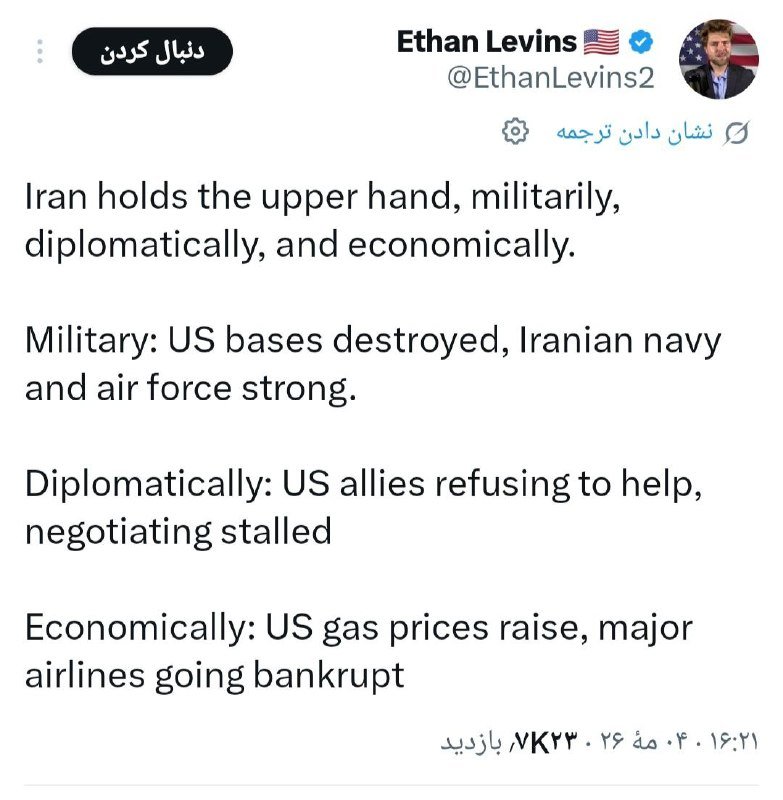
The people closest to the situation keep telling us it does not add up. On 4 May 2026, Fox News cited senior officials saying the United States is moving closer to resuming major combat operations against Iran — a decision, the report noted, that ultimately rests with President Donald Trump. Trump himself had said hours earlier that Iran would never be allowed a nuclear weapon, "one way or the other." The framing coming out of the White House — that this is a determined, time-sensitive, existential choice — is not being challenged as loudly as it should be. It should be.
This publication finds that the case for imminent military action against Iran rests on a set of premises that responsible analysts outside government privately dispute. The intelligence, as currently briefed, does not support the urgency being broadcast. What is being manufactured, instead, is political justification for a strike that its own advocates appear to have decided on before the public case has been made.
The Threat Inflation Machine
The pattern is recognisable. A sitting president signals open-ended hostility toward a foreign adversary; officials with proximity to the decision are quoted — on background, through a sympathetic outlet — describing a narrow window; the phrase "all options on the table" appears in at least three separate statements. The pressure builds until either a crisis provides a pretext or a strike is launched preemptively. By that point, the original intelligence question has become irrelevant. The action is underway and questioning it looks like weakness.
With Iran, this architecture of escalation is particularly hollow. Iran has not crossed the nuclear threshold. Its enrichment levels remain below weapons-grade. The International Atomic Energy Agency still maintains inspectors on the ground. The country that most analysts describe as a decade or more from a deployable weapon is being treated as though the threat is imminent. That gap — between the intelligence and the rhetoric — is not accidental. It is the gap within which military action gets sold.
What Congress Is Already Saying
The constitutional problem here is not subtle. The War Powers Resolution requires presidents to consult Congress before introducing US Armed Forces into hostilities. No such consultation has occurred. No new Authorization for Use of Military Force against Iran has been passed. If Trump orders strikes and does not seek congressional backing, he will be acting solely on executive authority — a precedent that would fundamentally alter how the United States goes to war. Congressional Democrats are already watching this closely, and the pressure on the floor, if strikes proceed, will be immediate and intense.
The argument that Iran poses such an acute threat that the president cannot wait for legislative debate is, on current evidence, not substantiated. It is an assertion. The burden of proof, given the consequences, belongs to those claiming urgency — and that burden has not been met in any public forum.
The Calculation Nobody Is Publishing
Here is what a strike actually looks like. Iran does not respond symmetrically — it cannot, and Tehran's military planners know this. What it can do is direct its network of regional proxies, from Hezbollah in Lebanon to Kata'ib Hezbollah in Iraq, to strike US personnel and facilities across the region. US bases in Iraq, Syria, and the Gulf states would come under pressure. The Strait of Hormuz — through which roughly a fifth of the world's oil flows — becomes a contested waterway. Global energy markets react. European allies, already strained by the transactional nature of the current US administration, find themselves further estranged. China and India, watching their oil supply lines come under shadow, reposition accordingly. The Middle East, already fragile from years of conflict, becomes a fully active theatre.
And the stated objective — preventing Iran from acquiring a nuclear weapon — is likely to be met precisely in the wrong direction. A strike would probably accelerate Iran toward the bomb. The Iranian hardliners who have argued for years that engagement with the West is futile would be vindicated. Iran withdraws from the Nuclear Non-Proliferation Treaty, kicks out inspectors, and enriches openly. The threat that was being managed becomes the threat that is now live.
That outcome is foreseeable. It is being dismissed because it does not serve the immediate political logic of a strike. But the people doing the dismissing know better. They know, and the rest of the world is watching what happens next.
This piece was written from a MENA desk editorial standpoint that foregrounds regional sovereignty and the structural consequences of unilateral US military action in the Gulf. The dominant US wire framing on Iran — framed as a time-limited existential choice — is not treated as self-evident here.
Wire provenance
This editorial synthesis draws on the following public wire/social posts:
- https://t.me/osintlive/2841
- https://t.me/wfwitness/8912
- https://t.me/wfwitness/8911