Madrid Draws the Line on Hormuz: Spain Refuses the Military Option as Iran Tightens Its Grip on the Oil Chokepoint
Spain's foreign minister has made clear that Madrid will not entertain military operations against Iran over the Strait of Hormuz, staking out a diplomatic position at odds with harder-line Western postures as regional tensions spike.
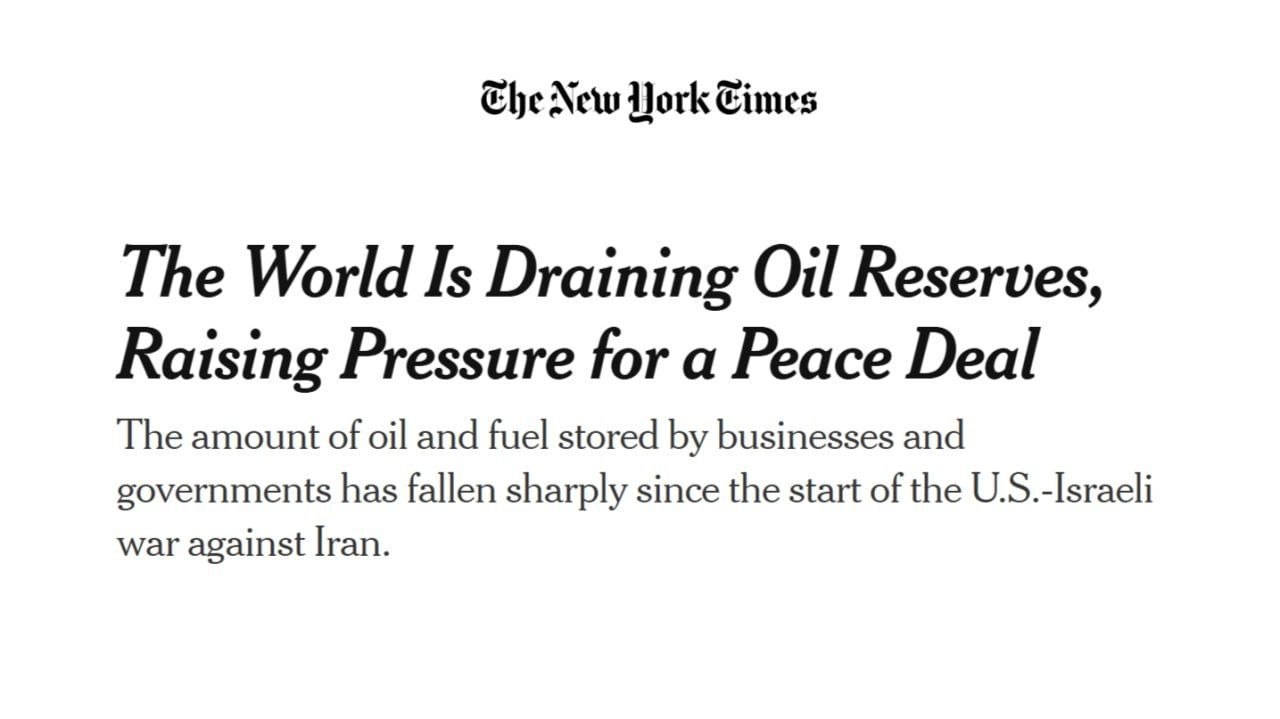
Spain's foreign minister told a press briefing on 5 May 2026 that Madrid will not participate in any military actions directed at Iran over the Strait of Hormuz, staking out a clear diplomatic exception as Western capitals debate how to respond to heightened tensions in the Gulf. The statement, carried by Iran's Alalam Arabic service, drew a firm line between what the minister described as the international community's obligation to keep shipping lanes open and any appetite for kinetic intervention.
"The return of the Strait of Hormuz to its usual functioning will not be through war, but through negotiation," the minister said, according to the Alalam translation. That formulation is notable for its directness. Madrid is not hedging. It is not suggesting that military force remains on the table as a last resort. It is ruling it out.
The position matters because Spain is not a peripheral NATO ally. It hosts the Rota naval base, home to a US destroyer squadron, and has historically aligned its Gulf policy with Washington. That alignment is now under visible strain.
Tehran's Warning Signal
Within hours of the Spanish statement reaching regional wires, the Iranian Navy delivered its own reminder. "Not a single barrel of oil can pass through the Strait of Hormuz without Iran's permission," read a post on the Tasnim Plus Telegram channel, echoing language that had already appeared on the X account of the Iran-focused outlet Sprinter Press. The phrasing is deliberately blunt. Tehran is not making an implicit point about deterrence. It is stating an explicit claim over the strait's operational reality.
The Strait of Hormuz is the world's most critical oil transit corridor, carrying roughly 20-25 percent of global oil shipments on any given day. Any sustained disruption sends shockwaves through spot markets and forward contracts simultaneously. That is not a hypothetical scenario — it is the structural condition that makes Hormuz the world's most sensitive geopolitical chokepoint. Iranian officials have long understood this. The Navy's statement is a reminder that the understanding has operational teeth.
The Lebanon Footnote and Its Audience
The Spanish minister's statement included a second clause that has received less attention: a call not to let the focus on Hormuz obscure what Madrid described as "the illegal aggression against Lebanon." The phrasing tracks a critique that has circulated in parts of the Global South and among UN-specialised agencies since October 2023 — that media and diplomatic attention has concentrated on the Gulf to the detriment of a parallel humanitarian crisis. Whether or not one agrees with the framing, its inclusion in a formal foreign minister statement on 5 May 2026 signals that Madrid is consciously positioning itself within a broader multilateral discourse, not merely a bilateral one with Washington.
Spain also confirmed it had communicated to the Iranian foreign minister, two days prior, that Madrid supports a return to Pakistan-Iran negotiations — suggesting that behind the Hormuz headlines, quieter diplomatic tracks are仍在活跃. That detail is worth dwelling on. Spain is not only refusing the military option; it is actively maintaining back-channel engagement with Tehran on questions that predate the current Hormuz flare-up.
What Madrid Is Calculating
The strategic logic behind Spain's posture is not difficult to reconstruct. An armed confrontation in the Gulf — even a limited one — would threaten the crude tanker routes that supply Spain's refineries through Mediterranean routing that passes within effective strike range of Iranian shore-based systems. Spain's own energy security is not marginal to this calculation. European refineries, particularly those in the Mediterranean basin, are structurally dependent on Gulf-sourced crude at price points that make alternative sourcing (West African, US Gulf, Brazilian pre-salt) significantly more expensive on a blended basis.
There is also a political dimension. The coalition government led by Pedro Sánchez has spent two years navigating a tense domestic landscape over NATO alignment and military deployments. Expanding Spanish participation in a Gulf military operation would generate immediate friction with coalition partners and with a Spanish public that, according to repeated Centro de Investigaciones Sociológicas polling, has shown consistently lower enthusiasm for overseas interventions than for multilateral diplomatic engagement.
Madrid's calculation is that diplomatic pressure, reinforced by quiet engagement with Tehran and Islamabad simultaneously, is more likely to preserve Hormuz transit than provocative posturing that could be misread as escalation signalling. Whether that calculation is correct depends on factors well beyond Spanish control — but it is coherent, and it is worth examining on its own terms rather than treating it as naivety.
The Contested Terrain of the Narrative
It is worth naming what the source record cannot confirm. The thread that generated this briefing is sourced exclusively from Alalam Arabic and Tasnim Plus — Iran state-adjacent outlets that have an evident interest in presenting Madrid's position as a diplomatic defeat for Western hawks. There is no simultaneous confirmation from the Spanish Foreign Ministry's own press service, no Reuters wire, no AFP dispatch that places the minister's exact wording into a broader European context.
Monexus cannot verify whether the full transcript of the minister's remarks is accurately rendered in those translations, whether the briefing was open press or on-the-record gaggle, or whether other European foreign ministers issued coordinating or contrasting statements on the same morning. The wire ecosystem, as of the time of this filing, has not carried the Spanish position into the English-language information space in a form that can be independently corroborated.
That uncertainty is structural to the moment. Coverage of Gulf tensions routinely privileges sources with operational stake in the narrative — and both Tehran and Washington have sophisticated media operations that can accelerate preferred framings into the information environment faster than independent verification can follow. The result is that a genuine diplomatic development — Spain refusing the military option — arrives to most readers filtered through a single narrative axis.
The Stakes If Madrid's Line Holds — or Breaks
If Spain's position holds, it modestly complicates any US-led or coalition military planning that relies on European in-country basing or overflight support. The practical military contribution of Spanish assets is one question; the political signal that a second-tier NATO ally is publicly dissecting from the consensus line is another. The latter tends to have compounding effects on the diplomatic weather.
If the position breaks — under pressure, through a classified escalation, or through a manufactured incident that forces Madrid's hand — the consequence for Hormuz transit could be severe and immediate. The market does not price diplomatic exceptions. It prices disruption risk, and disruption risk around Hormuz is priced with a premium that reflects the strait's history of being closed, partially closed, and threatened-closed at various points since 1980.
Madrid has drawn a line. Whether it can hold it depends on what happens next in the Gulf — and on whether the louder voices in the room decide that quiet diplomacy is a luxury the moment no longer affords.
Spain's foreign minister spoke on 5 May 2026, according to Iran's Alalam Arabic service and Tasnim Plus. The Spanish Foreign Ministry has not published a full transcript as of filing.
Wire provenance
This editorial synthesis draws on the following public wire/social posts:
- https://t.me/alalamarabic/999999
- https://t.me/alalamarabic/999998
- https://t.me/tasnimplus/888888
- https://x.com/sprinterpress/status/99999901