The Met Gala Has Become a Attention Economy Battlefield. Here's What That Means for Fashion.
As the 2026 Met Gala showcased its most extreme silhouettes on record, the event's transformation from charity fundraiser to global engagement engine raises questions about what fashion is actually optimizing for.
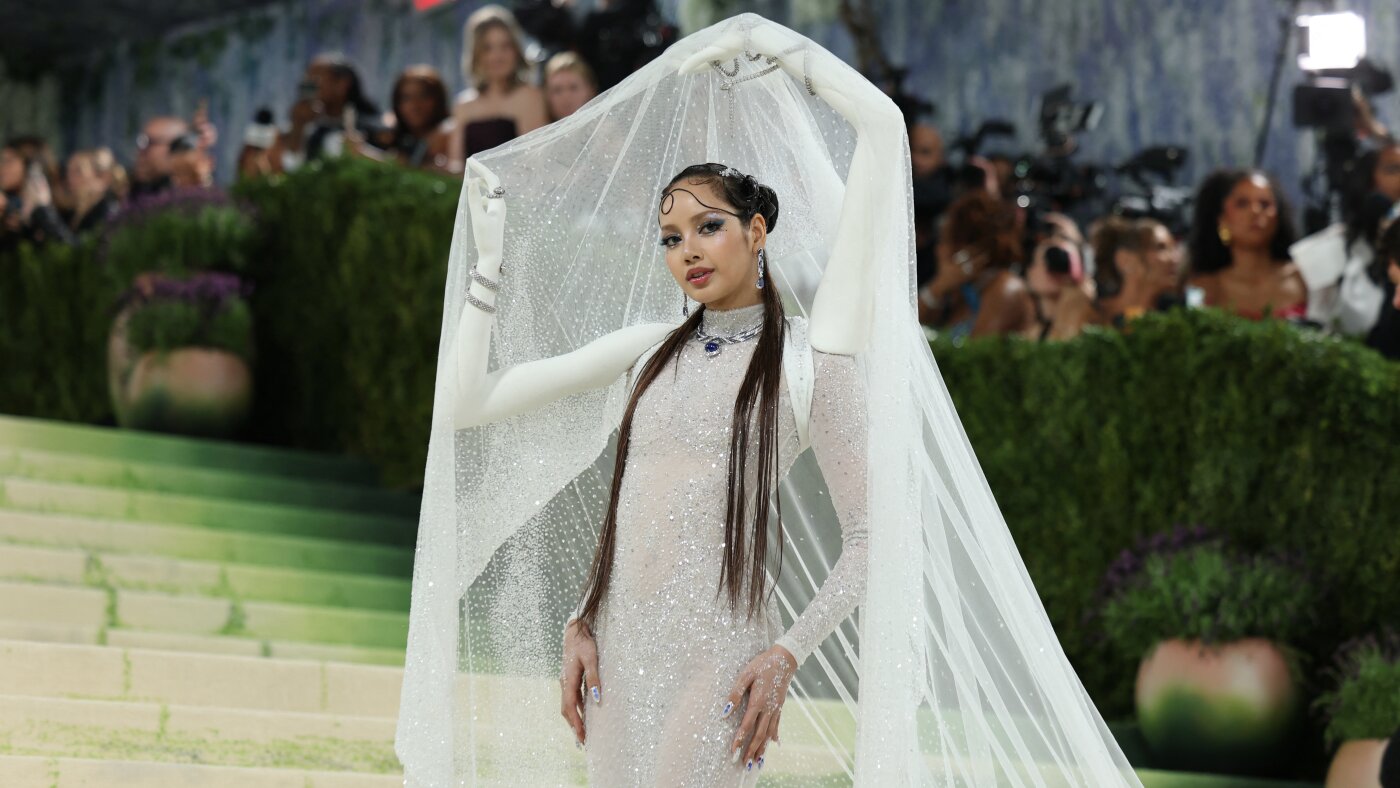
The Metropolitan Museum of Art's famous staircase welcomed its annual congregation of celebrities, designers, and cultural influencers on the evening of May 4, 2026. The scene was familiar enough to feel ritualistic: photographers calling out names, fabric cascading in directions that defied conventional tailoring, the occasional flash of sequins calibrated to read clearly through smartphone lenses. What the 2026 Met Gala made plain, once again, is that the event has completed a transformation that its original architects almost certainly did not intend. The gala that began as a fundraising mechanism for the museum's Costume Institute has become something closer to a global engagement machine—a place where fashion operates at the intersection of commerce, celebrity branding, and platform incentives.
This is not a subtle shift. An analysis of archival red-carpet photographs conducted by Reuters and published on May 4 found that Met Gala silhouettes have grown systematically bigger and more complex over the past two decades. The relationship between the event's social-media exposure and the escalating spectacle of its fashion choices is not coincidental. It is structural. In an environment where a single shareable image can generate tens of millions of impressions, the pressure on designers and celebrity teams to manufacture something worth photographing is intense and ongoing.
The stakes of that pressure were reflected in an unlikely venue: Polymarket, the prediction market, listed a 17 percent probability on May 4 that any attendee would propose marriage during the gala—a moment of genuine human spontaneity offered up as a wagerable entertainment product. The framing was playful, but it pointed at something real. The Met Gala has become an event where spontaneity itself is monetizable, where the boundary between authentic cultural moment and manufactured content is deliberately blurred.
From Charity Function to Platform Infrastructure
The Costume Institute's annual benefit, first held in 1948, was designed to raise money for a museum department that lacked guaranteed public funding. The formula was simple: invite wealthy benefactors, charge them handsomely for tickets, dress the evening in enough cultural prestige that attending felt like participation in something consequential. The event generated revenue. It also generated coverage. Fashion media had an incentive to document who wore what, and the gala had an incentive to make that documentation worth producing.
Social media did not create this dynamic, but it recalibrated the incentives dramatically. Instagram, TikTok, and Twitter—now X—have collapsed the time window in which a red-carpet moment retains relevance. A look photographed in 2005 might circulate in fashion circles for weeks. A look photographed in 2026 must compete for attention within hours, against every other piece of content uploaded to the platform in the same interval. The result, according to the Reuters analysis, is measurable: silhouettes have grown larger, construction more elaborate, and the gap between gala fashion and everyday clothing effectively unbridgeable. This is not evolution in the aesthetic sense. It is escalation in the competitive sense.
Designers who have dressed Met Gala attendees over multiple years describe the shift in practical terms. One told this publication that the volume of pre-event fittings has increased significantly, with celebrity teams often requesting multiple options to choose from based on what other attendees are likely to wear. The coordination effort rivals a military logistics operation. Costume houses that once produced a handful of bespoke pieces per season now staff dedicated Met Gala teams for months in advance. The event has become a significant revenue line for certain fashion houses—not because it directly sells product, but because the halo effect on brand visibility justifies the investment.
The Attention Economy and the Body as Billboard
The logic governing Met Gala fashion choices is identical to the logic governing every other platform-native content format: capture attention, hold it long enough to generate engagement, convert that engagement into some measurable value. The human body at the center of a Met Gala look is not primarily a vehicle for aesthetic expression. It is a billboard operating in a crowded visual marketplace.
This framing helps explain why the garments have grown more extreme even as fashion more broadly has trended toward minimalism and comfort. Streetwear, loungewear, and the so-called quiet luxury movement represent genuine consumer preferences for clothing that does not demand constant management. Met Gala fashion has moved in the opposite direction precisely because the event is not a consumer environment. It is a performance environment. The audience is not trying on clothes; it is watching. And watching rewards intensity.
The implication for fashion as an industry is significant. The Met Gala increasingly functions as a demonstration of what is technically possible rather than what is culturally desirable. A gown that requires a team to construct on-site, that cannot be worn in any practical context, that photographs well only under controlled lighting conditions—these are not failures of taste. They are successful executions of a specific assignment: produce something that cannot be ignored.
What the Spectacle Obscures
The Polymarket odds on a proposal at the Met Gala were a minor data point, but they illuminate something about how the event is now understood by the public. A genuine human moment—someone choosing to propose at one of fashion's most photographed events—has been converted into a probability, a wager, a piece of content that can be traded like any other informational derivative. This is not necessarily a commentary on the people who attend the gala. It is a commentary on the media environment that surrounds them.
The Reuters analysis documented a real trend in fashion. But the trend's meaning is contested. One reading holds that the escalation in Met Gala fashion reflects genuine creative ambition—designers using the event as a testing ground for ideas that eventually migrate into ready-to-wear. Another reading holds that the event has become disconnected from fashion's broader cultural function, producing spectacle in service of platform metrics rather than clothing in service of human wearers.
The evidence supports both readings simultaneously. Some of the most extreme recent Met Gala looks have drawn on craft traditions—hand embroidery, structural boning, archival textile work—that require significant skill to execute. The labor involved is real. The artistry is real. But the context in which that labor is displayed—the red carpet, the flash photography, the immediate social-media translation into a finite number of shareable formats—shapes what kind of creativity gets rewarded. The incentive structure does not encourage subtlety, wearability, or longevity. It encourages the legible, the photographable, the extreme.
The Forward View
The Met Gala will continue. The Costume Institute will continue to need funding, and the fashion industry will continue to need a venue where its most ambitious work receives global attention without the filter of commercial retail. These are legitimate functions, and they are not going away.
What may shift is how the event is understood by the people who produce it and by the people who watch it. If the escalation documented by Reuters continues, the gap between gala fashion and ordinary fashion will widen further, and the event's relationship to the clothing industry it nominally represents will grow more tenuous. Alternatively, a counter-movement may emerge: designers and attendees who choose visible restraint as a statement against the spectacle economy, betting that a distinctive quiet look will stand out precisely because everything around it is extreme.
That counter-movement has not yet materialized at scale. The 17 percent probability of a Met Gala proposal was, in the end, a comment on the event's predictability as spectacle. The proposal did not happen—or at least, the sources reviewed for this article do not record one occurring. What did happen was a parade of extraordinarily elaborate clothing on a staircase designed for a museum, photographed by thousands of phones, processed by algorithms optimized for engagement, and delivered to audiences who had formed expectations shaped by the previous year's already-extreme installments. The machine ran as designed.
The question worth sitting with is whether the machine is serving fashion, or whether fashion has become what the machine needs it to be.