Venus Williams and Nicole Kidman at the Met Gala: What the Co-Chairs' Pairing Reveals About Fashion's Shifting Power Centers
The pairing of a cinematic icon and a tennis champion as co-chairs of the Met Gala signals a deliberate recalibration of what the fashion world's most exclusive night values—and who it now needs to legitimise it.
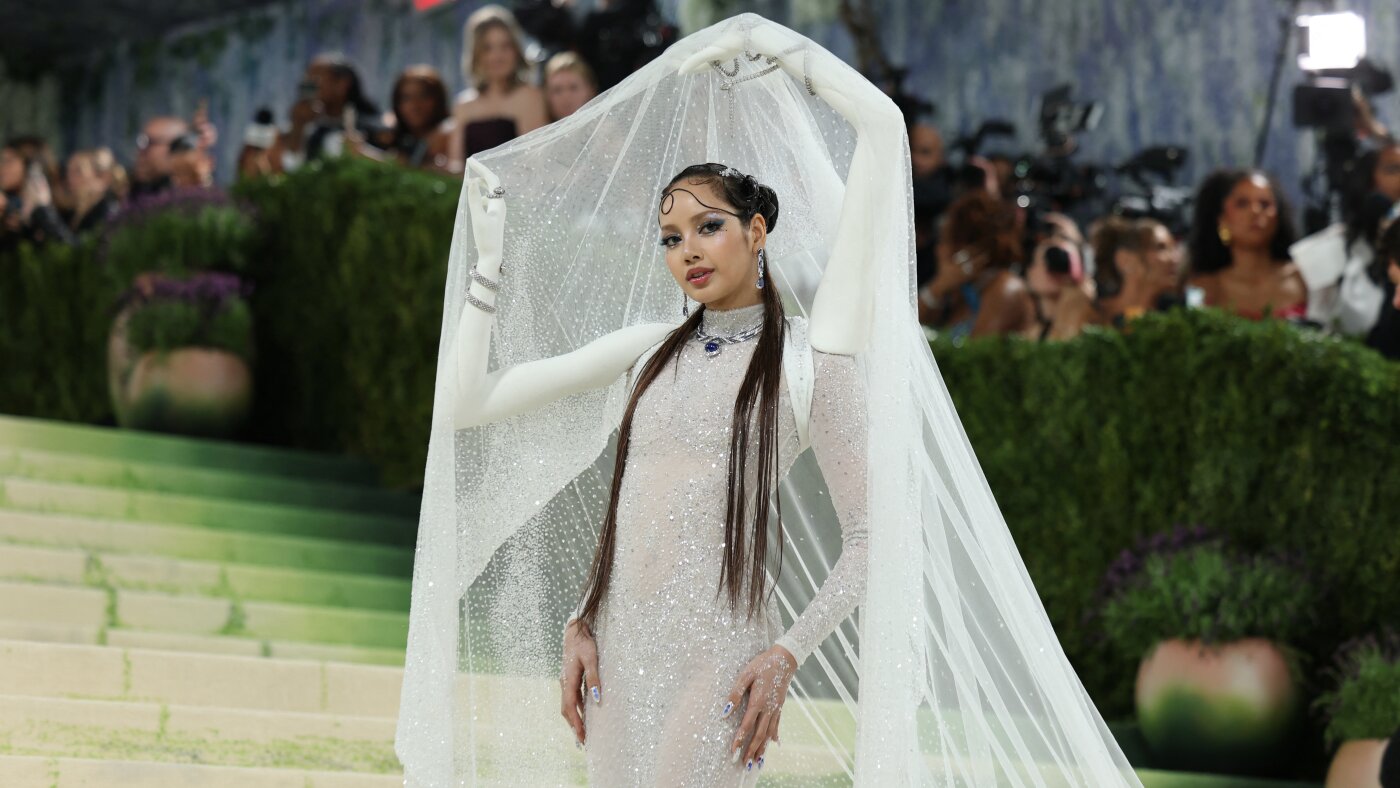
The Met Gala has always been a ceremony of proximity—fashion's inner circle granting access to those who can be photographed near it. But on the evening of May 5, 2026, at the Metropolitan Museum of Art in New York, the proximity calculus changed. Nicole Kidman, the Australian actor whose career spans four decades of Hollywood's highest echelons, and Venus Williams, the American tennis champion whose dominance reshaped women's sport, arrived as co-chairs of the costume institute's flagship annual fundraiser. They spoke to Reuters about their red carpet looks, offering the ritual personal narratives that gala coverage demands. What they did not say, but what their pairing announced, was more significant.
The Met Gala has long operated as a hinge between two worlds: haute couture's rarified craft and celebrity culture's hunger for spectacle. The co-chair position has historically been reserved for figures whose connection to fashion is direct and legible—designers, fashion editors, sometimes actors known for their personal style. Kidman's appointment follows that tradition comfortably. Williams's is a different signal. A seven-time Grand Slam champion and Olympic gold medalist, Williams has built a second career as a designer and businesswoman in the years since her peak on the court. Her presence as a co-chair reframes the event's institutional purpose: not merely as a celebration of costume as art, but as a statement about who gets to define what counts as cultural authority in the twenty-first century.
The Commerce of Legitimacy
Fashion's interest in sport has intensified steadily over the past decade. Louis Vuitton signed a partnership with Serena Williams before her retirement; Nike, Adidas, and a succession of luxury houses have courted Olympic athletes as commercial faces. The logic is demographic and cultural: sport's global reach, particularly in women's athletics, offers fashion brands an entry point into audiences that editorial fashion has historically struggled to convert. Williams, specifically, represents a particular kind of crossover credibility—she won at the highest level of her discipline, built an independent business empire, and carries the cultural weight that comes with being the first Black woman to reach world No. 1 in singles. She is not a fashion outsider who was granted access. She arrived with her own authority.
For the Met Gala, co-chairing a charity event with a reported ticket price north of fifty thousand dollars per head, the presence of a figure like Williams performs a specific function. It signals that the institution is not merely reflecting culture but curating it—selecting the figures who represent where cultural power is moving, not just where it has been. Kidman represents the established order of cinematic prestige; Williams represents the expansion of that order's membership. The pairing is carefully calibrated to hold both.
Fashion's Identity Problem
The Costume Institute's annual gala has navigated its own contradictions for years. It is a charity event for a museum department that studies and preserves clothing as cultural artifact; it is also the single most photographed fashion event in the world, with coverage that prioritises celebrity, spectacle, and the promotional interests of participating brands. The tension between those two identities has never been resolved—it's been managed, usually by selecting co-chairs who can hold both dimensions simultaneously.
The inclusion of Williams as a co-chair can be read as the institution acknowledging a broader shift in cultural authority. Fashion has spent the better part of a decade reckoning with accusations of cultural appropriation, exclusivity, and insularity—criticisms that have particular force against an event that costs more to attend than most people earn in a year. Hosting a co-chair with Williams's profile does not resolve those tensions, but it reframes them. It suggests the institution is not merely a passive recipient of celebrity but an active participant in constructing what legitimate cultural participation looks like.
This is not a new dynamic, but its intensity has increased. The Met Gala's media profile has grown with the expansion of digital fashion coverage; the event now generates weeks of content across social platforms, fashion blogs, and legacy outlets. With that expansion comes pressure to ensure the guest list, the co-chair roster, and the red carpet looks all reinforce the right messages. Kidman and Williams, each in their own way, send different but compatible signals—one about global cinematic prestige, one about athletic and commercial authority that happens to have a fashion dimension.
What the Looks Said
The Reuters reporting on the evening captured both co-chairs describing the narratives encoded in their attire. Kidman spoke about her red carpet selection, as is customary for high-profile gala attendees; Williams did the same. These descriptions matter less than the act of making them. The co-chair position comes with an implicit obligation to model the event's values—to appear, in dress and demeanor, as an embodiment of the Costume Institute's curatorial ambitions. That obligation has historically fallen most heavily on female attendees, whose clothing choices are scrutinised, decoded, and circulated as the primary language of the evening. Kidman and Williams both navigated that scrutiny on May 5, as they have navigated it at every fashion event where they have appeared together or separately.
The cultural weight of that navigation is not trivial. Each public appearance by a figure of Williams's stature, in a context where her authority is presented as equivalent to Kidman's, normalises a broader reconfiguration of what fashion's elite spaces are willing to validate. She is not a guest who was invited; she is a co-chair who was selected. The distinction matters. Co-chairs shape the event's identity rather than merely inhabiting it.
The Unresolved Question
What remains less clear from the available reporting is how the broader fashion industry—designers, retailers, editorial gatekeepers—responds to this recalibration. The Met Gala's co-chair choices are a signal, but signals require receivers. If Williams's presence as co-chair is followed by similar appointments in subsequent years—athletes, artists, figures from disciplines adjacent to but not identical with fashion—it will indicate a structural shift in how the event understands its role. If it remains an exception, it reads differently: a one-time concession to cultural momentum rather than a genuine reorientation.
The available evidence from the May 5 event points toward an institution that is genuinely navigating that tension rather than resolved by it. Kidman and Williams represent two different theories of cultural authority—one rooted in the continuity of established prestige, the other in the disruption that athletic and commercial success has brought to traditional hierarchies. The Met Gala's decision to hold both simultaneously, in a single co-chair arrangement, suggests the institution understands that fashion's future will be defined not by preserving the old order but by managing the transition to something more plural. Whether it succeeds in that management is a question the next gala will begin to answer.
This publication's coverage of the 2026 Met Gala prioritised the institutional framing of the co-chair appointments—their structural significance within the fashion world's hierarchy of legitimacy—over the conventional celebrity-and-fashion-press emphasis on individual look-by-look commentary, which the Reuters wire handled in exhaustive detail.