LeBron, the New Guard, and What the Second Round Tells Us About the NBA's Balance of Power
Two conference semifinal series tip off on Tuesday — and the contrast between them offers a quiet verdict on where the league's competitive gravity has shifted.
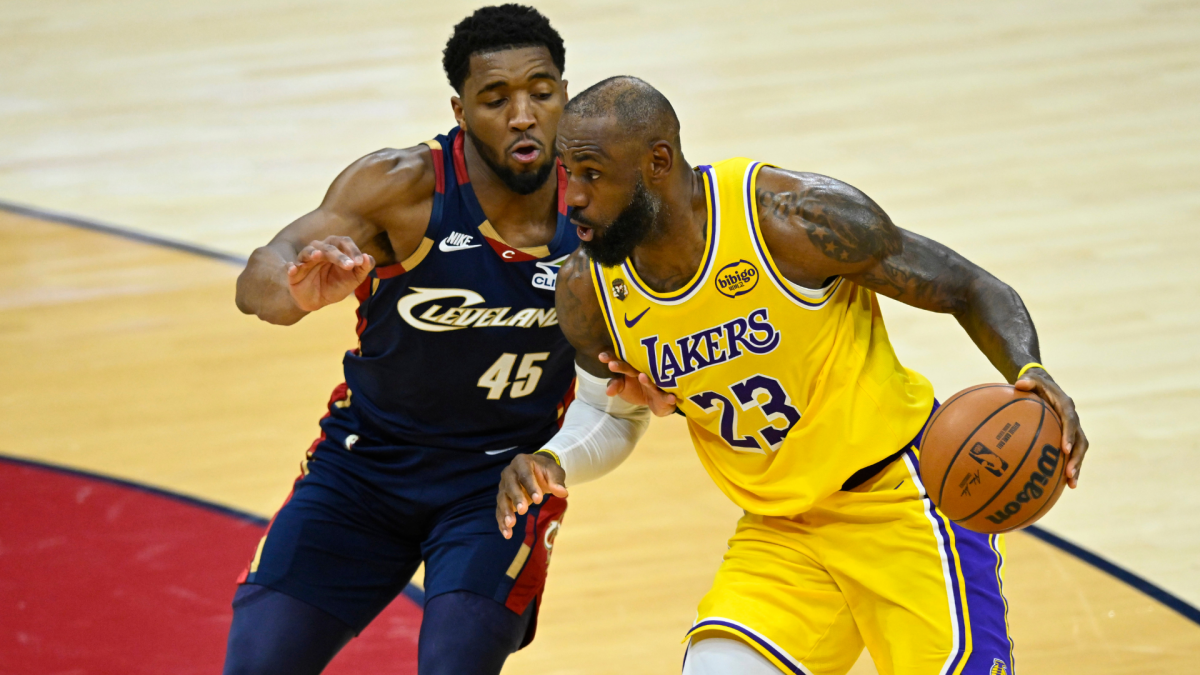
The 2026 NBA playoffs have produced the second-round slate that league observers anticipated, even if the paths each team took to arrive carry very different weight. On Tuesday, May 5, two series begin simultaneously: the Los Angeles Lakers visit the Oklahoma City Thunder in the West, while the Cleveland Cavaliers host the Detroit Pistons in the East. The scheduling itself — two conferences tipping off the same evening — is unremarkable. What is notable is what each series reveals about where power now sits in a league that has spent the better part of a decade trying to manage the tension between its greatest draw and its future.
That draw is, of course, LeBron James. He remains the single most commercially significant player in professional basketball, a designation he has held for so long it has become invisible — background noise in coverage that has moved on to debating his supporting cast, his coach's rotations, and whether the Lakers' supporting infrastructure is adequate to his ambitions. Those are legitimate questions. But they tend to obscure the more structural fact: the NBA's television ratings, its merchandise revenue, and its international audience reach are still partially sustained by the question of what LeBron does next. That is not nothing. It is also not forever.
The Lakers-Thunder series is, on the surface, a familiar narrative: old star against rising dynasty-in-waiting. Oklahoma City carries the weight of its own expectations. This is a franchise that has been constructed with disciplined patience — accumulated draft capital, developmental infrastructure, a core of players who have grown together and who carry none of the psychological scar tissue that comes with short-term, win-now roster construction. The Thunder's identity is built on collective execution and positional versatility rather than on a singular generational talent. That is, depending on your framing, either a more sustainable model or one that lacks the ceiling-raising capacity that elite individual talent provides. The Lakers need LeBron to be elite every night. The Thunder need no single player to be.
The betting markets have not been shy about this asymmetry. Sportsbooks have positioned the Lakers as the lower seed entering a hostile environment in Oklahoma City — a reflection not just of seeding but of where the wagering public's confidence sits. The promotional infrastructure around these games is substantial: bonus codes and first-bet offers are deployed across major sportsbooks as part of the standard commercial apparatus that now accompanies any high-profile NBA night. That infrastructure is not neutral. It reflects an understanding by oddsmakers and sportsbooks that the viewership for Lakers-Thunder is driven by a fanbase that bets at higher rates than average, and that the promotional funnel is therefore worth the outlay.
The other series carries less marquee glamour but more narrative complexity. Cleveland versus Detroit is, on one level, a meeting of two franchises that spent much of the early 2020s in different directions — the Cavaliers building methodically around a young core, the Pistons navigating the turbulence of a franchise reset that produced some memorable low moments. Both have arrived at the second round with something to prove that is distinct from the Lakers-Thunder dynamic. The Cavs do not carry the burden of legacy that Los Angeles does; the Pistons are not positioned as the future being tested by the past. There is a parity to this matchup that the other series lacks.
That parity is not incidental. It reflects a structural shift in how the modern NBA distributes competitive advantage. The league's salary cap architecture, its collective bargaining agreements, and its draft lottery mechanics are all designed to prevent sustained dynasties from locking up championship contention for a decade at a time. The result is a more fluid competitive landscape in which teams cycle through contending windows faster than the league's marketing apparatus can keep pace. The Lakers are the conspicuous exception — a franchise that has leveraged its market size, its historical brand, and its willingness to spend to remain relevant even during rebuilding phases. Cleveland and Detroit represent the more typical path: drafting well, developing patiently, and being ready when opportunity opens up.
The stakes are different for each team, but the common thread is that second-round exits carry different penalties depending on where a franchise sits in its cycle. For the Lakers, another early exit deepens the question of how the franchise builds around its aging star in the final chapters of his career. For the Thunder, reaching the conference finals would be a statement about organizational competence that few outside Oklahoma City are prepared to fully credit yet. For the Cavs and Pistons, this series is validation — proof that the rebuild worked, that the developmental investments paid off, and that the franchise's competitive window has arrived.
What the sources do not yet resolve is the question of injury exposure and substitution patterns. Neither the CBS Sports reporting on Tuesday's schedule nor the promotional materials accompanying the BetMGM offer specify which players are fully available or managing load as the second round begins. That information will emerge in the hours before tip-off and will reshape the odds picture significantly. The commercial machinery around these games — the sportsbook promos, the affiliate-driven content, the odds aggregation — moves faster than the information ecosystem can verify. A reader approaching these games with betting intent should treat the promotional framing as a commercial product, not a forecasting tool.
The two series that begin Tuesday are, in the end, about different things. Lakers-Thunder is about legacy versus emergence — a contest between a franchise sustained by one man's extraordinary longevity and one built on the premise that sustained excellence does not require a singular genius. Cavs-Pistons is about parity and proof — whether two franchises that rebuilt the right way can compete at the level the bracket now demands. Both questions will be answered by May 5. The NBA has arranged for them to be asked simultaneously, which is, in its own way, a statement about the league's interest in presenting multiple competing narratives rather than a single dominant story. That choice tells you something about where the NBA believes its future audience sits.