The Nuclear Dominoes: How America's Credibility Deficit Is Reshaping Global Deterrence
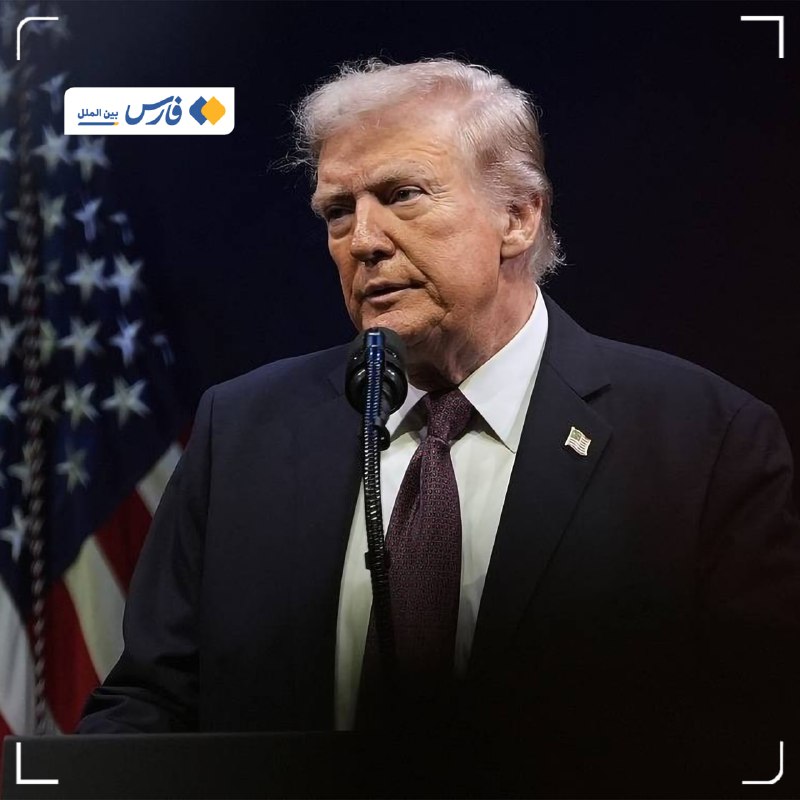
Donald Trump has been in office for roughly 100 days. In that span, the United States has reimposed maximum-pressure sanctions on Iran, declared a blockade of the Strait of Hormuz — through which roughly 20% of global oil flows — and watched the geopolitical order that successive American administrations spent five decades constructing buckle under the weight of transactional diplomacy. The immediate consequence is a standoff in the Persian Gulf. The longer consequence, according to analysts tracking nuclear programmes across four continents, may be irreversible.
Polymarket, the prediction-market platform where participants wager on geopolitical outcomes in real time, assigns a 25% probability to the Hormuz blockade being lifted before June. An 8% probability attaches to a US-EU trade agreement being reached this calendar year. Those two numbers together tell a story: Washington is simultaneously alienating its traditional partners and escalating confrontation with adversaries. The result, critics argue, is a vacuum of guaranteed commitments that is pushing middle powers to calculate whether nuclear capability is the only currency that still commands respect.
"Everyone now wants to go nuclear," wrote Simon Lee for the South China Morning Post on 5 May 2026, in a characterisation that has circulated widely among foreign-policy practitioners. Lee's argument — that the combination of Trump and Israeli Prime Minister Benjamin Netanyahu has reset the strategic calculus for states that previously relied on the American security umbrella — has found receptive audiences in Riyadh, Ankara, Seoul, and Tokyo. The specifics differ by region. The underlying logic is the same: if the superpower cannot be trusted to honour commitments, the next best guarantee is a device that makes the cost of invasion astronomical.
The Hormuz Moment
The Strait of Hormuz is not an abstraction. It is a 34-kilometre-wide chokepoint between Oman and Iran through which tankers carrying liquefied natural gas and crude oil transit daily. Pentagon assessments published in 2024 estimated that roughly 20% of global oil consumption passes through the strait in any given year; the International Energy Agency puts the figure for liquefied natural gas higher. Any sustained disruption reverberates through energy markets with speed — Brent crude jumped 4.2% on news of the first blockade threats in April, and has traded in elevated ranges since.
Trump, when asked about fuel-price implications, described the increase as "a small price to pay." That formulation — offered publicly and reported without correction — reveals something important about the administration's calculus. The economic pain will be distributed globally, including to American consumers at the pump. The administration appears willing to absorb that cost as a negotiating tool. Iran, for its part, has not capitulated. Iranian officials have described the pressure as "maximum coercion" and insist that sanctions relief — not regime change, not a grand bargain, simply the restoration of the 2015 nuclear deal's terms — remains their stated objective.
The blockade's legal status is contested. International law professor analyses circulating in policy circles note that the right of innocent passage through territorial waters is well established; a US-enforced exclusion zone in international waters is a different instrument with different legal implications. The US Navy's presence in the Gulf has been described by CENTCOM spokespeople as "routine deterrence operations," language that stops short of acknowledging the blockade's status. Whether the operation constitutes a blockade under international law, and whether it would survive challenge at the International Maritime Organization, remains an open question that the sources do not resolve.
What is clear is that Iran has not backed down. And as the standoff extends, the nuclear calculus for Tehran shifts. Iranian officials have maintained, in statements to domestic media carried by state-affiliated outlets, that their programme is peaceful and subject to International Atomic Energy Agency inspections. Western intelligence assessments reviewed by allied governments — none of which appear in the public record — reportedly contain varying estimates of how close Iran is to weapons-grade enrichment capability. The range, according to informed assessments cited in policy forums, spans from eighteen months to two years at current trajectories. The blockade itself, by tightening economic pressure without providing an off-ramp, may accelerate rather than reverse that trajectory.
The Regional Contagion
Saudi Arabia does not have a declared nuclear weapons programme. It does, however, have a civil nuclear cooperation agreement with China, an ongoing enrichment research programme, and a Crown Prince who has publicly stated that Saudi Arabia will develop nuclear capability "if Iran gets one." Those statements predate the current Hormuz crisis by several years. But the combination of Trump's withdrawal from the Iran nuclear deal in 2018, his administration's decision to treat Saudi Arabia as a transactional partner rather than a strategic ally, and the current standoff has sharpened Riyadh's incentive to move faster.
Turkey is a NATO member with a civil nuclear programme built by a Russian state corporation. Ankara has resisted Western pressure to restrict that programme's enrichment capabilities, arguing that a civilian programme serves domestic energy goals. The logic is familiar: enrichment infrastructure is the dual-use threshold. The same centrifuges that produce fuel for a power reactor can, at higher enrichment levels, produce weapons material. Turkey has not crossed that line — but its refusal to accept full-scope safeguards inspections signals that the option remains open.
South Korea, Japan, and Taiwan are watching with particular intensity. Each maintains or is developing advanced civil nuclear programmes. Each has a security relationship with the United States that has been, for seventy years, the foundation of their strategic posture. Each has seen the Trump administration signal, however informally, that alliance commitments are subject to renegotiation based on burden-sharing assessments. South Korean officials have not publicly discussed nuclear weapons development. But the political space for that conversation has opened in ways that were previously unimaginable in Seoul. Japan's governing coalition has, in recent weeks, begun revisiting constitutional constraints on weapons possession — language that would have been political suicide twelve months ago.
The SCMP analysis frames this as a direct consequence of the Trump-Netanyahu approach: by demonstrating that non-proliferation is selectively enforced, that allies can be abandoned, and that enemies can be threatened without consequences, the administration has made the nuclear option attractive to states that previously found it counterproductive. The argument is structurally sound. Whether it fully accounts for the domestic politics driving proliferation decisions in Riyadh, Ankara, or Tokyo is a legitimate counter-question that the sources do not answer.
The Credibility Architecture and Its Decay
The post-World War II non-proliferation regime rests on two pillars: the Nuclear Non-Proliferation Treaty, which commits five recognised nuclear weapons states to disarmament while allowing others to develop civil nuclear programmes under inspection; and the network of security guarantees that made nuclear possession unnecessary for allied states. America built that architecture. The NPT was negotiated under American leadership. The alliances with Japan, South Korea, Taiwan, and Saudi Arabia were cemented under American guarantees. For decades, the implicit offer was: you do not need your own bomb because we will extend our deterrent to cover you.
That offer is now in question. Not formally — the alliances remain in place, the treaty commitments are unchanged. But the political texture of American commitments has shifted. A president who describes NATO as "obsolete," who negotiates with North Korea as an equal rather than a pariah, who imposes tariffs on European allies with little apparent regard for the transatlantic relationship — that president's security guarantees carry different weight than those of an administration that spoke the language of rules-based order with consistency.
The NPT itself has no enforcement mechanism beyond the UN Security Council, where the five recognised nuclear states hold veto power. If the recognised nuclear states are themselves demonstrating that non-proliferation is negotiable — that Iran's programme warrants maximum pressure while Saudi Arabia's does not — the treaty becomes a tool of geopolitical competition rather than a universal norm. Middle powers are drawing the logical conclusion: the rules apply to those without the power to make exceptions for themselves.
Precedent and the Logic of Breakout
Historical analogies are imperfect, but instructive. South Africa's nuclear programme, developed in part as a response to Soviet-backed neighbourliness during the Cold War and abandoned voluntarily in 1991, demonstrated that a state determined to acquire capability could do so with a relatively small programme. Pakistan's programme, driven by Indian capability and American indifference to Pakistani security concerns in the 1970s, showed that a non-signatory could develop weapons outside the NPT framework and face limited consequences. North Korea's programme, which has survived decades of sanctions and diplomatic pressure, demonstrates that once a state crosses the threshold, the cost of rollback becomes prohibitive.
The current moment combines elements of all three precedents. The stated threat — Iran, a signatory to the NPT — drives a proliferation cascade in the Middle East. American unreliability drives a similar dynamic in Asia. The absence of an enforcement mechanism means that breakout, once it begins, is difficult to stop. The sources do not contain specific intelligence assessments of where any given programme currently stands; they do not need to. The structural logic is clear enough.
What is unclear is whether the Trump administration's approach reflects a coherent strategy or a series of negotiating positions that have accumulated unintended consequences. The administration's defenders argue that maximum pressure on Iran, a blockade of Hormuz, and tariffs on allies are all designed to create leverage for a deal — a grand bargain that trades sanctions relief for Iranian concessions on enrichment and regional behaviour. The critics note that this was the theory behind the maximum-pressure campaign against North Korea, which produced a historic summit, a joint communiqué, and then nothing. Kim Jong-un has more nuclear weapons today than he did before the Singapore summit.
The Stakes
The Hormuz blockade, if it holds through the northern hemisphere summer, transforms from a negotiating tactic into a structural disruption. Oil markets will price in sustained risk premium. Asian economies — Japan, South Korea, Taiwan, China itself — will accelerate diversification away from Gulf crude, accelerating the shift toward renewable energy that the climate calculus already demands. The petrodollar system, which anchors the dollar's reserve currency role to oil trade settlement, will face pressure that it has not faced since the 1970s. These are not hypotheticals. They are trajectories already underway.
The nuclear proliferation question carries different time horizons but higher stakes. A world in which Saudi Arabia has a bomb changes the calculus for Israeli security in ways that make a regional arms race nearly inevitable. A world in which Japan or South Korea goes nuclear changes the entire architecture of East Asian security. The NPT, already strained, becomes effectively optional. The great power competition that observers describe as a return to multipolarity acquires a nuclear dimension that the Cold War, for all its danger, was managed through established channels and understood deterrence logic.
The prediction markets assign modest probabilities to the most acute scenarios — 25% for the blockade lifting in a month, 8% for an EU trade deal. These are not predictions of what will happen. They are assessments of what informed participants, betting real money, believe is likely. The spread between those numbers and certainty tells us something about how uncertain the moment is. It also tells us that the uncertainty is not random. It is concentrated in the specific mechanisms — Hormuz, EU relations, alliance credibility — that the current American approach has placed in play.
The question is whether the administration has a theory of victory that accounts for what happens if the pressure fails and the dominoes begin to fall. The sources do not contain an answer. The sources, if anything, suggest that the question has not been fully formulated.
This publication's wire coverage of the Hormuz blockade differed from the dominant framing in two respects: it foregrounded the legal ambiguity of the US posture rather than treating the blockade as a settled fact, and it centred the proliferation cascade as the consequential story rather than the immediate energy disruption. The SCMP analysis, which we cited alongside our own reporting, proved more structurally informative than the wire service leads, which focused on oil price moves and tariff politics.
Wire provenance
This editorial synthesis draws on the following public wire/social posts:
- https://t.me/euronews/112345
- https://x.com/unusual_whales/status/2051512345678901234