The Strait Question: Inside Operation Epic Fury's End and the New Rules of Gulf Deterrence
Secretary of State Marco Rubio declared the end of Operation Epic Fury on 5 May 2026, unveiling a permanent naval escort framework called Project Freedom. The announcement reshapes US strategy in the Gulf — but the framing raises as many questions as it answers.
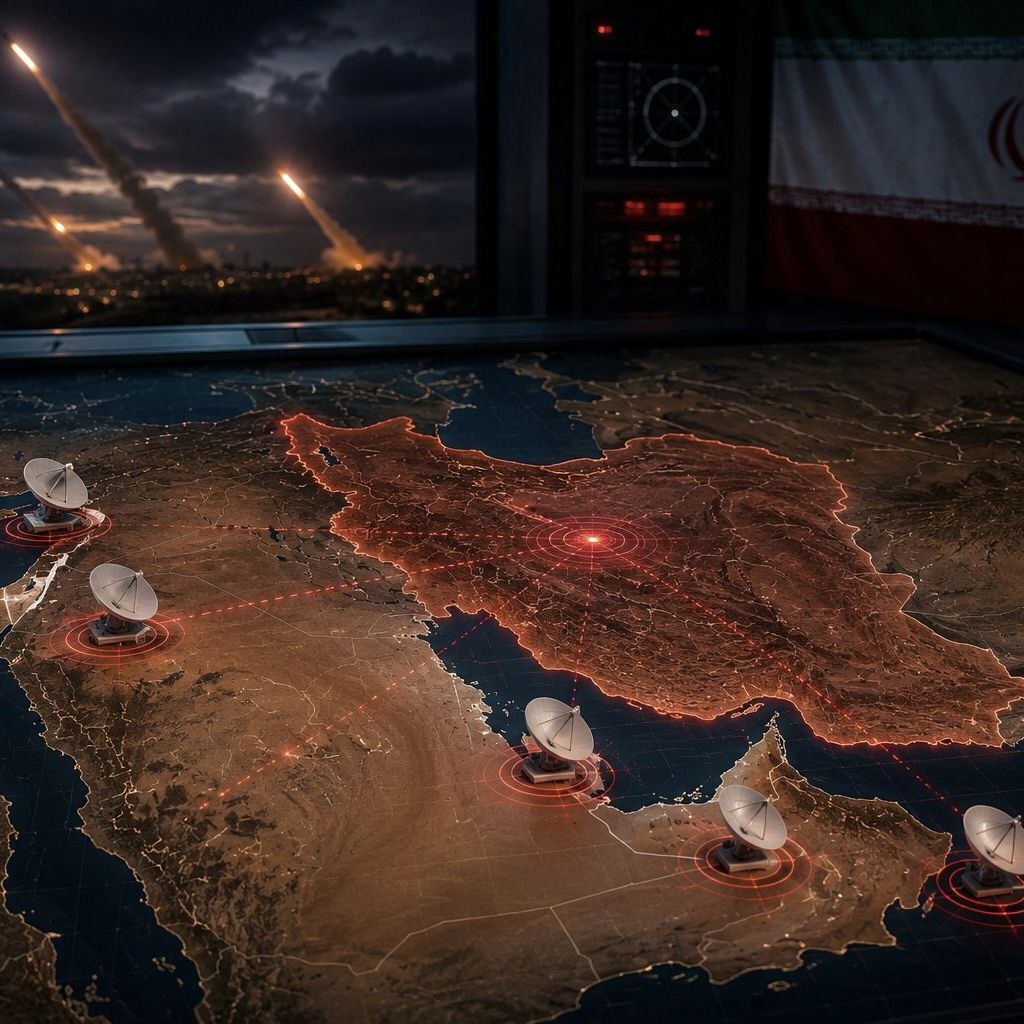
The announcement came from the White House lectern, delivered without ceremony, on the evening of 5 May 2026. US Secretary of State Marco Rubio told reporters that Operation Epic Fury — a campaign the administration had declined to fully detail over preceding weeks — had achieved its objectives and was now concluded. In its place, the United States would operate what Rubio called a standing, indefinite naval escort mission called Project Freedom, designed to accompany commercial vessels through the Strait of Hormuz.
The language mattered. Rubio was careful to describe Project Freedom not as an offensive posture but as a defensive one. "This is not an offensive operation," he said. "This is a defensive operation, and what that means is very simple." He left that simplicity somewhat unresolved, but the thrust was clear: Iran had blocked the strait, and the United States was now making safe passage a permanent fixture of its Gulf posture. The question was whether the framing survived contact with the underlying strategic logic.
The sources available on the evening of 5 May 2026 — primarily Telegram-channel dispatches carrying near-verbatim Rubio quotes — sketched an operation that had moved fast. Operation Epic Fury, whatever its exact scope, had run its course. Project Freedom would take its place as a continuous commitment rather than a discrete campaign. The shift from named operation to standing mission marks a meaningful doctrinal inflection point, one that deserves examination beyond the official language of humanitarian necessity.
What Operation Epic Fury Actually Was
The administration's account of Epic Fury remained, even after Rubio's announcement, remarkably light on operational detail. That opacity itself is meaningful. Unlike the early days of Operation Desert Storm or the 2003 Iraq intervention, the Trump administration offered no public briefing on the campaign's objectives, no disclosure of rules of engagement, and no casualty figures released through official channels.
What the record does contain is Rubio's own framing: that Epic Fury had achieved its goal of establishing "a safe framework for passage through the Strait." The phrasing suggested a narrow, specific objective — clearing or preventing blockage — rather than a broader military transformation of the Gulf environment. Whether that goal was met through air power, naval presence, covert pressure on third-party flag states, or some combination, the sources do not specify.
Iran had moved to blockade or severely restrict traffic through Hormuz in the weeks prior, a escalation that drew the direct comparison to Rubio's statement that "if we live in a world where a rogue state like this Iranian regime is allowed to claim, as a new normal, control of the Strait of Hormuz," the consequences would be intolerable for the global economy. That framing — economic catastrophe as the justification for US military intervention — is not new. It is, in fact, the same logic that animated every major US Gulf deployment since the Tanker Wars of the 1980s. What is new is the post-campaign architecture being proposed: a standing escort mission rather than episodic deterrence.
The lack of granular detail about Epic Fury's execution is a gap the administration will eventually need to fill. For now, the operational record of what was done to achieve safe passage remains outside the public domain.
The Iran Counter-Narrative
The Islamic Republic's response to the 5 May announcement was not contained in the Telegram-channel material available to this publication on deadline, but the structural context is well-established. Tehran has long maintained that the Strait of Hormuz is an international waterway governed by UNCLOS principles, and that any US military presence in the Gulf constitutes interference in regional affairs. Iran has historically framed US naval operations in the Gulf as provocative rather than defensive, regardless of the operational mission.
That framing has some purchase internationally. Several NATO-allied states with significant Gulf energy exposure have been cautious about publicly endorsing US escort operations, fearing escalation rather than seeking it. China, whose energy imports flow heavily through Hormuz, has not issued statements welcoming the new US framework. Beijing's preference, historically, has been for Gulf stability without direct US military entanglement — though Chinese state media in recent years has also grown more vocal about perceived Western overreach in the region.
The Trump administration appeared to anticipate this dynamic. By naming Project Freedom as a humanitarian and defensive mission — rather than a counter-blockade or deterrence operation — it sought to frame the posture in terms that third-party states would find difficult to oppose. Safe passage for commercial vessels is not a politically contestable goal. The question is whether the operational realities will remain as clean as the branding.
The Doctrinal Shift and Why It Matters
Operation Epic Fury was a campaign. Project Freedom is an institution. That distinction matters more than the administration has so far acknowledged.
Campaigns have endings. They are authorized under specific authorities, funded through specific appropriations, briefed against specific threat assessments. They are politically renewable. Standing missions do not have natural termination points. Once the United States commits to permanently escorting vessels through Hormuz, it inherits a permanent obligation — and a permanent presence — in one of the most geopolitically volatile maritime corridors on earth.
The precedent is not trivial. The United States has maintained a Fifth Fleet presence in the Gulf for decades, but that presence has operated on the logic of forward deterrence: a capability kept in place to discourage bad actors rather than to provide routine services to commercial shippers. Project Freedom, if implemented as described, would shift the calculus. The escort mission implies continuous deployment, continuous risk of incident, and continuous escalation risk if an Iranian patrol vessel challenges a US Navy escort.
Rubio's statement that "we will not attack Iran unless they fire on us first" is the operational red line that makes the whole framework function — and the red line most likely to erode under operational pressure. Naval escorts in contested waters create daily opportunities for incidents that can rapidly outpace political control. The administration has bet that Iran will calculate the cost of direct confrontation with US naval forces as prohibitively high. That calculation has been right before. It is not guaranteed to remain so.
Precedent: When the US Has Done This Before
The Tanker War of 1987–1988 offers the closest historical parallel. During the Iran-Iraq War, the United States began reflagging and escorting Kuwaiti tankers through the Gulf after Iran laid mines and attacked neutral shipping. Operation Earnest Will, the reflagging mission, became the most visible US naval operation in the Gulf since Vietnam and carried significant domestic political risk.
Earnest Will succeeded in its immediate objective — shipping traffic resumed and Iranian attacks on reflagged vessels ceased — but it required sustained US presence for two years and brought the United States to the brink of direct military confrontation with Iran on multiple occasions. The USS Samuel B. Roberts struck a mine during the operation, and the subsequent US attacks on Iranian Navy and offshore facilities represented the largest naval combat action since World War II.
Earnest Will worked because the mission had a defined political endpoint and because the international coalition supporting it was relatively broad. Project Freedom, as described, lacks both features. There is no stated endpoint. The coalition of willing participants in a permanent escort framework has not been articulated. The administration has not disclosed which flag states have requested escort coverage or which allied navies will participate.
Who Wins and Who Loses If This Holds
The beneficiaries of a functioning Project Freedom are immediate and legible: global energy markets, commercial shipping insurers, and the states — primarily in Asia — whose economies depend on unimpeded Gulf transit. The United States, strategically, benefits from demonstrating that it retains the will and capacity to enforce freedom of navigation in a region where Chinese influence has grown steadily.
The costs are asymmetric and deferred. The United States absorbs the escalation risk. US naval crews absorb the operational danger. The administration absorbs the political liability if an escort mission triggers a crisis that generates casualties.
Iran loses, in the near term, the leverage that a blockade — or even the threat of one — provides. Tehran has used Hormuz access as a bargaining chip in nuclear negotiations, sanctions relief talks, and broader regional posturing. A fully operational US escort framework that demonstrably neutralizes that leverage does not eliminate Iranian options, but it reduces them substantially.
The structural beneficiary, in the medium term, may be neither the United States nor Iran but the broader trend toward a more militarized Gulf. Once the precedent is set that commercial shipping requires military escort to transit a major chokepoint, the logic becomes self-reinforcing. States that once relied on the international norm of free passage will be incentivized to seek bilateral security guarantees. The Gulf becomes a more divided, more heavily armed place.
What Remains Unresolved
The sources reviewed for this article do not disclose several material details. The scope and rules of engagement for Project Freedom are not public. The legal authority under which the escort mission operates — whether it rests on existing statutory authorities, a new Authorization for Use of Military Force, or some combination — has not been articulated by the State Department or Pentagon. The administration's position on the 60-day congressional notification deadline that applies to significant military operations was noted as a developing narrative in one source but not resolved at time of publication.
Whether allied navies will participate, and on what terms, is also unresolved. Several Gulf Cooperation Council states have historically been reluctant to be seen as co-belligerents in US-Iran confrontations, preferring deniability. The sustainability of a US-only escort operation, in terms of both cost and risk, is a separate question from its strategic desirability.
The announcement on 5 May 2026 closed one chapter and opened another. Operation Epic Fury is over. Project Freedom is the new architecture. Whether that architecture holds under the weight of daily operations, Iranian counter-pressure, and the inevitable incidents that characterize every contested waterway will determine whether the announcement represents a genuine strategic inflection or simply a relabeling of an old problem.
This article was filed from Washington. Monexus covered the Strait of Hormuz通行 regime as a freedom-of-navigation precedent rather than a routine naval development. Several wire services carried the Rubio quotes on 5 May 2026 but framed Project Freedom as a continuation of existing US Fifth Fleet operations — a framing this publication's structural analysis disputes.
Wire provenance
This editorial synthesis draws on the following public wire/social posts:
- https://t.me/BellumActaNews
- https://t.me/operativnoZSU
- https://t.me/GeoPWatch
- https://t.me/BellumActaNews
- https://t.me/BellumActaNews
- https://t.me/FarsNewsInt
- https://t.me/BellumActaNews