The Pen and the Constitution: Trump, Executive Power, and the Pulitzer Reckoning
Recent Trump statements about extending his term and controlling employment with executive fiat have earned Pulitzer recognition for critical coverage — but the broader question is whether institutions built for an earlier era can still hold concentrated power to account.
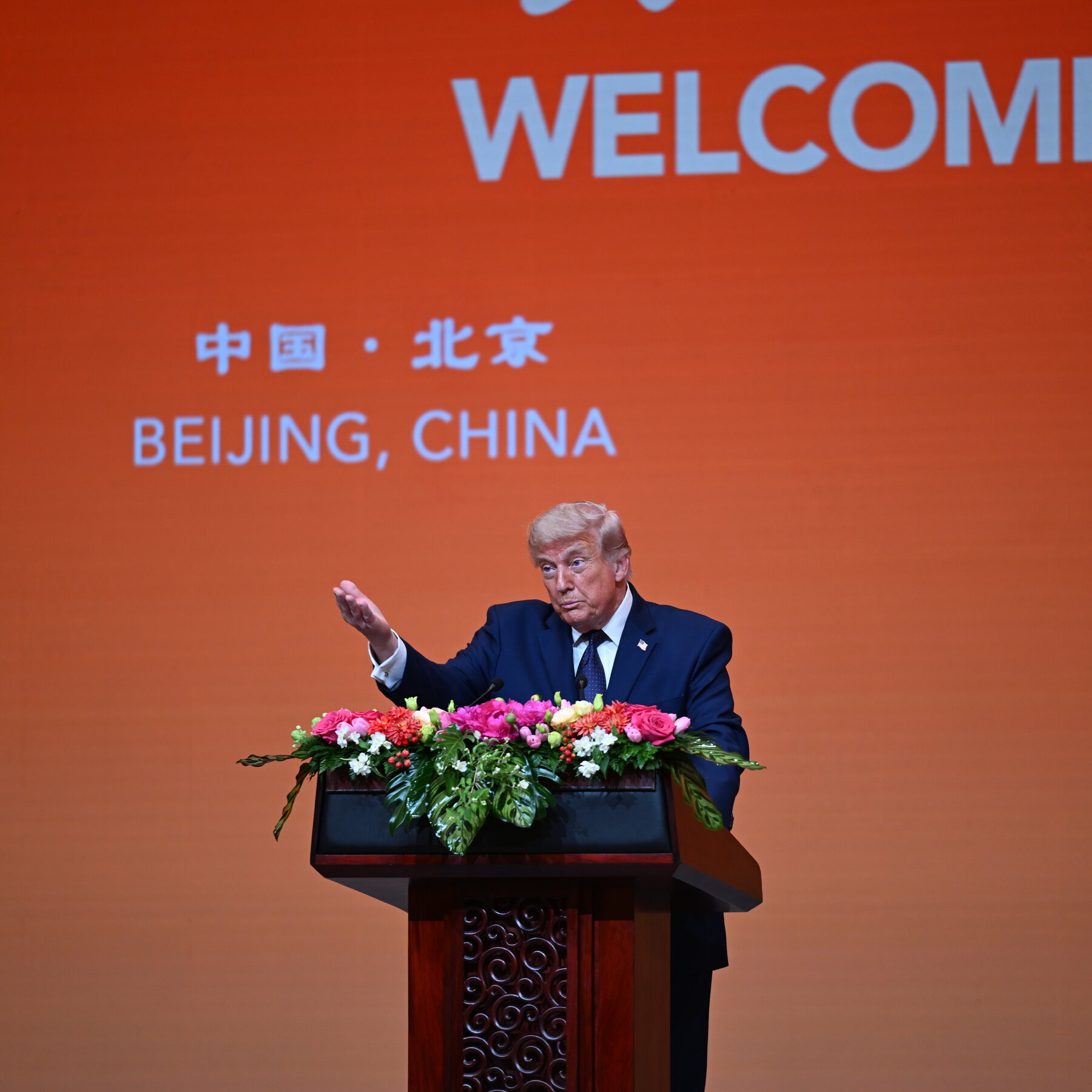
The Pulitzer Prize Board made a pointed choice on 5 May 2026. It awarded its prestigious public-service and investigative recognitions to newsrooms whose coverage catalogued, questioned, and contextualised the administration of President Donald Trump — coverage that proved as controversial as it was widely read. The South China Morning Post reported the announcement under a headline that captured the prize committee's own framing: Pulitzers honour damning coverage of Trump and his policies. Whether that description came from the board itself or was applied by wire services covering the event, it carried an unmistakable signal. The country's most storied journalistic institution had looked at four years of administration coverage and decided the word "damning" was the right one.
That decision landed amid a week in which Trump himself had supplied fresh material for the record. Speaking at a campaign-style event, he told an audience that he could, with executive authority alone, declare a national employment halt and subsequently employ the displaced workforce directly — framing this not as a hypothetical but as an assertion of latent presidential power. The same appearance produced a remark that drew constitutional scrutiny on its own terms: Trump suggested he might leave office not in the constitutionally prescribed two-term window, but after eight or nine years — a timeline that would require either a constitutional amendment or the dissolution of term limits entirely. The US Constitution, ratified in 1951 as the Twenty-Second Amendment, limits the presidency to two terms. Trump's current term expires in approximately two and a half years from the date of these remarks. The sources do not indicate that any White House legal counsel publicly corrected the characterisation.
The Pen and the Permanent Campaign
The employment-halt remark is the more structurally significant of the two, because it reaches most directly into the operational reality of American governance. A president who genuinely believes — or who finds it useful to profess belief — that executive authority can suspend or reshape national labour markets is making a claim that sits outside any conventional reading of presidential power. The office does not hold authority to declare a general cessation of employment. The Department of Labor administers workforce regulations; the Federal Reserve influences employment through monetary policy; Congress holds the power of the purse and the authority to legislate labour standards. None of these levers belongs to a single executive stroke.
That said, the remark is also the kind of thing that sits in a recognised rhetorical register in American political life — the strongman flourishes that punctuate populist rallies, the promise that the leader could fix everything if only the system permitted it. Whether Trump was making a substantive policy claim or performing the theatre of unlimited executive competence for an audience that finds competence preferable to democratic process is a question the available sources do not answer. What matters for editorial purposes is the structural effect: such claims, repeated with sufficient regularity, do political work regardless of their literal accuracy. They normalise executive overreach as a conceptual space. They shift the Overton window of what is thinkable.
What the Pulitzer Board Signalled
The Pulitzer recognitions complicate any easy narrative about institutional decline. Journalism's financial model has contracted sharply; advertising revenue that once sustained metro dailies has migrated to platform intermediaries; newsroom headcounts across the country are a fraction of their mid-2000s peaks. By most quantitative measures, the infrastructure of accountability journalism is weakened. And yet the Pulitzer Board — a body composed of journalists, academics, and public figures that has existed since 1917 — looked at the preceding four years and decided the coverage warranted its most visible endorsements.
The decision is not without political risk. The Pulitzer committee has historically sought to position itself above partisan conflict; its charter prizes journalistic excellence over advocacy. But the board's willingness to use the word "damning" in connection with coverage of a sitting president signals that the institutional calculation has shifted. When the country's most consecrated press award publicly allies itself with critical coverage of an administration, it changes what other institutions feel permitted to say. It is an invitation — or a permission structure — for other actors to engage without the protective hedging that usually accompanies scrutiny of executive power.
The Constitutional Gap
The eight-or-nine-years remark exposes a specific structural vulnerability in American governance that the Pulitzer coverage — and critical coverage more broadly — has repeatedly struggled to address. The problem is not that Trump will extend his term beyond the constitutional limit; the mechanisms of democratic constraint do not require that scenario to be literally plausible in order to matter. The problem is that the remark functions as a test of institutional response. If a president can floated the prospect of extending his own tenure and face no immediate, concrete institutional sanction — no Supreme Court clarification, no congressional resolution, no constitutional crisis requiring resolution — then the gap between constitutional text and constitutional enforcement is exposed as a gap that requires political will to close.
The United States has no enforceable mechanism for presidential term compliance beyond political and legal pressure. A president who decided to remain in office after a second term expired would present a crisis that could only be resolved through institutions — courts, military chain of command, Congress — whose willingness to enforce constitutional limits against a popular sitting president is untested. The sources do not indicate that any constitutional scholar, federal judge, or senior military official has issued public guidance on this scenario during the period under review.
This is not a novel problem. Political scientists and constitutional lawyers have noted for decades that the American system relies on informal enforcement mechanisms — political norms, institutional loyalty, public pressure — alongside formal ones. What changes is the context in which those informal mechanisms operate. An administration that routinely contests the boundaries of executive authority, that treats institutional resistance as an obstacle rather than a check, that frames constitutional limits as impediments to preferred outcomes rather than foundational commitments — that administration tests the informal mechanisms more severely than their designers anticipated.
The Stakes, and What Remains Uncertain
The Pulitzer recognition of critical coverage and the week's presidential remarks sit inside the same structural question: can institutions designed for an earlier era of political competition still hold concentrated executive power to account? The journalism — weakened financially, fragmented across platforms, contested ideologically — is attempting to do the work it was designed to do. The Pulitzer Board, by lending its prestige to that effort, has reasserted the model's legitimacy even as the model's survival is not guaranteed.
What remains genuinely uncertain is whether accountability journalism, even honoured journalism, changes the trajectory of executive power in an era when the audiences most hostile to such coverage are also the most politically engaged. The sources do not establish a clear link between Pulitzer recognition and shifts in public opinion or political behaviour. The press cannot compel; it can only inform, contextualise, and — on occasion — make visible what power prefers to keep obscured. Whether that is sufficient depends on what other institutions — courts, Congress, the electorate — choose to do with the information.
The week of 5 May 2026 offered a specific, datestamped record of presidential language that would have been treated as extraordinary at any prior point in American political history. The Pulitzer Board treated critical coverage of that language as worthy of its highest awards. Both facts are now part of the permanent record. What they add up to — whether they represent a inflection point or merely an unusually contested moment — will be determined by decisions that journalism alone cannot make.
This publication covered the Pulitzer announcement and Trump's remarks together rather than as separate beats. Wire reports treated the prize and the presidential statements as distinct stories; Monexus found a structural through-line connecting media accountability, executive power, and the constitutional norm-testing that both sets of coverage addressed.
Wire provenance
This editorial synthesis draws on the following public wire/social posts:
- https://x.com/sprinterpress/status/1917566461865332737
- https://x.com/boweschay/status/1917566619374006272
- https://x.com/sprinterpress/status/1917563395388768256
- https://x.com/unusual_whales/status/1917077780582699250
- https://x.com/unusual_whales/status/1917065879105466368
- https://en.wikipedia.org/wiki/Twenty-second_Amendment_to_the_United_States_Constitution