The Price of Ceasefire: Iran Tensions, American Wallets, and the Fragile Architecture of Middle East Stability
As the UAE reports continued attacks from Tehran and a ceasefire holds by a thread, American consumers are absorbing the economic fallout through higher prices — the invisible casualty of a conflict that has yet to formally end.
The smoke has yet to fully clear over the Emirates. On 5 May 2026, the United Arab Emirates reported additional attacks attributed to Iranian forces, hours after the White House characterised the broader ceasefire arrangement as holding — if shakily. The dissonance between official confidence and ground-level reality encapsulates the central puzzle of a conflict that has never formally ended, yet has imposed tangible costs on American households through a mechanism that rarely makes the evening news: inflation.
The administration of President Donald Trump announced the ceasefire framework in March 2026, bringing a measure of relief to markets scarred by weeks of escalation. But the architecture of that arrangement is proving easier to announce than to enforce. Iranian-aligned groups operating across the region have not universally recognised its terms, and the UAE — a frontline state — continues to absorb incidents that challenge the premise of calm.
The Ground Truth in the Emirates
The Reuters reporting from 5 May 2026 confirms that the UAE government has documented further attacks originating from Iranian-linked actors, even as American officials publicly assert the ceasefire is operational. This is not a contradiction so much as a revelation about the difference between a diplomatic headline and a military situation on the ground.
American officials, speaking to Reuters on condition of anonymity, described the ceasefire as "shaky" — a word that carries more honesty than the official talking points. The framework reportedly includes commitments from Tehran to restrain regional proxy forces, but the enforcement mechanism remains thin. Unlike a formal armistice, there is no international monitoring body, no agreed demarcation line, and no penalty structure for violations short of resumption of hostilities.
Iranian state media, for its part, has not publicly accepted the ceasefire terms as described by Washington. That gap — between what the United States says Iran agreed to and what Tehran acknowledges — is where the current instability lives. Proxies in Yemen, Iraq, and Lebanon continue to operate with varying degrees of coordination, and the UAE's exposure as a neighbour to both Yemen and the Strait of Hormuz gives those actors frequent opportunity for harassment operations.
European Markets and the Geography of Risk
European equity markets registered the ambiguity sharply. As news of the UAE attacks circulated on 5 May, indices that had rallied on ceasefire sentiment gave back a portion of those gains. The Dax and Cac 40 both posted modest declines, reversing an early-session climb that had been built on optimism about de-escalation. Travel and defence sectors — the twin proxies for Middle East risk in equity markets — moved in opposite directions, reflecting a split assessment among investors about what "shaky" actually means for portfolio exposure.
The pattern is instructive. European capital has been quietly recalibrating its exposure to Gulf states since the escalation began in early 2026. Sovereign wealth funds from the UAE and Saudi Arabia, major holders of European blue-chip equity, have made no moves to reduce stakes — a signal of continued confidence in the long-term trajectory of the relationship. But institutional money managers in Frankfurt, Paris, and London have been trimming positions in airlines and hospitality groups with heavy Gulf exposure, rotating instead into defence contractors and energy logistics providers.
That rotation is not panic. It is a rational repricing of tail risk in a region where the gap between diplomatic optimism and operational reality has historically been large, and the consequences of misjudging it have been severe.
The Inflation Pass-Through
The connection between a conflict in the Persian Gulf and the price of groceries in Ohio or the cost of a tank of petrol in suburban Virginia is not always obvious. It runs through oil.
Crude futures spiked sharply during the peak escalation period, climbing above $110 per barrel before retreating as ceasefire talks gained traction. That retreat has partially reversed since the UAE incidents became public, with Brent crude settling in the mid-$90s — still elevated compared to the $70-$75 range that prevailed through most of 2025.
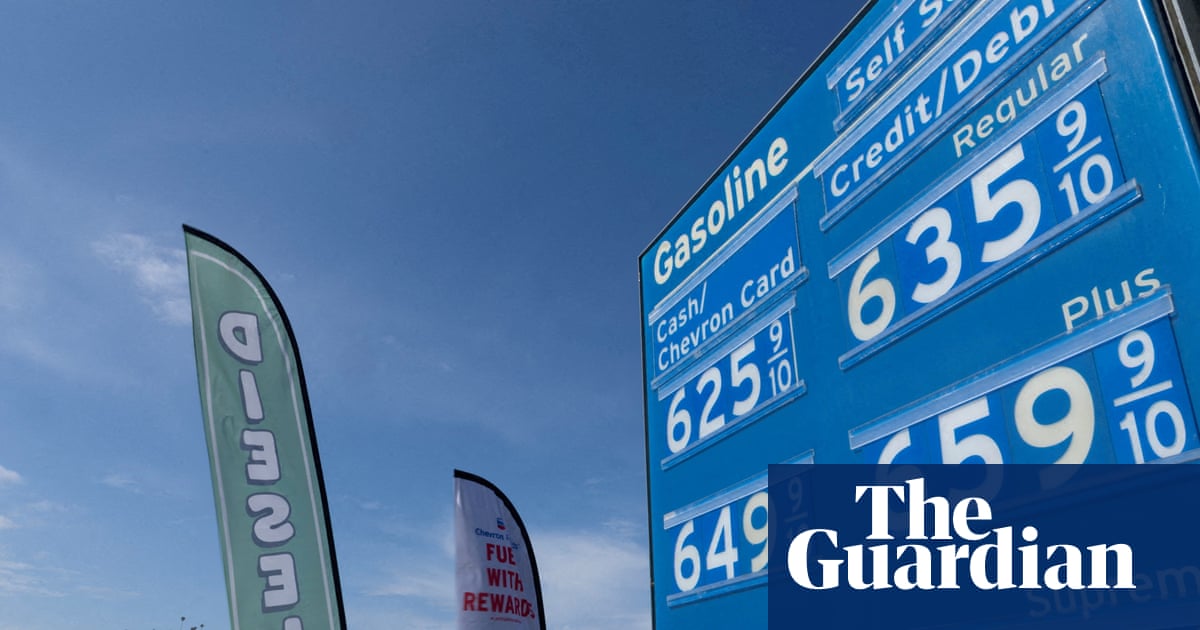
The pass-through to American consumers is already visible. Young Futures analysts, quoted in financial research circulated on 5 May 2026, noted that US consumers are bearing the brunt of inflation stemming from the conflict with Iran. The mechanism is textbook: higher oil prices raise transportation and manufacturing costs, which feed into the Producer Price Index and eventually the Consumer Price Index with a lag of several months. Energy-intensive categories — food, plastics, pharmaceuticals, construction materials — absorb the first wave. By the time the connection becomes legible in the monthly CPI release, the damage to household budgets is already done.
The Federal Reserve, which had been expecting a further moderation in core inflation through 2026, now faces a more complex picture. The personal consumption expenditures index, the Fed's preferred gauge, is unlikely to reach its 2 percent target on schedule if energy prices remain elevated. Markets are now pricing a shallower trajectory for interest rate cuts than they were six weeks ago, adding a financial channel to the real-economy costs already being felt.
What Holds and What Doesn't
Three structural realities govern what happens next.
First, the ceasefire has no substitute. Both Washington and Tehran have strong incentives to avoid a full resumption of hostilities. For the United States, the costs of a second Gulf war — in blood, treasure, and geopolitical distraction — are considered prohibitive by both parties in Congress. For Iran, the economic pressure of existing sanctions has not relented, and a new round of secondary sanctions triggered by resumed conflict would be devastating. The ceasefire, however imperfect, is the only game in town.
Second, enforcement capacity is asymmetric. The United States can apply overwhelming military pressure but has limited ability to compel Iranian proxy groups to stand down without a broader political settlement in Tehran. Iran can apply persistent pressure at low intensity — harassment operations, economic disruption, and diplomatic irritation — without triggering the threshold that would justify a major American response. This asymmetry is a feature of the current arrangement, not a bug: it preserves the ceasefire by making both sides averse to the alternative, while leaving the underlying tensions unresolved.
Third, American consumers are the latent variable. As long as the conflict remains below the threshold of open war, the economic pressure it exerts is diffuse — absorbed through higher prices, diminished purchasing power, and slower progress on interest rate relief. It is the least visible casualty of the conflict, and therefore the one least likely to generate the political pressure that might force a more durable resolution.
The UAE attacks reported on 5 May did not breach the ceasefire in the formal sense. They did not kill American citizens. They did not close the Strait of Hormuz. They did not interrupt oil shipments. By the metrics that govern official assessments, the ceasefire holds.
But in the supermarket aisles of Phoenix and the petrol stations of Houston, the ceasefire has a different valence. The price of keeping the peace, it turns out, is being paid — quietly, invisibly, and without ceremony — by people who have no vote in the decisions that determine whether it holds.
The question for policymakers is not whether the ceasefire will be maintained. Most analysts believe it will, at least for now. The harder question is what kind of peace is worth having when its maintenance costs are borne not by those who made the decisions, but by those who simply live with the consequences.
This publication's wire coverage emphasised the administration's framing of ceasefire viability, with less attention to the UAE ground-level incidents until social-media transmission of the Reuters reporting shifted the news cycle mid-afternoon on 5 May 2026.
Wire provenance
This editorial synthesis draws on the following public wire/social posts:
- https://en.wikipedia.org/wiki/2025%E2%80%932026_Iran%E2%80%93United_States_crisis
- https://en.wikipedia.org/wiki/Brent_crude_oil
- https://en.wikipedia.org/wiki/Federal_Reserve
- https://en.wikipedia.org/wiki/United_Arab_Emirates
- https://en.wikipedia.org/wiki/Iranian_proxy_groups_in_the_Middle_East
- https://en.wikipedia.org/wiki/Effects_of_oil_price_shocks_on_the_United_States_economy