The Rhetoric of 'Smart' Mass Deportation
Tom Homan's framing of 'smart' mass deportations signals a White House recalibrating its immigration posture after early-term turbulence — but the operational details remain deliberately sparse.
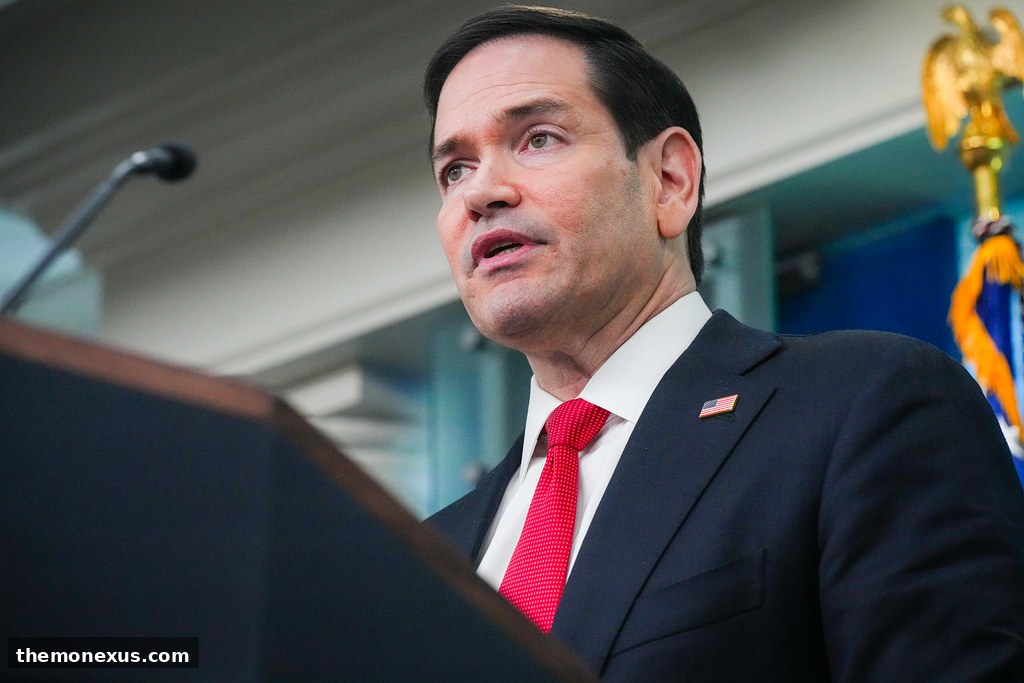
On the evening of 5 May 2026, Tom Homan went on television and said something revealing. "We can have mass deportations, but do it in a smarter way," the former ICE director told Disclose TV. The framing was deliberate. After eighteen months of an administration that entered office pledging the largest deportation operation in American history, Homan — by then a senior voice inside the White House's immigration apparatus — was publicly reframing the mission. Not mass deportations or no mass deportations. Smarter mass deportations.
That single distinction carries significant weight. It acknowledges that the first version of the plan, whatever exactly that plan was, encountered friction significant enough to warrant a public revision. It also signals that the administration has no intention of abandoning the core objective. The deportations will continue. The language is changing.
This is not a minor rhetorical tweak. In the machinery of American immigration enforcement, the gap between stated ambition and operational reality has always been wide. The executive branch routinely invokes the specter of mass deportation to signal resolve to its political base while managing the legal, logistical, and diplomatic constraints that make the full realization of that threat nearly impossible to execute. What Homan was doing on 5 May was not walking back a promise. He was repackaging it for an audience that includes federal judges, foreign governments whose cooperation the United States requires, and a domestic public whose tolerance for disruption has proven more limited than the most maximalist campaign rhetoric suggested.
The Machinery Already in Place
The institutional architecture for large-scale immigration enforcement is substantial. Immigration and Customs Enforcement, the agency Homan once led, has historically operated on annual arrest and removal figures that fall far short of any credible "mass deportation" scenario. Under the Obama administration, removals peaked at roughly 409,000 in fiscal year 2012. Under Trump in his first term, the number declined rather than rose, a counterintuitive outcome that reflected the same operational realities Homan is now implicitly acknowledging: deportations require detention space, court dockets, transportation logistics, and — critically — destination-country cooperation.
The second Trump administration inherited that same machinery, plus a Supreme Court that has broadly supported executive authority over immigration enforcement, and a set of foreign policy levers that could theoretically be deployed to compel cooperation from countries that serve as home territories for significant populations of undocumented migrants currently in the United States. The administration moved quickly after taking office in January 2025 to expand detention capacity, reinstate fast-track removal procedures, and issue a series of executive orders intended to strip away procedural protections that had accumulated over decades of litigation.
What the administration found, as many of its predecessors have discovered, is that the gap between a political mandate and an operational outcome is not primarily a matter of legal authority. It is a matter of logistics, diplomacy, and political cost. The countries most affected — particularly in Central America and the Caribbean — have limited capacity to absorb large numbers of returning nationals rapidly. Countries like Venezuela and Nicaragua, with whom the United States has no formal repatriation agreements and strained diplomatic relations, present particular obstacles. Removing someone to a country that will not accept them is legally and practically complicated.
What "Smarter" Actually Means
Homan did not elaborate in his 5 May appearance on what operational changes the "smarter" approach entails. The disclosure did not include policy specifics, legislative proposals, or budget allocations. What it provided was a calibrated reframe: the goal remains, the method is being refined.
In the context of the administration's broader posture, the most plausible reading is that "smart" means targeted rather than sweeping — focusing enforcement resources on individuals who have criminal records, outstanding removal orders, or pending asylum claims that have already been denied, rather than attempting the indiscriminate roundups that early rhetoric suggested. This approach has the advantage of being more legally defensible, more palatable to courts that have historically blocked the most aggressive exercises of executive immigration authority, and more achievable in terms of the logistics involved.
It also has the advantage of political sustainability. Indiscriminate enforcement operations generate footage that circulates on social media, produce sympathetic coverage of individual cases, and create a political backlash that complicates the broader immigration agenda. Targeted enforcement, by contrast, allows the administration to point to specific cases — often involving individuals with serious criminal histories — that generate public support rather than sympathy for the affected individuals.
This is not a novel strategy. The Obama administration's Deferred Action for Childhood Arrivals program and its successor Deferred Action for Parents of Americans represented a similar political calculation: exercise the maximum defensible executive authority to protect the largest politically sympathetic population, while maintaining the broader enforcement infrastructure that satisfies the base. The Biden administration's early immigration agenda followed a comparable logic, at least until a surge in border crossings forced a series of reversals and restrictions.
Domestic Political Arithmetic
The timing of Homan's 5 May appearance matters in the context of the administration's second-term political calendar. By May 2026, the early enthusiasm of the 2025 inauguration has given way to the harder work of governing. Immigration enforcement has produced victories — increased arrests, expanded detention, expedited removals — but also produced a series of legal setbacks as courts have pushed back on specific enforcement tactics and procedural changes that exceeded the administration's delegated authority.
The political environment has shifted as well. Polling throughout 2025 and into 2026 showed a complicated public attitude toward immigration enforcement: Americans consistently supported "securing the border" in the abstract, but grew more ambivalent when enforcement operations produced images of long-term residents — people with jobs, children in school, decades of uninterrupted presence — being detained and removed.
Homan's "smart" framing is calibrated to that environment. It signals that the administration has heard the concerns without abandoning the commitment. It allows the White House to argue, when pressed, that enforcement is proceeding but proceeding responsibly. It gives political cover to Republican members of Congress who face constituent pressure from both enforcement-first voters and the business community that depends on immigrant labor.
The administration has also been navigating a delicate relationship with the courts. A series of judicial rulings in late 2025 and early 2026 narrowed the administration's options on several fronts — limiting the use of certain detention facilities, requiring additional procedural protections before removal of individuals claiming asylum, and requiring the government to demonstrate that specific enforcement priorities were being applied consistently rather than discriminatorily. Each ruling represents a constraint on the "mass" dimension of mass deportation. Each one makes the "smart" framing more necessary, not less.
What Remains Unresolved
Homan's 5 May appearance left several questions unanswered. The "smarter" approach was described but not detailed. The operational specifics — how many enforcement officers will be deployed, which categories of individuals will be prioritized, what diplomatic negotiations are underway with recalcitrant destination countries — remain outside the public record the disclosure provides.
It is also unclear how the "smart" reframe will be received by the administration's most enforcement-focused supporters, who may interpret it as a capitulation to the same institutional resistance that has historically limited immigration enforcement. The base that delivered the president a second term in 2024 included a substantial contingent for whom mass deportation was not merely a policy preference but a defining reason for their vote. Calibrating the message for that audience while also addressing the legal and logistical realities the administration has encountered is a political act with real constraints.
The administration has time. The Supreme Court's current composition leans toward deference on executive authority questions, and the broader political environment remains favorable to enforcement-focused immigration rhetoric. But the gap between the promise and the execution has not closed. It has, for now, been given a new name.
This publication covered the Homan disclosure as a staffing and enforcement rhetoric story. The wire focused on the quote as a potential signal of White House recalibration. The contrast in framing reflects a broader pattern in immigration coverage: the political dimension tends to dominate the operational one, even when — as here — the operational dimension is precisely where the real story lies.
Wire provenance
This editorial synthesis draws on the following public wire/social posts:
- https://t.me/disclosefed/8471
- https://x.com/ekonomat_pl/status/2051730639771066376
- https://x.com/sknerus_/status/2051727776206442499
- https://x.com/sknerus_/status/2051611877822668807
- https://www.dhs.gov/immigration-statistics